


Weather Resistant Area Rugs for Patios and Outdoor Spaces
Sunlight is one of the toughest tests of an outdoor rug’s color. Choose weather resistant area rugs made with UV-resistant fibers to help limit fading and material deterioration. For changeable weather, look for materials that repel moisture and a low-profile weave that allows water to drain or move off the surface.
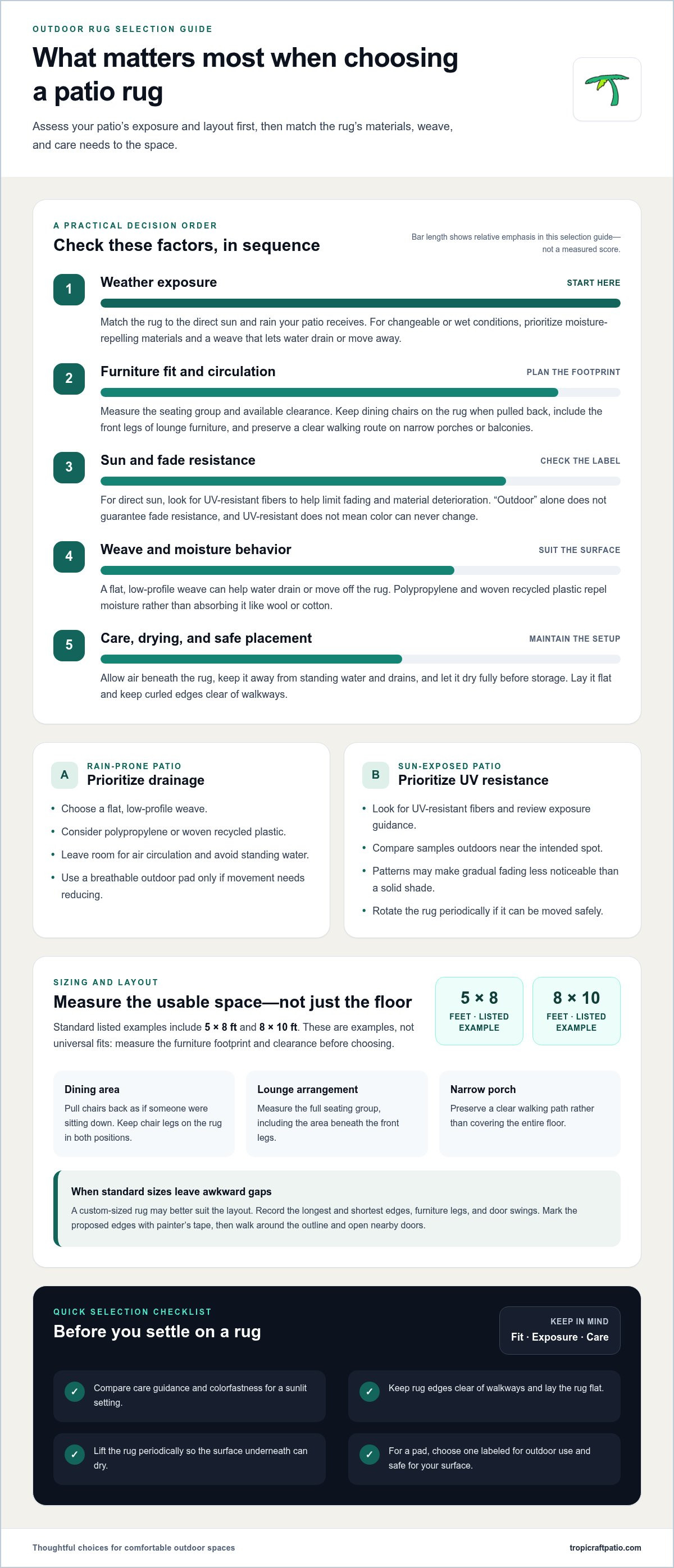
A patio rug should feel inviting underfoot and suit the conditions around it. Choose based on the amount of direct sun and rain your space receives, how the material handles moisture, and whether standard dimensions fit your layout. Compare fade resistance, select a practical weave for wet areas, and measure carefully if your space needs a tailored fit. Considering exposure and placement helps keep an outdoor retreat comfortable and polished.
Table of Contents
Choosing outdoor rugs for different weather conditions
Start by matching the rug to its exposure. For rainy patios, choose a flat, low-profile weave that lets water drain or move away. Polypropylene and woven recycled plastic repel moisture rather than absorbing it like wool or cotton. Leave room for air to circulate beneath the rug, keep it clear of standing water and drains, and let it dry fully before storage.
For direct sun, choose UV-resistant fibers to help limit fading and material deterioration. Color and pattern matter, too: gradual fading may be less noticeable on a multicolor motif than on a solid, saturated shade. Choose a pattern that complements nearby furniture and disguises everyday debris, and consider how it looks against your home’s exterior.
Fit the rug to the furniture, not just the floor. Under a dining table, allow chairs to remain on the rug when pulled back; on a small balcony, preserve a clear walking route. Common listed examples include 5-by-8-foot and 8-by-10-foot rugs. Measure the seating footprint and available clearance before selecting either size. Outdoor rugs can also work in covered porches, sunrooms, and entry areas, provided the rug suits that location’s exposure and use.
Do you need a rug pad? Use one only if needed to reduce movement. Choose a breathable pad labeled for outdoor use and safe for your deck or patio surface. A pad that traps moisture can slow drying beneath the rug.
What safety risks should you consider? A rug that slips, has a curled edge, or stays damp can create a trip or slip hazard on a deck, patio, or concrete surface. Lay it flat, keep its edges clear of walkways, and lift it periodically so the surface underneath can dry.
Standard and custom rug sizes
Start with the space’s usable footprint, then compare it with standard outdoor rug dimensions. Listed examples include 5-by-8-foot and 8-by-10-foot rugs. A compact balcony may suit the smaller option, while a broader dining area may need more coverage. These are examples, not universal fits, so measure your own layout before choosing.
For a dining area, pull each chair back as if someone were sitting down. The rug should support the chair legs in both positions. For a lounge arrangement, measure the full seating group, including the area beneath the front legs. On a narrow porch, preserve a clear walking path instead of covering the entire floor. These steps help balance appearance, function, and durability.
Rectangular rugs suit long dining tables and sectional arrangements. A round rug can soften a square balcony or echo a circular table. Mark the proposed edges with painter’s tape, then walk around the outline and open nearby doors. This simple test shows whether the shape fits before you commit. For an indoor-outdoor transition, measure inside as well and compare the two footprints.
When standard dimensions leave awkward gaps or obstruct circulation, a custom-sized rug may suit the layout better. Record the longest and shortest edges, note furniture legs, and account for door swings. Coordinating rug proportions with outdoor furniture styles can help create a balanced setting. For guidance on your layout, discuss your space and design needs with the patio team.
Fade resistance for sunny climates
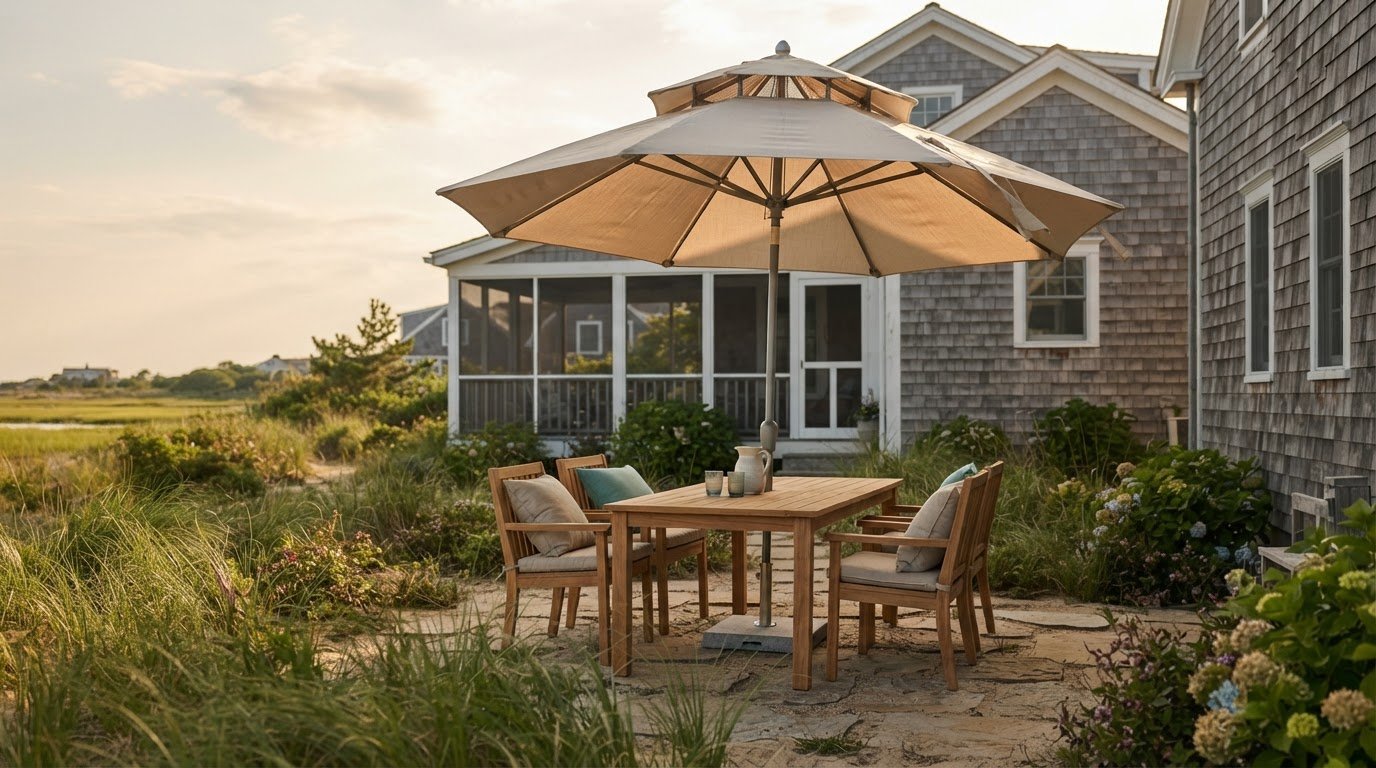
On a south-facing patio, direct sunlight can gradually change a rug’s color and affect its fibers. Choose UV-resistant fibers to help limit fading and material deterioration. “UV-resistant” means the material is designed to withstand sun exposure, not that its color can never change. Review the care and exposure guidance before placing a rug in full sun.
Compare colors and patterns in the light the rug will receive. A charcoal solid may show fading differently from a multicolor geometric design, but no shade is immune to prolonged sun. Hold samples outdoors near the intended spot and compare them with cushions, decking, and furniture. This reveals whether the palette looks balanced in bright midday light and softer evening conditions.
Fiber choice matters as much as color. Polypropylene and woven recycled plastic repel moisture, while UV resistance is the feature to prioritize for sun exposure. Don’t assume that “outdoor” alone guarantees fade resistance. On a patio with shifting sun, note where the rug gets direct exposure and consider how its pattern looks in that brighter area.
Keep care simple: sweep away grit, clean according to the manufacturer’s directions, and let a damp rug dry completely before storage. If it can be moved safely, rotate it periodically so one edge doesn’t receive all-day exposure. Use shade where practical during long periods of intense sun. Shade reduces direct exposure, while regular maintenance helps preserve the rug’s appearance.
For help planning a comfortable layout around a sunny patio, talk through your patio plans.
Tropicraft Patio: Resin Wicker
Tropicraft Patio helps homeowners in Ardmore and Philadelphia coordinate outdoor seating with a rug’s proportions and style. Resin wicker adds a woven look to a patio arrangement, while cast and extruded aluminum offer other furniture styles to pair with your rug.
Turn to Tropicraft Patio when planning a seating area or refining an existing layout. Share the space you’re furnishing and the atmosphere you want to create, then consider which furniture material best suits your design. A balanced combination makes an outdoor setting feel welcoming and thoughtfully composed.
Contact Tropicraft Patio to discuss your outdoor living plans.
Make your outdoor space feel complete
Think of the rug as more than a finishing touch. It can define a welcoming space, frame a conversation area, or connect dining and lounging zones. Picture the patio at the time you use it most, then decide what atmosphere you want: calm and understated, or lively and expressive. That intention can guide a more personal choice than matching colors alone.
Weather resistant area rugs can anchor that feeling while supporting the way you live outdoors. For a considered next step, gather your preferred dimensions, a few notes about the setting, and the look you hope to create. Contact Tropicraft Patio about outdoor rugs and explore the possibilities for your patio. A thoughtful choice can make the space feel more inviting, season after season.
Frequently Asked Questions
Which outdoor rugs resist fading, mold, mildew, and UV damage?
UV resistance and mildew resistance are separate product claims; one doesn’t guarantee the other. Read the label for both, and check whether the care instructions cover the backing as well as the surface. For a patio with mixed sun and shade, base your choice on the most exposed area where the rug will sit.
What sizes and shapes are available for weather-resistant area rugs?
Options vary by design, and some layouts may call for custom dimensions. Check the finished measurements, including any border, rather than relying on a size name alone. Compare the rug’s proportions with the furniture footprint, too: the usable surface matters more than the impression created in a product photo.
How do you clean and maintain a weather-resistant area rug?
For routine care, follow the rug’s cleaning directions and test a cleaner on a discreet area before treating a visible stain. Use a soft brush or cloth rather than an abrasive tool that could disturb the weave. Address spills promptly and prevent soil from building up around the rug’s edges.
Can outdoor rugs be left outside in rain, snow, or freezing temperatures?
Outdoor suitability doesn’t automatically mean a rug is designed for snow or freezing conditions. Before cold weather, read the care instructions for seasonal guidance. If you move the rug in low temperatures, handle it gently and avoid sharply folding it, as some materials may be less flexible in the cold.
How do you choose an outdoor rug for a specific climate or patio surface?
Consider how you use the patio as well as its weather exposure. A dining area benefits from a surface that’s easy to clean, while a covered transition between indoors and outdoors may need a texture that doesn’t catch passing debris. Check the rug’s care guidance to ensure it suits your surface and intended placement.
Comments