


Double-Vented Umbrella Canopies and How Wind Passes Through
Understanding what a double-vented umbrella canopy is starts with its construction: two fabric layers are separated by vented mesh, allowing air to pass through openings in the inner canopy. This airflow helps ease pressure beneath the canopy and can reduce the risk of inversion. A single canopy has one fabric layer stretched across its ribs.
Wind resistance matters when creating a comfortable patio retreat, but vents are no reason to leave an umbrella open in severe weather. Vents can help air pass through the canopy, but they do not make an umbrella suitable for severe weather. Understanding how the layers and mesh manage airflow, and how the design compares with a single canopy, can help you choose an umbrella for your outdoor space.
Table of Contents
How double-vented canopies let wind pass through
A double-vented design manages airflow through openings between canopy layers. Its vents can ease pressure beneath the fabric, but they don’t make an umbrella storm-proof.
Wind Flow Through the Dual-Layer Canopy
Air moves beneath the outer canopy and passes through mesh vents sewn into the inner layer. This lets some air escape instead of pressing only against a sealed surface. When comparing designs, look for vents between the two fabric layers, not just a gap at the canopy’s edge. The canopy still provides shade and rain coverage, while airflow depends on the vent layout and construction.
Resistance to Canopy Inversion
Air pressure beneath a canopy can push upward against its fabric and frame. Vented mesh gives some of that air a path through the inner layer, which can help ease pressure and reduce the risk of inversion. That doesn’t guarantee greater wind resistance: frame construction, base weight, and weather conditions matter too. Close the umbrella if it sways noticeably or conditions strengthen. Vents don’t protect it from severe weather.
The National Weather Service describes 4-7 mph as a light breeze on the Beaufort scale, generally safe for most quality patio umbrellas. It describes 8-12 mph as a gentle breeze, when a good-quality double-vented umbrella should be fine, while users watch for swaying. The National Weather Service describes 13-18 mph as a moderate breeze. Close the umbrella when winds exceed 15-18 mph.
Read the manufacturer’s wind rating as guidance for that umbrella, not a guarantee for every setup. ISO 9001, according to the International Organization for Standardization, is a quality management system certification, not a certification of the umbrella product itself.
Choose a canopy size that provides coverage for your seating or dining area without obstructing movement. For care, close and secure the umbrella; when winds reach 25 mph or higher, cover or store it.
Double-canopy construction and mesh ventilation
A double canopy combines two fabric layers with vented mesh between them. Its construction affects airflow, coverage, and how the umbrella responds to weather.
Double-Canopy Mesh Ventilation
Look for mesh positioned between the outer and inner canopy layers. The openings let air pass through the structure while the fabric provides shade and rain coverage. Mesh is part of the canopy design, not a substitute for closing an umbrella in strong winds. Check how the vent is sewn into the layers to see where air can pass through.
Canopy Fabric and Materials
A double-vented canopy has two fabric layers and a vented mesh section; fabric and frame materials vary by umbrella. Check the manufacturer’s description for the materials and care guidance. Fabric construction matters because the canopy needs to provide coverage while opening and closing smoothly. Durable materials alone won’t prevent inversion in harsh weather, so follow the product’s use instructions.
A single-canopy umbrella has one fabric layer stretched over its ribs, with no inner canopy layer or mesh passage. The difference is visible beneath an open umbrella: a double canopy has a second layer and vent openings, while a single canopy has one continuous fabric surface.
The pole and ribs help support the canopy’s shape. The pole holds the frame upright, while ribs extend beneath the fabric to maintain its spread. Check how the fabric attaches to those supports and consider the umbrella’s intended setting. Canopy layers, frame materials, and overall construction work together; no single detail determines performance in every weather condition.
For guidance on matching canopy construction to your patio, discuss your umbrella choices.
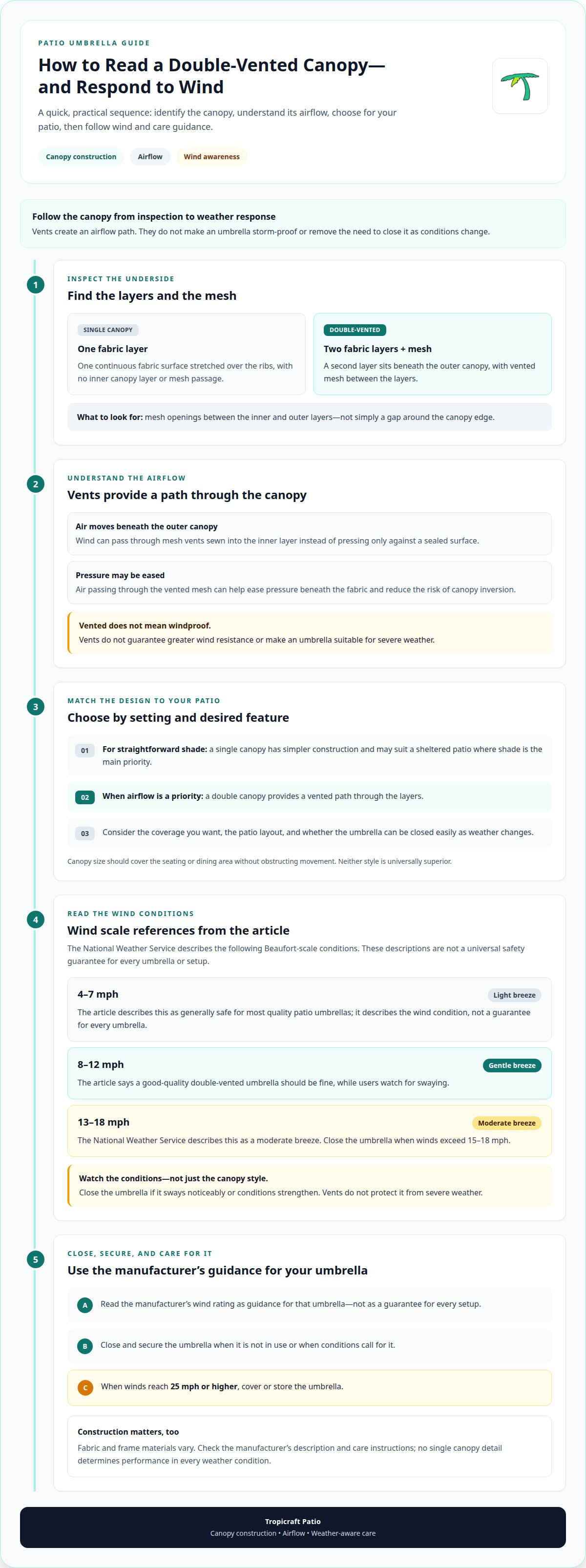
Comparing single and double canopies
A single canopy has one fabric layer stretched over its ribs; a double canopy has two layers separated by vented mesh. This difference shapes how air moves through the umbrella. A double canopy provides a path for air to pass through, while a single canopy has no inner vented layer.
A double-canopy design can help ease pressure beneath the fabric and reduce the risk of inversion. A single canopy has simpler construction but no equivalent mesh passage. Neither design is windproof. For outdoor events, close and secure either umbrella when conditions strengthen rather than relying on vents or a sturdy frame alone.
One drawback of a double-vented canopy is its extra layer and mesh construction, which may not be necessary in every setting. If your patio is sheltered and shade is your main priority, a single canopy may suit your needs. If airflow is a priority, the double design provides a vented path. In either case, follow the manufacturer’s use and care guidance.
Compare the inside of each open canopy: one continuous fabric layer indicates a single design, while a second layer with mesh openings indicates a double design. Then consider your setting, desired coverage, and how easily you can close the umbrella as weather changes. These practical details matter more than treating either style as universally superior.
Choose by use: a single canopy for straightforward shade, or a double canopy when vented airflow is a desired feature. To discuss which construction suits your patio, talk through your canopy options.
Tropicraft Patio: Umbrellas
Tropicraft Patio offers umbrella options to consider alongside the needs and style of your outdoor space. When choosing between a single or double canopy, think about where you’ll use it, the coverage you want, and how the canopy fits your patio furniture and layout.
An umbrella can complete a relaxed setting with resin wicker, cast aluminum, or extruded aluminum furniture. Focus on the practical details that matter to your space, including the canopy’s construction and the manufacturer’s guidance for care and wind. This makes it easier to choose an option that supports comfortable outdoor living without treating any vented design as windproof.
For help considering your patio umbrella options, contact Tropicraft Patio.
Plan a More Considered Outdoor Space
Understanding what a double-vented umbrella canopy is can help you make an informed choice. Next, picture how shade will serve your outdoor space throughout the day. Consider where people gather, how the canopy fits your seating, and whether you can close it easily as the weather changes. A comfortable retreat depends on choices that work together, not on one feature alone.
As you plan your outdoor setting, consider how the umbrella will complement the materials and atmosphere around it. Resin wicker, cast aluminum, and extruded aluminum bring distinct looks to a patio, helping create a cohesive and welcoming space.
For thoughtful guidance as you plan your outdoor setting, connect with Tropicraft Patio. Choose a canopy that fits your seating area, and close the umbrella when changing weather calls for it.
Frequently Asked Questions
What is a double-vented umbrella canopy?
A double-vented umbrella canopy has two fabric layers and openings for ventilation. If you’re considering a replacement canopy, confirm that its shape, attachment points, and dimensions match the existing frame. A vented design alone doesn’t establish compatibility, and a canopy made for one frame may not fit another.
How does a double-vented umbrella canopy work?
The vented construction gives air beneath the canopy an exit path. This feature doesn’t replace the umbrella’s operating instructions. Open and close it as directed, and don’t force the crank or frame if movement feels obstructed. Smooth operation helps you manage shade as your patio needs change.
What are the benefits of a double-vented umbrella canopy?
Ventilation can be useful in an outdoor setting where airflow beneath the canopy matters. Consider how the umbrella will sit over dining or lounge furniture and whether its shade will serve the area you use most. Canopy design is one factor in choosing an umbrella, alongside fit and the product’s instructions.
Does a double-vented umbrella resist wind better than a single-vented umbrella?
Not necessarily in every setup. A canopy’s vent design alone doesn’t determine how the complete umbrella performs. For a fair comparison, consider models intended for similar placements, such as table-mounted or freestanding use, and read each manufacturer’s guidance for that setup. Don’t treat “vented” as a universal performance rating.
How does a double-vented canopy compare with a single-vented or ventless canopy?
The main distinction is the canopy’s ventilation design, but a model’s name may not reveal how it is constructed. When choosing an umbrella or replacement canopy, use the manufacturer’s product description to confirm its design and frame compatibility. Then weigh those details against your patio layout, preferred shade, and how you plan to use the space.
Comments