


Umbrella Fabric for Sun Protection: Compare UV Factors
The darkest canopy isn’t automatically the most comfortable choice for a sunlit patio. Color can influence UV protection, but the best umbrella fabric for sun protection is best judged by its UPF rating, not appearance alone.
It’s natural to consider a canopy’s color and material when creating a cool, inviting retreat. A UPF 50+ fabric blocks 98% or more of UV radiation, giving you a useful benchmark as you compare options.
This guide explains how fabric type, color, and UPF work together. You’ll also learn why brown, dark blue, and dark green are worth considering, and how to interpret UV protection factors when choosing an umbrella canopy.
Table of Contents
1. Treated canvas and recycled polyester
Treated canvas and recycled polyester can both be used for umbrella canopies. Their UV-blocking ability depends on the finished fabric, not simply its fiber name. Compare the UPF rating, weave density, and any applied treatment. A close weave leaves fewer openings for sunlight to pass through, while a coating may add a layer that reflects or absorbs radiation.
Outdoor conditions also affect fabric performance. Sunlight, moisture, and repeated use can damage a canopy over time, so review the care guidance and make sure the fabric is dry before storage. Recycled polyester describes the fiber source; it does not establish UV protection on its own. A stated UPF rating offers a more useful comparison.
There’s no single cost for a high-UPF sun umbrella: canopy size, frame construction, and fabric choice all shape the price. A reflective silver lining can redirect some radiation, while a dense weave limits rays passing between yarns. The Skin Cancer Foundation notes that shiny polyester can be highly protective because it reflects radiation.
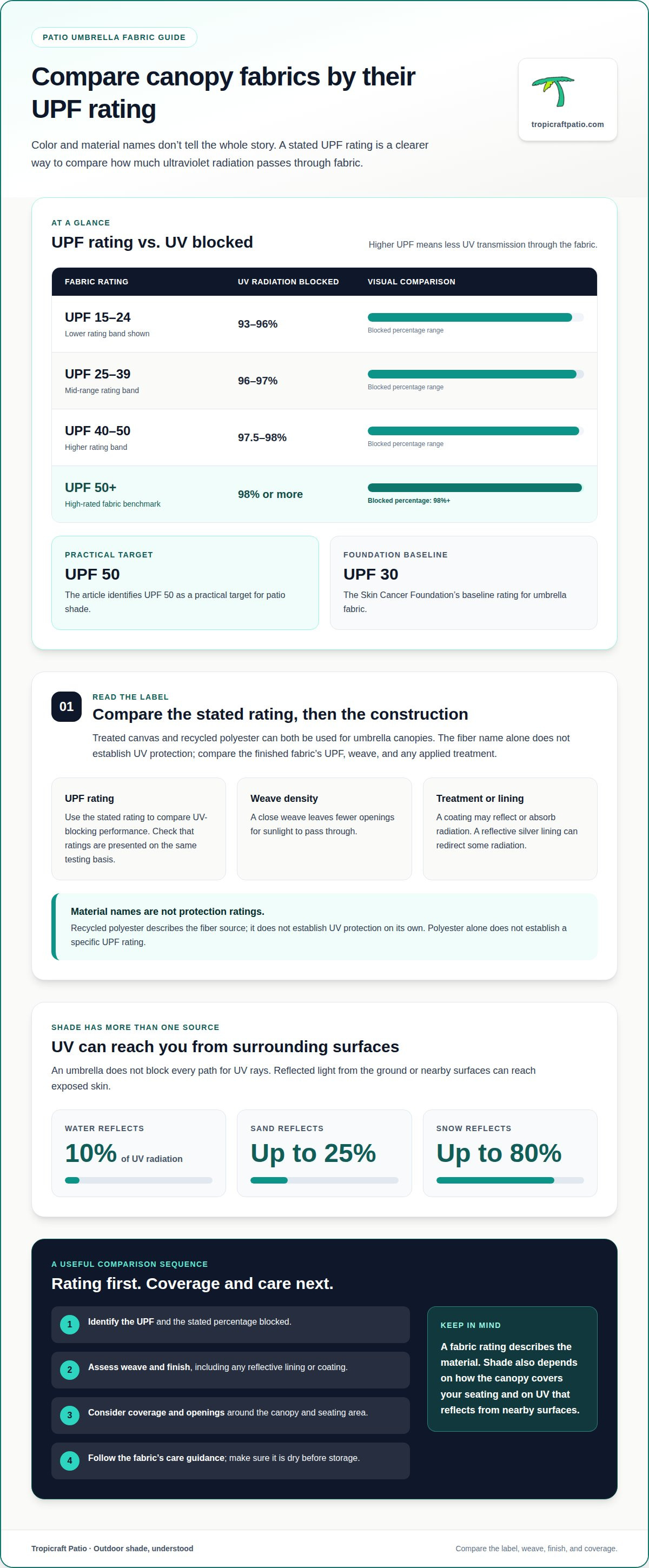
Yes, UV rays can reach you under an umbrella through gaps and reflection. Water reflects 10% of UV radiation, sand reflects up to 25%, and snow reflects up to 80%. Position the canopy to cover your seating area, and remember that reflected light can reach exposed skin from the ground or nearby surfaces.
For a practical comparison, start with the UPF label, then assess the weave and any reflective lining. This gives you a stronger basis for choosing fabric than color alone and helps distinguish recycled content from verified sun protection.
2. UPF ratings and UV-blocking percentages
UPF gives you a useful way to compare fabric resistance. A rating estimates how much ultraviolet radiation passes through the material; higher numbers mean less UV transmission. For summer shade, compare the canopy’s stated UPF rather than relying on color, fiber name, or appearance. Polyester alone doesn’t establish a specific rating.
The ratings distinguish meaningful levels of protection. UPF 15-24 fabric blocks 93-96% of UV radiation, while UPF 25-39 blocks 96-97%. UPF 40-50 blocks 97.5-98%, and UPF 50+ blocks 98% or more. The Skin Cancer Foundation’s baseline rating for umbrella fabric is UPF 30. These figures help compare materials, but the percentage is not the whole outdoor-shade picture.
For U.S. label claims, treat UPF as a fabric-performance rating, not proof of a particular regulatory approval. A number alone doesn’t identify the testing method. Look for the test basis on the label or product information, then compare ratings presented on the same basis. This matters when assessing a complete canopy, since coverage and gaps affect the shade you experience.
Use a simple comparison: identify the UPF, note the percentage blocked, and then consider how the canopy fits your seating area. UPF 50+ is a clear benchmark for high-rated fabric, while a lower rating allows more UV through. If you’re weighing fabric ratings alongside style and outdoor use, discussing umbrella choices can help clarify what best suits your space.
3. Fabric UV protection factor
A fabric’s UV protection factor describes how much UV radiation passes through its structure. Standard umbrella fabrics may provide only UPF 5-10, while UV-resistant fabrics typically allow 2-10% of UV rays through. To choose the best umbrella fabric for sun protection, compare the stated factor alongside weave and finish, rather than relying on material names alone.
For patio shade, UPF 50 is a practical target. The rating reflects the combined effect of materials, weave, color, and treatments, rather than one feature in isolation. During testing, fabric construction determines how much radiation can travel through its surface. A tight weave can limit openings, while reflective finishes can redirect some UV rays.
Durability, water resistance, and fading vary with the fabric and its finish. Solution-dyed acrylic, marine-grade fabrics, and treated polyester can repel water through coatings or tight weaves. PVC-coated polyester is the umbrella fabric option closest to waterproof, though outdoor fabrics aren’t completely waterproof like a solid surface. Sun exposure and weather can also affect color over time.
For maximum protection, use the stated factor as your starting point, then consider how the canopy will be used and maintained. A high rating describes the fabric, but shade also depends on coverage and openings around the canopy. Keeping the fabric clean and dry before storage helps preserve its condition; follow the care instructions for its specific materials.
Weigh the rating, durability, and weather resistance against your patio’s needs. Discuss umbrella fabric choices to find a suitable direction for your outdoor space.
Tropicraft Patio: Umbrellas
Once you’ve compared fabric ratings, weave, and color, explore umbrellas at Tropicraft Patio. For patios in Ardmore and Philadelphia, consider where people gather and how an umbrella will fit into the outdoor setting. Pairing shade with resin wicker or cast aluminum furnishings can help create a cohesive space.
As you narrow your options, consider how the canopy will serve your seating area and complement its surroundings. A well-chosen umbrella can provide practical shade and a polished finishing touch to outdoor spaces across the region.
For help exploring an umbrella for your outdoor space, contact Tropicraft Patio.
Shape a More Comfortable Outdoor Retreat
Choosing the best umbrella fabric for sun protection is one part of creating a shade plan that feels natural in your space. Consider where people gather, how the seating is arranged, and whether the canopy will provide useful coverage throughout the day. These details turn a technical fabric decision into a considered design choice.
Tropicraft Patio’s umbrellas complement resin wicker, cast aluminum, and extruded aluminum furnishings, bringing shade to a coordinated outdoor setting. Consider the balance of comfort, materials, and style you want your patio to offer, then choose pieces that support how you’ll use it.
Plan your shaded setting with Tropicraft Patio, and take the next step toward an outdoor retreat you’ll enjoy.
Frequently Asked Questions
What Are The Best Colors for UV Protection?
Color alone can’t identify the most protective canopy. Choose a fabric with a clear UV rating, then select a shade that suits your patio’s palette. You might coordinate the canopy with cushions or surrounding finishes, but don’t treat a deep color or heavy appearance as proof of protection. Let the fabric information guide your decision.
What Are The Best Fabrics for UV Protection?
Look for outdoor fabrics with a stated UV rating, then consider how the canopy will be used. An umbrella that stays outside through changing weather may call for fabric designed to repel water as well as limit UV transmission. Compare care guidance, too, to make sure the material fits the maintenance routine you prefer.
What is the Best Outdoor Umbrella Fabric?
The best fabric depends on the setting and your priorities. For a dining space, consider how much of the table and chairs the canopy covers. For an umbrella near a pool or garden, think about moisture exposure and the fabric’s care needs. Choose a canopy that balances shade, weather resistance, and the look of your outdoor furnishings.
What umbrella fabric blocks the most UV radiation?
Choose a fabric with the highest clearly stated UV protection rating among the options you’re comparing. Don’t rely on thickness, opacity, or a dark appearance to judge performance. When comparing canopies in different colors, use the fabric’s protection information rather than assuming one looks more substantial or blocks more radiation.
How do UPF ratings measure umbrella sun protection?
UPF describes the ultraviolet protection provided by the fabric itself. It helps you compare canopy materials, but it doesn’t indicate how much of your patio an umbrella shades. For a practical choice, assess the fabric rating alongside the umbrella’s position and the area you want covered, such as a dining table or lounge chairs.
Comments