


Furnishing a screened-in porch for comfort and easy flow
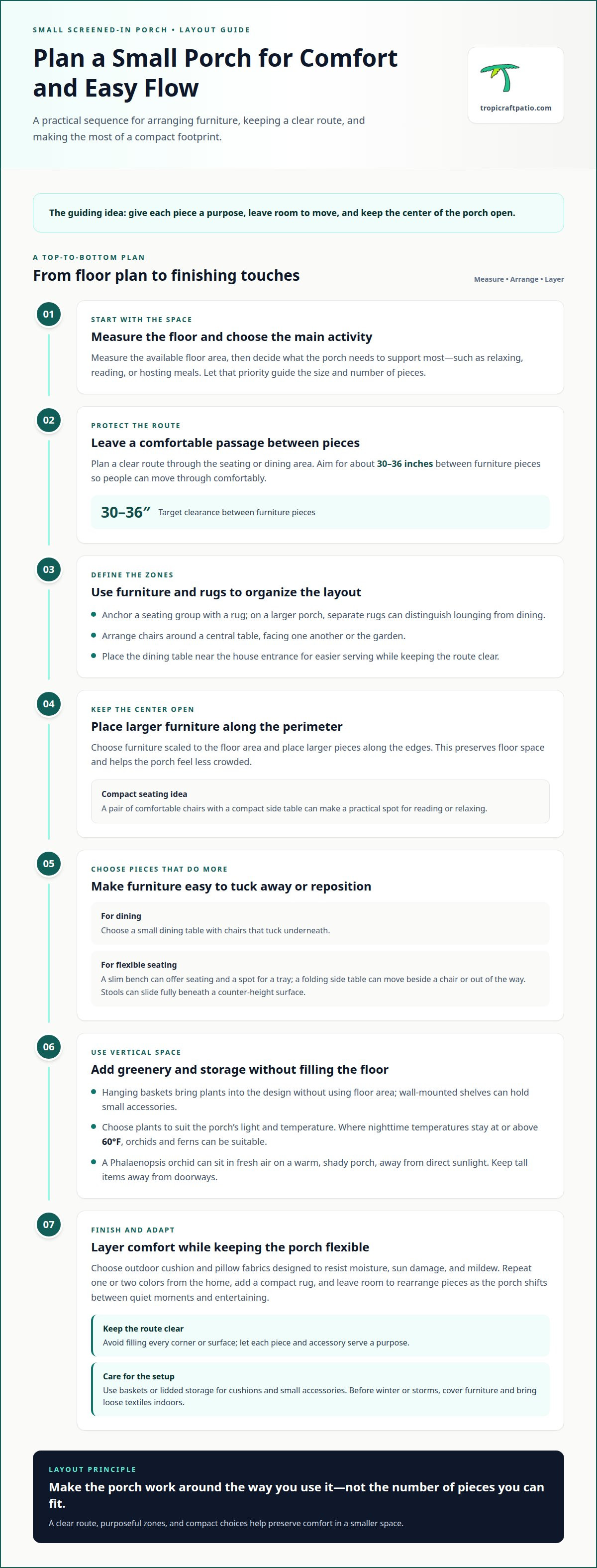
A smaller screened-in porch doesn’t need less comfort; it needs a more considered layout. When furnishing a screened-in porch, begin by measuring the available floor area and planning a clear route through each seating or dining zone. Aim to leave about 30-36 inches between furniture pieces so people can move through comfortably. The goal isn’t to fill every corner, but to give each piece a purpose.
It’s understandable to worry that a compact porch will limit how you use the space. Thoughtful furniture placement, inviting textiles, and greenery can make it feel welcoming while leaving room to move through. This guide covers practical layouts, decorative layers, and compact pieces that help create a comfortable retreat with an easy flow.
Table of Contents
1. How should you arrange a screened-in porch?
Start by deciding what each part of the porch needs to support. A rug can anchor a seating group, add warmth and texture, and visually separate it from a dining area. On a larger porch, use separate rugs to define lounging and dining zones without adding walls. Choose colors that complement the home’s exterior for a cohesive look.
Arrange chairs around a central table, facing the garden, fireplace, or one another. Place the dining table near the house entrance for easier serving, while preserving a clear route between dining and seating. For entertaining, group stools with a bar-height surface and position any screens where seated guests can see them. Keep fireplaces clear of dining traffic so guests can move comfortably.
Furniture costs depend on porch size, the number of pieces, and the materials you choose. A dining set, lounge seating, and accessories require a different budget from a few chairs and a small table. Common outdoor furniture materials include teak, cedar, eucalyptus, aluminum, and synthetic resin. For cushions and pillows, choose outdoor fabrics designed to resist moisture, sun damage, and mildew.
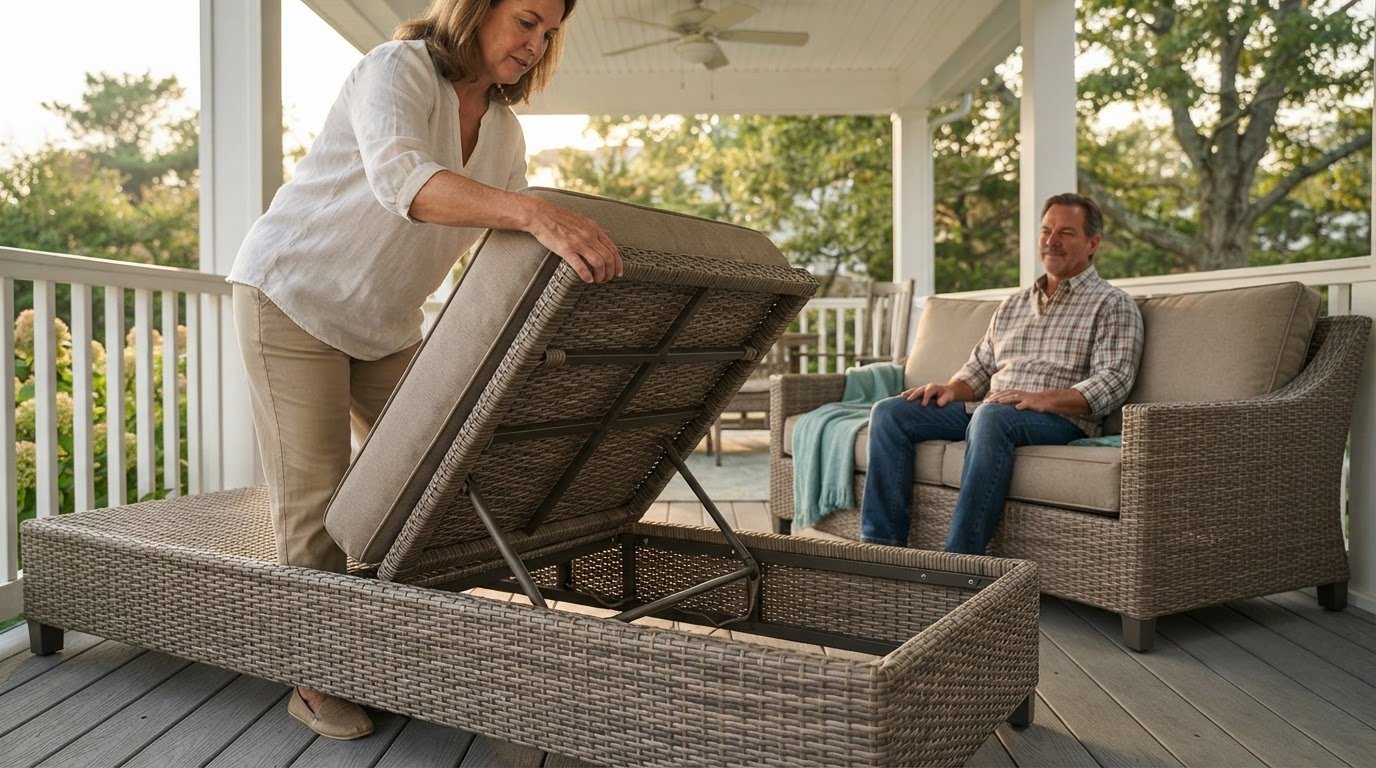
Permit requirements depend on local rules and the work involved. Arranging loose furniture differs from adding electrical features, so consult your local building department before construction or electrical upgrades. Layer overhead lighting with table lamps or string lights, and have a qualified electrician plan and install wiring, fans, and outlets. Use baskets or lidded storage for cushions and small accessories. Before winter or storms, cover furniture with protective covers and bring loose textiles indoors.
2. Adding textiles, greenery, and decorative accessories
When furnishing a screened-in porch, use textiles to connect indoor comfort with outdoor living. Choose cushion and pillow fabrics designed to resist moisture, sun damage, and mildew. Repeat a color from the home’s exterior in cushions or curtains, then add contrast with smaller accents. Curtains or shades can soften daylight, provide privacy, and give the porch a more composed look.
Choose a decorative style that complements the home’s architecture. A traditional home might pair subtle stripes with woven textures, while a modern exterior can suit crisp solids and sculptural planters. Keep bold patterns to a few pieces, such as pillows, and balance them with solid colors. This helps keep the view beyond the screens in focus.
Plants add natural texture, but their placement should suit the porch’s light and temperature. Where nighttime temperatures stay at or above 60 degrees Fahrenheit, humidity-loving orchids and ferns can be suitable. A Phalaenopsis orchid can sit in fresh air on a warm, shady porch, away from direct sunlight. Hanging baskets bring greenery to a compact space without using floor area.
For a final layer, place a ceramic planter near a chair or arrange a small tray on a side table. A ceiling fan can circulate air when the breeze is insufficient. Let accessories complement the textiles and plants while serving a purpose, rather than filling every surface. For help selecting details that suit your space, get in touch.
3. Furnishing a small porch with compact, multifunctional pieces
For a small screened porch, choose outdoor furniture scaled to the floor area and your main activity. A pair of comfortable chairs and a compact side table can create a practical spot for reading or relaxing. If you regularly host meals, consider a small dining table with chairs that tuck underneath. Choose pieces that suit your routine without blocking the route through the porch.
Keep the center of the room open by placing larger furniture along the perimeter. A slim bench against one wall can provide seating and a spot for a tray, while a folding side table can move beside a chair or out of the way. For entertaining, choose stools that slide fully beneath a counter-height surface. These choices preserve floor space and make the porch feel less crowded.
Think vertically before adding more furniture. Hanging baskets bring plants into the design without taking up floor space, while wall-mounted shelves can hold small accessories. If the ceiling can accommodate a fan, it can circulate air when the breeze is insufficient. Keep tall items away from doorways, and arrange seating so guests can converse comfortably.
Echo one or two colors from the interior to create a visual connection with the home. Outdoor cushions add warmth and comfort, while a compact rug can soften the area beneath a small seating group. Choose pieces that can be rearranged easily as the porch shifts from quiet mornings to entertaining. Plan your compact porch furniture around the way you want to use the space.
Tropicraft Patio
Tropicraft Patio can help you turn a screened porch into a comfortable outdoor retreat. When choosing furniture for a compact footprint or coordinating seating and dining areas, consider your room’s proportions and how you plan to use it. Explore resin wicker, cast aluminum, and extruded aluminum to find a look that suits your home and entertaining style.
Consider which pieces will support your everyday routines, how much room guests need to move, and which materials suit the porch’s setting. With those priorities clear, it’s easier to narrow furniture choices without crowding the path or compromising comfort. Contact Tropicraft Patio to discuss furniture for your screened porch.
Shape a porch that feels like your own
Let the porch evolve with the way you use it. A favorite book, a morning coffee ritual, or an evening gathering can guide finishing touches and make the space feel distinctly yours.
As you continue furnishing a screened-in porch, think beyond the initial arrangement. Leave room to adjust the layout, so the setting can shift naturally between quiet moments and time with guests.
Plan your porch with Tropicraft Patio and take the next step toward an outdoor retreat that feels like home.
Frequently Asked Questions
How should you arrange a screened-in porch?
Arrange it around the activity you use most, and give less frequent tasks a smaller footprint. If you enjoy morning coffee, a small tray and side table can keep essentials close without making the porch feel like a dining room. For a hobby space, reserve a surface for books or craft supplies, then store them together when the activity is finished.
How should you measure and arrange furniture on a screened-in porch?
Measure the route furniture must travel from the delivery entrance to its final position, including tight turns and screen-door openings. A piece may fit on the porch but still be difficult to bring inside. Record the widest points of bulky furniture, such as a chair arm or tabletop, and compare them with the narrowest part of the access route.
Which outdoor rugs, cushions, and fabrics are best for screened porches?
Choose care instructions that suit how you use the porch. Removable cushion covers can simplify routine cleaning, while a rug pad should be appropriate for both the rug and porch flooring. Avoid arrangements that trap moisture beneath textiles, and let pieces dry fully after cleaning. These simple habits help maintain a polished appearance between seasonal cleanings.
What are the best furniture options for small screened-in porches?
Consider stackable chairs or a nesting table if you sometimes need more open floor space. Bring them out for guests and store them together afterward, rather than keeping them in place. Flexible furniture can adapt to changing everyday needs.
What are typical costs to furnish a screened-in porch?
Costs depend on porch size, the number of pieces, and the materials chosen. A dining set, lounge seating, and accessories require a different budget from a few chairs and a small table.

Comments