


Vitamin D & Immunity: Tips for Philadelphia Outdoor Living
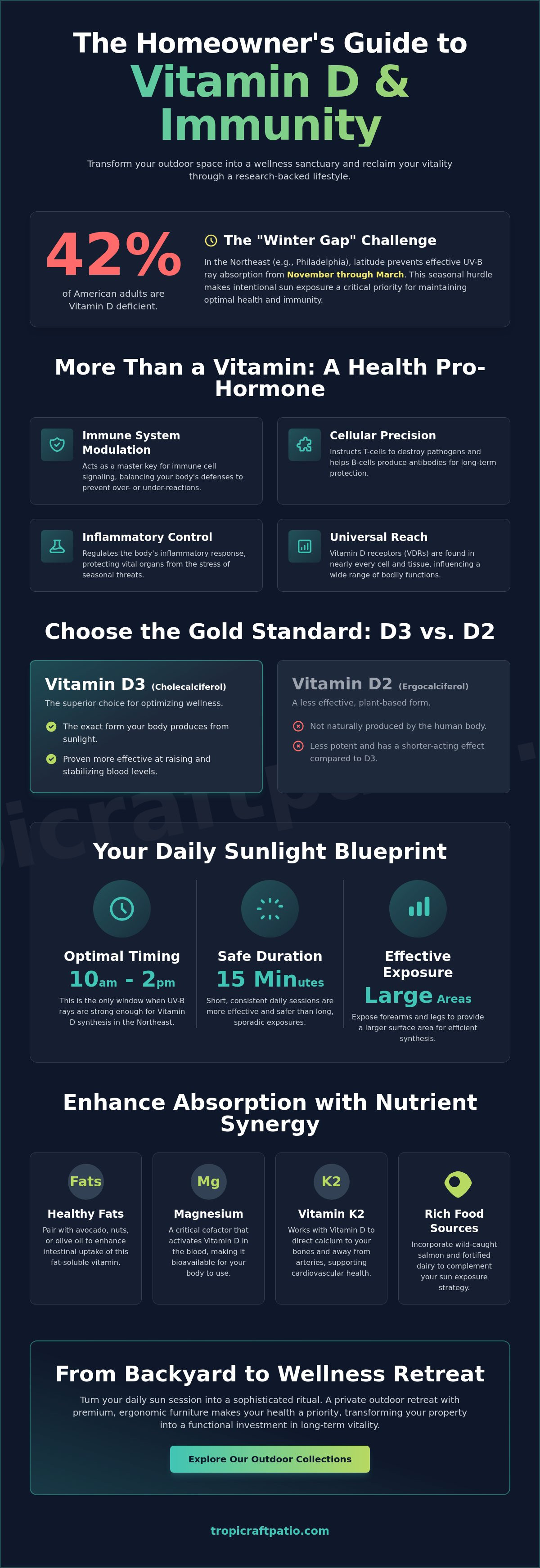
With approximately 42% of American adults falling below the deficiency threshold, many homeowners are looking for natural ways of increasing Vitamin D absorption for immunity rather than relying solely on supplements. You've likely felt that familiar dip in energy as the Philadelphia seasons shift, leaving you to wonder if a capsule can truly replace the restorative power of a sun-drenched afternoon. It's a common struggle to balance a demanding schedule with the physical need for natural light.
This guide reveals how to reclaim your vigor through research-backed lifestyle shifts and the creation of a sophisticated outdoor retreat. We'll examine the specific window for UV exposure in the Northeast and provide a luxury blueprint for a private sanctuary that transforms your backyard into a functional investment in your long-term health.
Key Takeaways
Learn how Vitamin D functions as a vital pro-hormone to balance your immune system and strengthen your body’s natural defenses.
Identify the precise midday window for UV-B exposure and why healthy fats are essential for increasing Vitamin D absorption for immunity.
Explore how to design a private outdoor retreat that serves as a functional wellness sanctuary for daily restorative sessions.
Understand how premium materials and ergonomic design turn a brief sun session into a sophisticated daily ritual.
Table of Contents
The Science of Vitamin D: How Proper Absorption Fortifies Your Immune System
Vitamin D is far more than a simple nutrient; it's a fat-soluble pro-hormone that acts as a master key for your biological health. Within the sophisticated architecture of the human body, this molecule is essential for complex immune cell signaling. It essentially instructs your defense systems to operate with surgical precision.
Scientific studies regarding Vitamin D and the immune system highlight its role in "immune modulation." This process helps the body maintain a delicate internal balance. By focusing on increasing Vitamin D absorption for immunity, you're fine-tuning your body's ability to strengthen natural defenses against external threats while preventing the overreactions that lead to chronic inflammation.
For those residing in the Mid-Atlantic, the "Winter Gap" is a significant biological hurdle. From November through March, Philadelphia’s specific latitude prevents UV-B rays from reaching the intensity required for natural skin synthesis. This makes increasing Vitamin D absorption for immunity a critical priority for homeowners who view their health as their most valuable asset.
Universal Reach: Vitamin D receptors (VDRs) are located in nearly every tissue in the body, influencing everything from cardiovascular health to cognitive function.
Cellular Precision: It allows T-cells to identify and destroy pathogens while ensuring B-cells produce the necessary antibodies for long-term protection.
Inflammatory Control: By regulating the body's inflammatory response, adequate levels help protect vital organs from seasonal stress.
Vitamin D3 vs. D2: Which Matters for Immunity?
Vitamin D3, known as cholecalciferol, is the gold standard for those seeking to optimize their wellness. It's the exact form your body produces when sunlight interacts with your skin. Research consistently shows that D3 is more effective than D2 at raising serum levels and keeping them stable throughout the year.
The Consequences of Deficiency in the Mid-Atlantic
Philadelphia’s geographical position means the UV Index often falls below the threshold needed for Vitamin D production during the cooler months. This deficiency is closely linked to an increased risk of seasonal respiratory issues. Understanding these environmental limits is the first step toward creating a lifestyle that prioritizes resilience and vitality.
Strategic Ways to Increase Vitamin D Absorption for Lasting Immunity
Living in the Philadelphia area or spending summers on the Jersey Shore presents unique seasonal challenges. As the sun’s angle shifts, your strategy for increasing Vitamin D absorption for immunity must become more intentional. Timing is everything. Midday exposure between 10 AM and 2 PM is the only period when UV-B rays are strong enough to trigger synthesis during the shoulder seasons.
To support this biological process, consistency is vital. Regular exposure allows your body to build a "buffer" of Vitamin D stored within fatty tissues. This reserve acts as a natural safeguard during the darker winter months. You can further optimize this by focusing on three key factors:
Healthy Fats: Always pair Vitamin D-rich meals with avocado, nuts, or olive oil to enhance intestinal uptake.
Magnesium Support: This mineral is a critical cofactor that activates Vitamin D in the blood; without it, the hormone remains stored and inactive.
Routine Consistency: Short, daily sessions are more effective for long-term storage than sporadic, lengthy sun exposure.
Optimizing Your Sunlight Exposure Safely
The "15-Minute Rule" is a cornerstone of a healthy outdoor lifestyle. Brief, consistent sessions provide the necessary UV-B signals without the risks associated with prolonged exposure. For the best results, expose your forearms and legs. This provides a larger surface area for synthesis, allowing your body to produce what it needs efficiently while you relax in a comfortable setting.
Dietary Synergies and Bioavailability
Bioavailability is the proportion of a nutrient that enters circulation to have an active effect. To maximize this, incorporate wild-caught salmon and fortified dairy into your menu. Experts at the Harvard T.H. Chan School of Public Health have extensively documented how vitamin D helps control infections by modulating the body's inflammatory response. Additionally, ensure your intake includes Vitamin K2. This nutrient is essential for directing calcium toward your bones and away from your arteries.
If you are ready to refine your home environment to better support your wellness goals, we invite you to speak with our design consultants about creating a functional outdoor sanctuary.
Creating a Private Retreat: Optimizing Your Outdoor Space for Vitamin D Synthesis
Your outdoor environment is more than an extension of your home; it's a dedicated wellness sanctuary. By intentionally designing your patio for increasing Vitamin D absorption for immunity, you transform a leisure area into a vital health asset. Biophilic design principles suggest that surrounding yourself with natural textures and fresh air reduces cortisol and enhances the body’s receptivity to restorative sunlight.
Investing in premium materials like Teak and Poly Lumber ensures your sanctuary remains inviting year-round. These materials offer the weather resistance required for the Philadelphia climate while providing the tactile elegance that encourages you to step outside daily. A well-curated space removes the friction between your busy schedule and your physical need for light.
Designing for the "Wellness Hour"
To capture the peak UV-B window discussed earlier, place deep-seated Resin Wicker chaises in areas with direct southern exposure. Comfort is the key to consistency. When your seating is ergonomically designed, a 20-minute sun session becomes a highlight of your day rather than a chore. For those seeking professional guidance on how to get more Vitamin D safely, remember that once your synthesis window is met, adjustable Cantilever Umbrellas provide a seamless transition to protective shade.
Extending the Season in Philadelphia and the Jersey Shore
Don't let the cooler autumn air drive you indoors prematurely. Incorporating fire pits and high-quality cushions allows you to maintain your outdoor wellness habits well into the crisp months of October and November. These elements provide the warmth needed to linger outdoors, ensuring you don't miss the final opportunities for natural increasing Vitamin D absorption for immunity before the winter gap begins. We invite you to visit our Ardmore showroom to experience the craftsmanship and comfort of these wellness-supporting pieces firsthand.
Elevate Your Wellness with a Custom Outdoor Sanctuary
Optimizing your health is a multifaceted journey that begins with your immediate surroundings. By understanding the biological timing of UV-B rays and pairing your sun exposure with strategic dietary choices, you're taking proactive steps toward increasing Vitamin D absorption for immunity. Transforming your patio into a functional wellness retreat ensures these restorative habits become a seamless and sophisticated part of your daily life.
Since 1977, our family-owned business has helped homeowners across the Philadelphia area and the Jersey Shore invest in long-lasting comfort and quality. We invite you to visit our 20,000-square-foot showroom in the historic Ardmore Theatre to experience our curated collections firsthand. With white-glove delivery and installation available throughout the Main Line, your transition to a luxury outdoor lifestyle is handled with expert care. Explore our luxury outdoor collections to create your wellness sanctuary today and begin your journey toward a more vibrant, resilient lifestyle.
Frequently Asked Questions
How much sun exposure do I need for Vitamin D absorption?
Most individuals require approximately 10 to 30 minutes of direct sunlight three times a week to maintain healthy levels. This duration varies based on your skin sensitivity and the current UV index in the Mid-Atlantic region. Prioritizing these brief sessions is a foundational step for increasing Vitamin D absorption for immunity without risking skin damage. It's best to expose your arms or legs to maximize the surface area available for synthesis.
Can I get Vitamin D through a window or glass door?
No, you cannot synthesize Vitamin D through a window or glass door because standard glass blocks nearly all UV-B radiation. While you may feel the warmth of the sun through a pane, the specific wavelengths required to trigger pro-hormone production are filtered out. To effectively support your health goals, you must step into your outdoor sanctuary and experience direct, unfiltered light rather than relying on indoor sunspots.
Does wearing sunscreen completely block Vitamin D production?
High-SPF sunscreen can significantly reduce Vitamin D production, but real-world studies show that most people still synthesize the nutrient during typical outdoor activities. While SPF 30 blocks about 97% of UV-B rays, incomplete application or the specific timing of your sun session often allows for some synthesis. Balancing skin protection with brief periods of direct exposure is a nuanced approach to increasing Vitamin D absorption for immunity while maintaining long-term skin health.
What is the best time of day in Philadelphia to get Vitamin D from the sun?
The optimal time for Vitamin D synthesis in Philadelphia is during the midday window, typically between 10 AM and 2 PM. During these hours, the sun is at its highest point, providing the direct UV-B rays necessary for your skin to produce the nutrient efficiently. Outside of this specific window, or during the deep winter months, the angle of the sun prevents effective natural production regardless of the temperature or sky clarity.


Comments