


Solar Powered Umbrella Lights for Cloudy Days and Patios
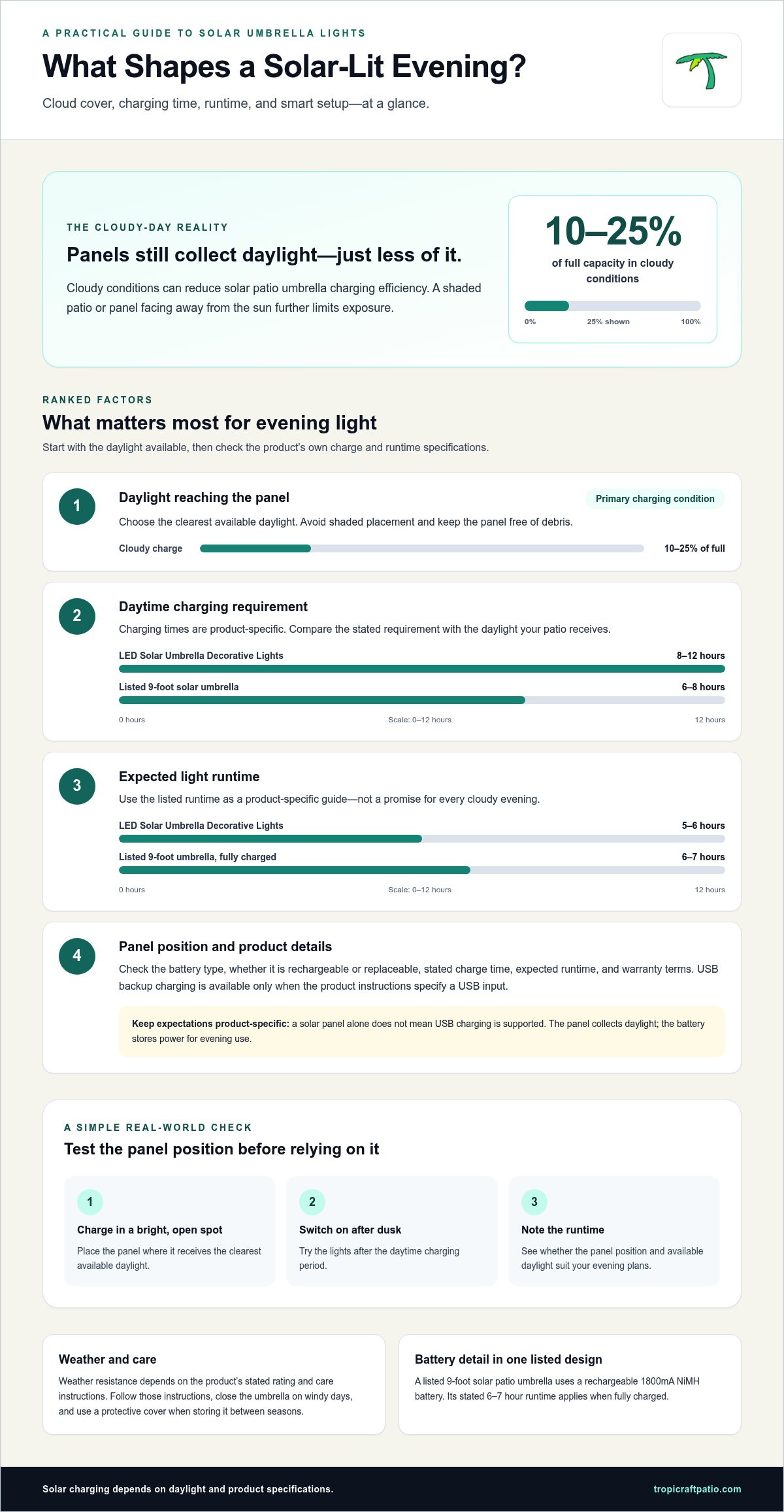
Solar powered umbrella lights can still charge on cloudy days, but cloudy conditions can reduce solar patio umbrella charging efficiency to around 10-25% of full capacity. Solar-powered LED umbrella ribs are designed to illuminate for up to 6 hours on a single charge, though limited sunlight can affect how much power is available that evening.
It’s natural to wonder whether solar lighting will charge reliably under overcast skies or whether another design would suit your patio better. This guide explains how cloud cover affects charging, compares integrated umbrella lights with add-on strands, and covers positioning and installation. You’ll get a clearer idea of what to expect and how to create a softly illuminated setting for evenings outdoors.
Table of Contents
Solar charging on cloudy days
Cloudy conditions can reduce solar patio umbrella charging efficiency to around 10-25% of full capacity. A panel still collects daylight, but a shaded patio or a panel facing away from the sun limits its exposure. For better charging, position the panel where it receives the clearest available daylight, then keep it free of debris.
Charging and runtime vary by design. LED Solar Umbrella Decorative Lights require 8-12 hours of daytime charging and provide 5-6 hours of light. A 9-foot solar patio umbrella’s panel should charge for 6-8 hours before use; its rechargeable 1800mA NiMH battery runs for 6-7 hours when fully charged. Treat these as product-specific figures, not a promise for every cloudy evening.
USB backup charging is useful only when the product instructions specify a USB input. If it does, use the recommended cable and power source. A solar panel alone does not mean USB charging is supported: the panel charges in daylight, while the battery stores power for evening use.
Are solar umbrella lights waterproof and safe to leave outdoors? Not necessarily. Weather resistance depends on the product’s stated rating and care instructions. Follow them, and close the umbrella on windy days to help prevent damage.
Before buying, check the battery type, whether it’s rechargeable or replaceable, stated charging time, expected runtime, and warranty terms. For example, compare the 1800mA NiMH battery details with your typical patio use; warranty coverage varies by product, so read its terms before purchase.
For a practical first test, place the panel in a bright, open spot to charge. After dusk, switch on the lights and note how long they run. This helps you judge whether the panel’s position and the available daylight suit your evening plans.
Solar-powered patio umbrella designs
The best solar-powered umbrella lights match the canopy and the atmosphere you want. Integrated options keep illumination attached to the umbrella: listed designs include a 7.5-foot model with 18 LEDs, a 9-foot Tiki-style umbrella with 33 LEDs, and a 9-foot umbrella with 40 LEDs plus a wrap-around center light.
For an existing umbrella, choose a separate strand set. One design has 8 strands and 112 LEDs, while another has 200 warm-white LEDs on clear wire, with bulbs spaced 2 inches apart. The first can suit an even, decorative glow; warm-white strands create a softer look. Check attachment points and wire reach against your umbrella’s ribs before choosing.
Solar lights charge from daylight and avoid a cord running to an outlet. Battery-powered lights can suit a shaded patio if you can replace or recharge their batteries; plug-in lights need nearby power but don’t rely on solar charging. The right choice depends on your patio’s sunlight, outlet access, and preferred setup; explore the outdoor furniture collection for umbrella options that suit your space.
In the United States, prices vary by design: an integrated solar umbrella and a separate light set are different purchases. To compare brightness, look at LED count and placement, then consider the area you want to illuminate. A dining table benefits from light spread around the canopy, while accent strands can create a softer decorative effect. Lumens allow direct brightness comparisons, but some product listings provide LED counts instead.
Before settling on a style, sketch where the panel, strands, and seating will sit. For help considering an umbrella and lighting arrangement for your patio, discuss your patio setup.
Installation
Begin with the umbrella closed and the solar panel accessible. For separate strands, attach each run along the ribs, keeping wires clear of joints and moving parts. A tape measure helps center the strands and check their reach before fastening. The decorative light set’s solar panel has a 12-inch lead wire, so plan its position within that distance.
Install the umbrella securely before opening it. A listed 9-foot patio umbrella calls for a base weighing at least 50-70 pounds. Separate installation guidance recommends a cross base and sandbags weighing at least 100 pounds for stability. These figures apply to their respective setups, so match the base arrangement to the umbrella design.
Use a screwdriver to tighten any light clips or fasteners without pinching the wiring.
Position the solar panel where it receives daylight, then make sure the cable stays clear as the canopy opens and closes.
Open and close the umbrella slowly once, checking that strands remain attached and wires don’t snag.
For a 9-foot umbrella, consider the space around its canopy before placing the table and chairs. A listed design suits 42-54-inch round, square, or rectangular tables and 4-6 chairs. Keep the crank, tilt button, and walking paths unobstructed. Close the umbrella on windy days to help avoid damage, and use a protective cover when storing it between seasons.
Planning a patio layout around an umbrella? Discuss your patio setup and how it can accommodate comfortable seating and evening lighting.
Tropicraft Patio: Resin Wicker
Tropicraft Patio helps bring seating and shade together in a comfortable outdoor setting. When planning patios in Ardmore, Philadelphia, King of Prussia, or Villanova, consider how furniture and umbrella placement will work with the space.
Resin wicker adds a textured, welcoming look to a lounge area. Cast and extruded aluminum offer distinct styles for dining or conversation spaces. These materials can help create a cohesive retreat, whether you’re furnishing a home in Margate, Ventnor, Stone Harbor, Avalon, or Cape May.
Turn to Tropicraft Patio when refreshing your patio or choosing seating to complement your umbrella. Contact Tropicraft Patio to discuss your outdoor space.
Shape Your Patio for Evenings Outdoors
Think of lighting as one part of a complete outdoor setting. Decide how you want the patio to feel, from a quiet reading corner to a welcoming place to gather after sunset. Solar powered umbrella lights can help set the mood, while complementary seating makes the space feel considered and comfortable.
Tropicraft Patio offers resin wicker, cast aluminum, and extruded aluminum furniture, giving you distinct material choices for your outdoor retreat. Consider which option suits your preferred look and how you use the space. A thoughtful mix of seating, shade, and gentle illumination can keep the patio inviting after daylight fades.
Ready to plan a setting that feels like your own? Contact Tropicraft Patio to discuss your patio, and take the next step toward evenings outdoors that feel truly restorative.
Frequently Asked Questions
How do solar umbrella lights attach to different umbrella poles and ribs?
Attachment depends on whether the lights are integrated or sold separately. For a hub-mounted unit, measure the umbrella pole and compare it with the product’s stated fit. For integrated lighting, make sure the umbrella frame is designed for that system. These checks help prevent a loose fit or an installation that obstructs the opening mechanism.
How long do solar umbrella lights run on a full charge?
Runtime on a full charge varies by model and lighting mode. If a set offers steady and flashing modes, check the stated duration for the one you plan to use. A relaxed dinner may call for consistent illumination, while flashing effects can add a decorative accent. Switch off the lights when the patio is empty to preserve charge for later.
How long do solar umbrella lights take to charge, and do they need direct sunlight?
Charging time varies by model, so follow the product instructions rather than comparing different designs. Direct sun isn’t essential, but panel exposure affects charging. Consider whether the canopy’s position or rotation might shade the panel during the day. Place it where nearby structures and foliage won’t block daylight for extended periods.
How do you install and maintain solar-powered umbrella lights?
After installation, periodically check for loose connectors, damaged insulation, or bulbs that no longer illuminate. Clean the panel gently with a soft cloth, following the product’s care instructions. Before storing the umbrella for an extended period, remove detachable lights if instructed and store each component as directed. Keeping the parts together also makes seasonal setup easier.
How much do solar-powered umbrella lights cost in the United States?