


Rattan vs Resin Wicker Furniture: Which is Best for Your Philadelphia Patio?
That beautiful, natural rattan chair you saw in a lifestyle magazine might be the quickest way to ruin your weekend retreat. You've likely spent hours envisioning a serene outdoor sanctuary where the textures of woven furniture invite you to linger over a morning coffee. It's common to feel confused by terminology or frustrated when a set you loved starts cracking after just one Philadelphia winter. We'll help you clarify the nuances of rattan vs resin wicker furniture so you can invest in a collection that remains stunning through coastal salt spray and heavy humidity.
You'll learn why high-density polyethylene (HDPE) is the gold standard for luxury and how to distinguish true craftsmanship from mass-market imitations. This guide explores the critical differences in durability and design to ensure your investment stands the test of time. By understanding these materials, you can curate a space that offers both timeless elegance and uncompromising performance.
Table of Contents
Understanding the Core Differences: Rattan vs Resin Wicker Furniture
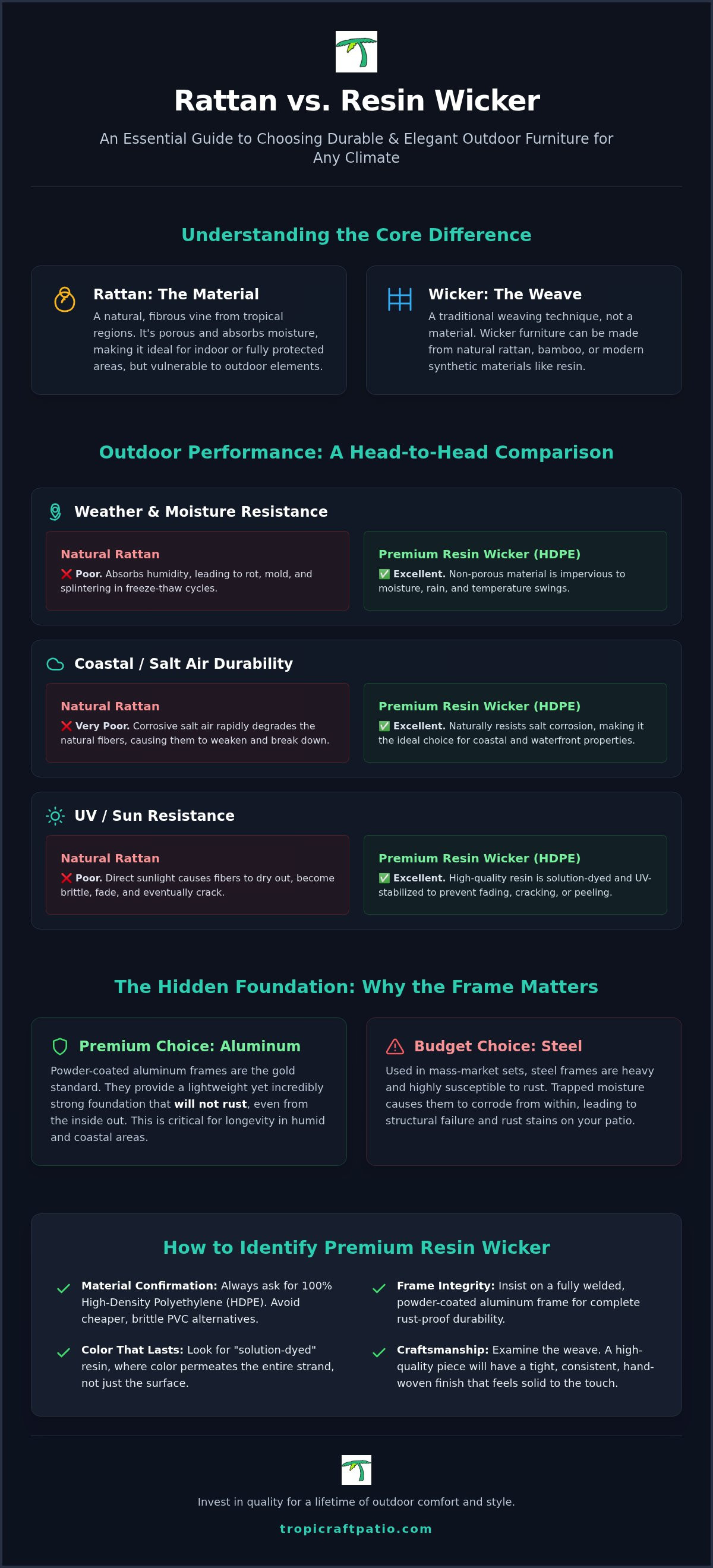
Natural rattan is a flexible, fibrous climbing vine native to tropical regions like Southeast Asia. Designers have long prized it for its warmth and organic texture, but there's a frequent point of confusion for homeowners. Rattan refers specifically to the material itself; wicker is a centuries-old weaving technique used to construct the furniture. When evaluating rattan vs resin wicker furniture, it's vital to recognize that most products labeled as "outdoor rattan" are actually synthetic materials designed to withstand the elements.
Material Composition: Natural Vine vs. High-Density Polyethylene (HDPE)
Natural vine is inherently porous. It absorbs moisture. This causes fibers to expand, which eventually leads to splintering, mold, and rot. This susceptibility makes it ideal for protected sunrooms but creates a significant risk for open patios. High-performance Resin wicker solves this by utilizing High-Density Polyethylene (HDPE). This synthetic material is specifically engineered to endure the rigors of outdoor exposure while mimicking the inviting look of natural fibers.
Luxury resin has undergone a remarkable aesthetic evolution. High-end collections now feature variegated tones, matte finishes, and complex textures that rival the visual depth of natural vine. You can often feel this difference in quality through physical, sensory engagement with the weave. By choosing premium resin wicker furniture, you're investing in a lifestyle of relaxation. The result is a sophisticated outdoor sanctuary that maintains its elegance through every season.
Durability and Weather Resistance in the Mid-Atlantic Climate
Philadelphia's climate presents a unique set of challenges for any outdoor investment. When weighing the choice of rattan vs resin wicker furniture, the regional freeze-thaw cycle is a critical factor. Natural rattan is organic. It absorbs humidity during our muggy summers. When winter arrives, that trapped moisture freezes and expands; this causes the fibers to splinter and rot. High-density polyethylene (HDPE) remains unaffected by these temperature swings.
The Impact of Coastal Exposure on Your Outdoor Sanctuary
Properties in Ventnor, Margate, and Cape May require materials that can withstand relentless salt spray. Salt air is notoriously corrosive. It quickly degrades natural vine and unprotected metals. Understanding the performance of rattan vs resin wicker furniture is essential for anyone living near the water. Choosing resin wicker outdoor furniture ensures your retreat remains pristine. Since HDPE is non-porous, it naturally resists salt corrosion and prevents the growth of mold.
Longevity also depends on what lies beneath the weave. Premium collections utilize powder-coated aluminum frames rather than steel. This creates an indestructible foundation that won't rust from the inside out. Luxury resins are also solution-dyed. This process infuses color throughout the material so it won't fade or peel under direct UV exposure. It's a sophisticated solution for those who value both aesthetics and endurance.
Creating a worry-free environment allows you to focus on social connection rather than maintenance. If you're ready to upgrade your patio, reach out to our expert team for personalized guidance on material selection. We'll help you find a set that thrives in your specific micro-climate.
Investing in Quality: How to Identify Premium Resin Wicker
Distinguishing high-end luxury from mass-market imitations requires looking beyond the surface. When comparing rattan vs resin wicker furniture, always prioritize High-Density Polyethylene (HDPE). Cheaper sets often use PVC, which lacks the necessary UV stabilizers. It becomes brittle and cracks after just one or two seasons in the sun. Structural integrity is equally vital. While budget brands use steel, premium collections utilize powder-coated aluminum. This prevents internal rust and ensures your investment remains a centerpiece of your sanctuary for years.
True luxury lives in the details. Hand-woven craftsmanship creates a tighter, more durable finish that machine-made pieces simply can't replicate. This artisanal approach results in a tactile quality you can feel. It transforms a functional piece into a lasting investment in your lifestyle of relaxation and social connection.
Maintenance and Care for a Lifetime of Leisure
One of the most rewarding aspects of high-performance resin is its effortless upkeep. Unlike the delicate care natural rattan demands, cleaning your set requires only mild soap and water. To safeguard your retreat during harsh Philly winters, we recommend using protective covers. This simple step preserves the luster of the weave and keeps your space ready for spring. We invite you to explore our diverse outdoor furniture lines at the historic Ardmore showroom. Stepping into our space allows you to experience the comfort and craftsmanship of our collections firsthand.
Elevate Your Outdoor Sanctuary
Selecting the right materials transforms a simple patio into a lasting personal retreat. Understanding the nuances of rattan vs resin wicker furniture allows you to choose pieces that defy the Philadelphia humidity and coastal salt spray. By prioritizing high-density polyethylene weaves and rust-proof aluminum frames, you're investing in a lifestyle of enduring comfort and social connection.
Our family-owned team has specialized in these high-performance materials since 1977. We invite you to experience the tactile quality of our collections at our 20,000 square foot Ardmore showroom. From the Main Line to the Jersey Shore, our white-glove delivery ensures your sanctuary arrives with the care it deserves. Explore our curated resin wicker collections at Tropicraft Patio and find the perfect foundation for your outdoor leisure. Your ideal retreat is closer than you think.
Frequently Asked Questions
Can natural rattan furniture be used outdoors in Philadelphia?
Natural rattan is poorly suited for open outdoor use in the Philadelphia climate. Because it's an organic vine, it absorbs moisture from our humid summers and then expands or contracts during winter freeze-thaw cycles. This leads to inevitable splintering and mold growth. While it's beautiful in a protected Villanova sunroom, it won't survive a single season on an exposed deck or patio.
Is resin wicker the same as plastic furniture?
While resin wicker is synthetic, it's vastly superior to standard injection-molded plastic furniture. Premium collections use high-density polyethylene (HDPE) that is hand-woven over durable, powder-coated aluminum frames. This process creates a sophisticated texture and structural integrity that cheap plastic cannot match. When comparing rattan vs resin wicker furniture, you'll find that luxury resin mimics the warmth of natural fibers without the flimsy feel of mass-market plastics.
How long does high-quality resin wicker furniture last?
High-quality resin wicker can easily provide over a decade of comfort and style. Sets constructed with HDPE and rust-proof aluminum frames are specifically engineered for longevity in environments like Avalon or Stone Harbor. These materials resist salt-air corrosion and UV degradation. With minimal maintenance and the use of protective covers during the off-season, your investment will remain a beautiful centerpiece of your outdoor sanctuary for fifteen years or more.
Does resin wicker furniture get hot in the sun?
Resin wicker remains remarkably comfortable even in direct sunlight. Unlike cast aluminum or steel, high-density polyethylene doesn't conduct heat efficiently, so the material stays cooler to the touch. The solution-dyed fibers also help maintain a stable temperature. Pairing your furniture with premium cushions and an umbrella from our Ardmore showroom ensures your retreat remains a cool, inviting space for relaxation during the peak of summer.


Comments