


How to Clean Cast Aluminum Patio Furniture: A Luxury Maintenance Guide
That white, chalky haze creeping across your cast aluminum patio furniture isn't just unsightly. It's a warning sign that your outdoor investment is quietly losing the battle against the Mid-Atlantic's relentless humidity, freeze-thaw cycles, and occasional salt air. For homeowners with cast aluminum patio furniture on the Main Line PA, the instinct to grab a household cleaner and scrub aggressively is understandable. It's also one of the fastest ways to strip a precision-engineered powder coat finish you can't easily restore.
You already know this furniture was built to last. The weight, the craftsmanship, the intricate detailing pressed into every frame - it's not the kind of piece you replace on a whim. That's exactly why it deserves a cleaning approach as considered as the investment itself.
This guide gives you a clear, safe protocol for removing oxidation, scuff marks, and seasonal grime without compromising the finish. You'll learn which products to trust, which to avoid entirely, and how a consistent maintenance routine keeps your set looking showroom-quality for decades in Pennsylvania's demanding climate.
Table of Contents
The Essentials of Cast Aluminum Care: Tools, Solutions, and pH Balance
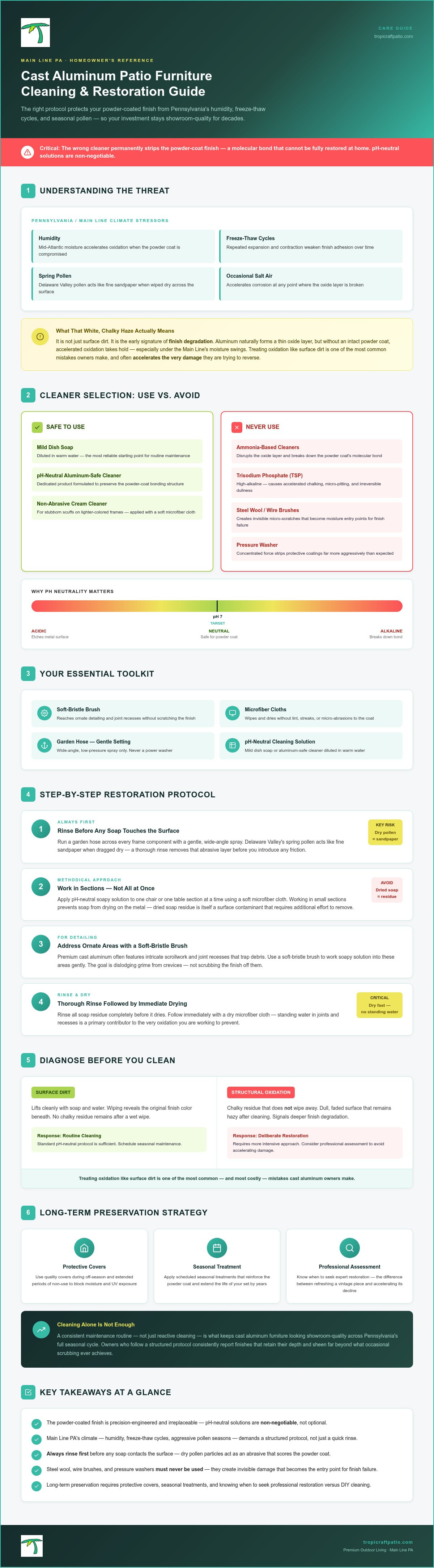
Cast aluminum earns its reputation through a combination of structural integrity and surface precision. The intricate scrollwork and weighted frames that define premium pieces are protected by a powder-coated finish that's baked on under heat, bonding to the metal at a molecular level. That finish is what stands between your furniture and the Main Line's humidity. Compromise it, and you're not just dealing with cosmetic damage.
Understanding the properties of aluminum alloys helps explain why that finish matters so much. Aluminum naturally forms a thin oxide layer when exposed to air, which offers some corrosion resistance. But without an intact powder coat, accelerated oxidation takes hold, especially in climates with significant moisture swings. That chalky white surface you're seeing? It's not just surface grime. It's the early signature of finish degradation.
The chemistry behind cleaner selection is straightforward but frequently overlooked. High-alkaline solutions, including common household cleaners containing ammonia or trisodium phosphate (TSP), disrupt the oxide layer and begin breaking down the powder coat's bonding structure. The result is accelerated chalking, micro-pitting, and a dull finish that no amount of buffing will fully restore. pH-neutral cleaning solutions aren't a preference; they're a structural requirement.
Choosing the Right Cleaning Agent
For routine maintenance on cast aluminum patio furniture on the Main Line PA, a solution of mild dish soap diluted in warm water remains the most reliable starting point. It's gentle enough to preserve the finish while cutting through pollen, bird residue, and seasonal grime effectively. For stubborn scuffs on lighter-colored frames, a non-abrasive cream cleaner applied with a soft microfiber cloth can lift surface marks without scoring the coating.
Avoiding Abrasives and Harsh Tools
Steel wool and wire brushes are non-negotiable exclusions from your cleaning kit. Even light-gauge steel wool introduces micro-scratches that are invisible to the naked eye but create channels where moisture collects and sits. Over time, those micro-scratches become the entry points for finish failure. The same logic applies to pressure washers; the concentrated force strips protective coatings on high-end finishes far more aggressively than most homeowners expect.
Your essential toolkit should include:
Soft-bristle brushes for reaching ornate detailing and joint recesses
Microfiber cloths for wiping and drying without leaving lint or micro-abrasions
A standard garden hose with a gentle spray setting, not a pressure washer
pH-neutral dish soap or a dedicated aluminum-safe cleaner diluted in warm water
Before you begin cleaning, take a moment to assess what you're actually dealing with. Surface dirt lifts cleanly with soap and water. Structural oxidation, identified by a chalky residue that doesn't wipe away, signals deeper finish degradation that requires a more deliberate restoration approach rather than routine cleaning. Treating oxidation like surface dirt is one of the most common mistakes owners of cast aluminum outdoor furniture make, and it often accelerates the very damage they're trying to reverse.
A Step-by-Step Guide to Restoring Your Aluminum Patio Set
With the right tools confirmed and your finish assessed, the actual restoration process is more methodical than strenuous. Think of it less as cleaning and more as a structured ritual, one that rewards patience with results that hold through Pennsylvania's full seasonal cycle. Owners of cast aluminum patio furniture on the Main Line PA who follow this sequence consistently report finishes that retain their depth and sheen far beyond what occasional scrubbing ever achieves.
Step 1: Rinse first, always. Before any cleaning solution touches the surface, run a garden hose across every frame component using a gentle, wide-angle spray. The Delaware Valley's spring pollen season is particularly aggressive, and dry pollen particles dragged across a powder-coated surface by a cloth act like fine sandpaper. A thorough rinse removes that abrasive layer before you introduce any friction.
Step 2: Work in sections, not all at once. Apply your pH-neutral soapy solution to one chair or one table section at a time using a soft microfiber cloth. Working in small sections prevents the soap from drying on the metal, which leaves its own residue and can dull the finish over time, particularly on darker powder-coat colors where dried soap streaks are most visible.
Step 3: Address oxidation with precision. For chalky spots that didn't lift during the soap phase, a 1:1 solution of white vinegar and water applied with a soft cloth targets the alkaline deposits responsible for that hazy buildup. White vinegar's mild acidity neutralizes the oxidation without disrupting the powder coat beneath. Work the solution in small circular motions, rinse immediately, and don't let it sit longer than two minutes on any single area.
Step 4: Seal the work with wax. This is the step most guides skip entirely, and it's the one that separates a surface-level clean from genuine protection. A thin coat of high-quality automotive paste wax, buffed to a light sheen with a clean microfiber cloth, creates a UV-resistant barrier that slows future oxidation and repels moisture. According to university-backed outdoor furniture care guidelines from Purdue University Extension, protective wax coatings applied to metal outdoor furniture surfaces meaningfully extend finish integrity when reapplied on a seasonal schedule. Apply in the shade, never in direct sun, so the wax doesn't cure unevenly before you can buff it.
The Jersey Shore Protocol: Neutralizing Salt Air
For homeowners who split their time between the Main Line and coastal properties in Avalon or Stone Harbor, salt air introduces a separate maintenance demand. Salt crystals that form on metal surfaces as moisture evaporates are highly corrosive; left unchecked, they begin etching the powder coat within weeks during peak summer humidity. A bi-monthly freshwater rinse, not a full cleaning session, just a thorough hose-down, is enough to flush crystalline salt deposits before they bond to the finish. Early signs of salt-induced pitting include small, rough-textured spots that catch light differently than the surrounding surface. Catch them at that stage and they're manageable. Wait until they've darkened or deepened, and you're looking at a professional restoration conversation. If you're uncertain whether what you're seeing is surface salt or deeper pitting, reaching out to an outdoor furniture specialist for an assessment is a smart first step before attempting any intervention.
Drying Techniques to Prevent Water Spotting
Rinsing and walking away is one of the most common finishing mistakes. Main Line tap water carries mineral content that leaves calcium and magnesium deposits as it evaporates, those faint white rings and spots that reappear even after a careful clean. Hand-drying every surface with a chamois or lint-free microfiber towel immediately after rinsing eliminates that risk entirely.
Hollow frame components deserve specific attention. Many cast aluminum sets feature tubular legs or arm supports with small drainage gaps. Tipping each piece at a slight angle after rinsing allows trapped water to drain out rather than pooling internally, where it accelerates corrosion from the inside out, invisible until structural damage is already underway.
Long-Term Preservation: Protection and Professional Care
Cleaning restores. Protection preserves. That distinction matters enormously for anyone who's invested in cast aluminum patio furniture on the Main Line PA, where the climate doesn't pause between seasons to let your furniture recover. The step-by-step restoration protocol covered earlier is only half of the equation. What happens between cleanings determines whether your set looks distinguished or diminished five years from now.
The Role of High-Quality Protective Covers
Breathable covers are the single most underutilized tool in outdoor furniture care. Non-breathable vinyl traps condensation against the powder coat through Philadelphia's freeze-thaw cycles, creating exactly the moisture environment you're trying to prevent. A properly fitted, breathable cover does the opposite: it shields against debris, UV exposure, and precipitation while allowing airflow that keeps the surface dry. Homeowners who cover their sets consistently between uses report significantly fewer deep cleaning sessions each season, because the surface simply accumulates less of the grime and oxidation that requires intensive treatment.
Tropicraft carries protective covers sized and designed for the aluminum collections they carry, which matters more than it sounds. An ill-fitting cover pools water at low points and creates friction against the finish on windy days. Precision fit eliminates both problems.
Seasonal Maintenance Schedule
Two moments in the calendar deserve your full attention:
Pre-winter: Complete a final deep clean using EPA-approved safer cleaning ingredients, apply a fresh coat of automotive paste wax, and cover the set before the first hard frost. This seals the finish at its cleanest point and gives it the strongest possible foundation for winter storage.
Early spring: Remove covers and inspect every joint, weld point, and hollow component for signs of moisture intrusion or surface chalking that developed under cover. Address any spots before the entertaining season begins, not after.
Cushion Care and Frame Integration
One frequently overlooked hazard: cleaning the frame while cushions are still in place. Soap runoff and rinse water that saturates cushion fabric and foam creates mildew conditions that no amount of sun-drying fully resolves. Remove cushions before any wet cleaning begins. If you've invested in custom outdoor cushions, treat them as a separate care category entirely, with their own cleaning protocol suited to the specific fabric.
When Professional Restoration Makes Sense
Surface cleaning has limits. When powder coat failure has progressed beyond chalking into visible pitting, flaking, or exposed metal, no household remedy closes that gap. Vintage sets with intricate casting detail are often worth professional assessment rather than aggressive DIY intervention. A specialist can evaluate whether the finish can be stabilized or whether a full restoration is warranted. For cast aluminum dining furniture with significant sentimental or monetary value, that conversation is worth having before the damage deepens.
A well-maintained set doesn't just look better. It holds its value, requires fewer replacements, and continues anchoring the kind of outdoor environment that makes a Main Line property genuinely distinctive. That's the return on a consistent, considered care routine: not just furniture that lasts, but a space that endures.
Ready to build a maintenance routine around pieces worth protecting? Connect with the Tropicraft team to explore collections and care recommendations tailored to your outdoor space.
Your Furniture Deserves Care That Matches Its Craftsmanship
Cast aluminum patio furniture on the Main Line PA faces a climate that tests even the most precisely engineered finishes. What this guide has walked you through isn't just a cleaning protocol; it's a complete framework for protecting a long-term investment. The right tools, pH-neutral solutions, and a seasonal rhythm of cleaning and waxing are what separate furniture that ages gracefully from a set that quietly deteriorates between uses.
Three things worth carrying forward: pH balance isn't optional, it's the foundation of every safe cleaning decision. Protection matters as much as cleaning, and breathable covers earn their keep through Pennsylvania's full seasonal cycle. And when surface damage moves beyond what household care can address, professional assessment is the smarter call.
Since 1977, Tropicraft has guided Main Line homeowners toward pieces built to last and helped them keep those pieces looking their best. Voted best of Philly for outdoor luxury, with white-glove delivery across the region, the team brings genuine expertise to every conversation.
Explore our premium cast aluminum collections at our Ardmore showroom and let's build an outdoor space worth protecting for decades to come.
Frequently Asked Questions About Cast Aluminum Patio Furniture on the Main Line PA
Can I use a pressure washer on my cast aluminum furniture?
No. Pressure washers concentrate far more force than powder-coated finishes are designed to absorb, and even a single pass on a high-end frame can strip the protective coating in ways that aren't immediately visible. What looks like a quick, efficient clean often initiates finish failure that shows up weeks later as chalking or dull patches.
A standard garden hose with a wide-angle, gentle spray setting is the right tool for the job. It removes pollen, debris, and surface grime without the concentrated pressure that compromises the molecular bond between the powder coat and the aluminum beneath it.
How do I remove white chalky residue from my aluminum chairs?
That chalky film signals oxidation, not simple surface dirt, so treating it like ordinary grime won't resolve it. A 1:1 solution of white vinegar and water applied with a soft microfiber cloth targets the alkaline deposits responsible for the haze. Work in small circular motions, rinse within two minutes, and dry immediately to prevent water spotting.
If the chalking persists across large sections or feels rough and pitted rather than smooth, you're likely looking at deeper finish degradation rather than surface oxidation. At that stage, a professional assessment is worth pursuing before any further DIY intervention accelerates the damage.
Is it safe to leave cast aluminum furniture outside during a Philadelphia winter?
Cast aluminum itself won't rust, and it handles freeze-thaw cycles better than most outdoor materials. That said, leaving it fully exposed through a Philadelphia winter without protection isn't a care strategy worth taking with a quality investment. Moisture that pools in joints or hollow frame components can expand during freezing and stress the structure over multiple seasons.
The practical approach is a final deep clean before the first hard frost, a fresh coat of automotive paste wax to seal the finish, and a properly fitted breathable cover through the off-season. That combination protects the powder coat from UV degradation, debris abrasion, and the moisture cycling that gradually degrades even the most precisely engineered finishes.
What is the best wax to use on powder-coated patio furniture?
A high-quality automotive paste wax is the most reliable choice for protecting powder-coated cast aluminum. It creates a UV-resistant barrier that slows oxidation and repels moisture without introducing any chemicals that conflict with the finish chemistry. Apply it in a shaded area so it doesn't cure unevenly in direct sun, then buff with a clean microfiber cloth to a light sheen.
Avoid spray waxes that contain silicone or petroleum distillates, as these can leave residue in ornate detailing and attract dust more aggressively over time. Reapplying wax on a seasonal schedule, once before winter storage and once at the start of the entertaining season, is what keeps cast aluminum patio furniture on the Main Line PA looking its best through years of Pennsylvania's demanding climate.


Comments