


High-density foam for outdoor cushions: compare foam types
Indoor foam can stay wet for days after rain soaks it. High-density foam for outdoor cushions offers support and typically resists wear and shape loss better than lower-density foam. For seating exposed to frequent rain, quick-dry foam lets water drain through and dry faster. Choose based on how you use the furniture and how much weather it faces.
A cushion that feels comfortable at first can become damp, flattened, or unsupportive outdoors. Choose by balancing comfort and support with exposure: covered seating has different needs from a lounge area open to rain. This guide compares standard, high-density, memory foam blend, and quick-dry foam, then explains how to match firmness to dining chairs, sofas, and lounge seating. You’ll be better equipped to choose materials suited to your outdoor space and preferred comfort.
Table of Contents
Why does regular foam fail in outdoor cushions?
Indoor foam can stay wet for days after rain soaks patio cushions, making outdoor seating uncomfortable. Foam density, structure, sizing, and protection all affect how cushions perform outside.
Density and Shape Retention
Density helps indicate how well foam resists wear and retains its shape. Higher-density foam is typically more durable than lower-density foam, according to the U.S. Environmental Protection Agency. For everyday patio seating, high-density foam can provide support and hold its shape longer than standard indoor foam. Check density and firmness separately: supportive seating depends on foam suited to your needs and a cushion that fits the furniture. Custom shapes can be made from dimensions or a template to fit curved seats and unusual outdoor frames.
Foam Structure and Cushion Thickness
Open-cell foam lets water pass through and dries faster than traditional foam, making it a better choice for cushions exposed to regular rain. Closed-cell foam is not the same as quick-dry foam, so consider whether the cushion’s design allows drainage and airflow. For thickness, dining and occasional chair seats should be at least 2 to 3 inches; lounge chair and sofa seats should be 4 to 5 inches. Deep-seat back cushions should be 4 inches thick.
Outdoor cushion foam costs in the United States depend on dimensions, thickness, foam type, and whether the shape requires a template. A custom marine cushion with angled corners, for example, needs a different cut from a standard rectangle.
To help protect foam from rain, mold, and mildew, pair outdoor-appropriate fabric with a protective cover and allow airflow around cushions after wet weather. Fabric helps shield foam from moisture, dirt, and UV exposure, while drainage reduces the chance of water remaining trapped inside.
For custom outdoor cushions, visit a patio-furniture showroom that carries cushions and pillows. Bring the seat measurements or a paper template for curved or marine seating so the cushion can be shaped to fit the frame.
Choosing cushion firmness by use
Match firmness to how each seat is used, then consider density for durability. Weather exposure and seating comfort both affect the right choice.
Firmness Levels by Use
Higher-density foam is typically more durable than lower-density foam, according to the U.S. Environmental Protection Agency. Density and firmness describe different qualities, so a denser cushion is not automatically firmer. Choose density for shape retention, then select firmness to suit the seat and the people using it.
A dining chair used for upright meals may feel best with balanced support, while a lounge seat may call for a softer, more relaxed feel. Consider expected weight and moisture exposure, too. A four-inch cushion with the correct density and ILD compresses to approximately two inches under load, illustrating why both support and firmness matter.
Foam Firmness and ILD
ILD measures how much force it takes to compress foam, making it a useful guide to firmness. Low-ILD foam, rated 10-25, feels soft and plush; medium-ILD foam, rated 25-40, offers a balanced feel. High-ILD foam at 40+ feels firm and supportive.
Available outdoor options include Soft at 25 ILD, Medium at 33 ILD, and Firm at 45 ILD. For a seat shared by different people, Medium offers a middle ground; choose Firm when a more supportive feel matters. A fabric cover affects the finished cushion’s feel, but doesn’t replace choosing the right ILD. Antimicrobial treatments also don’t determine firmness or substitute for managing moisture and mold and mildew.
For help weighing seating use and exposure, discuss your cushion requirements before settling on a firmness.
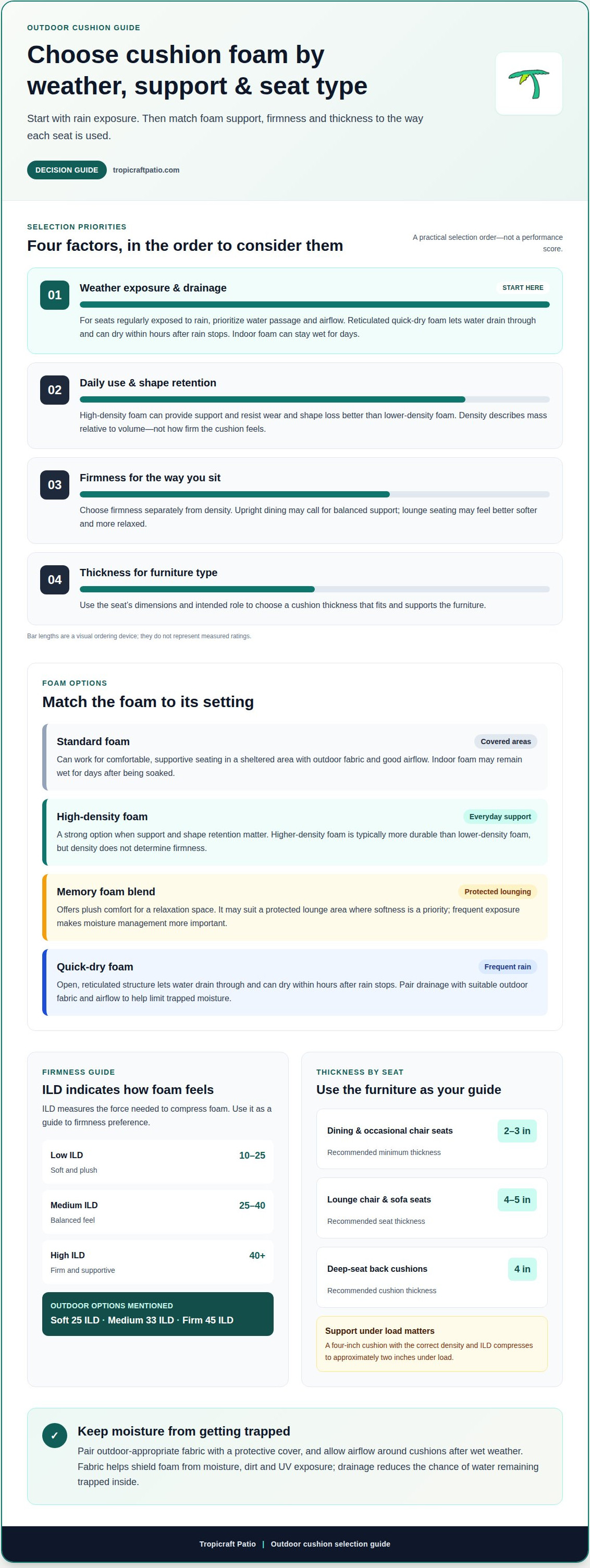
Comparing standard, high-density, memory foam blend, and quick-dry foam
Each foam type balances comfort, support, and moisture management differently. The right fit depends on whether seating is sheltered, regularly exposed to rain, or designed mainly for relaxation.
Standard foam: Indoor foam can remain wet for days after rain soaks it. Standard outdoor foam suits covered areas, where it provides comfortable, supportive seating. In a sheltered dining nook, it can work well with outdoor fabric and good airflow.
High-density foam: Higher-density foams are typically more durable than lower-density foams, according to the U.S. Environmental Protection Agency. High-density foam for outdoor cushions can suit everyday seating when shape retention matters. Density describes the foam’s mass relative to its volume, not how firm it feels.
Memory foam blend: A memory foam blend offers plush comfort for relaxation spaces. It may suit a protected lounge area where softness is a priority, while regular exposure to the elements makes moisture management more important.
Quick-dry foam: Reticulated foam lets water drain through and can dry within hours after rain stops. For seats frequently exposed to rain, high-density foam for outdoor cushions can be paired with quick-dry construction when drainage is essential. Outdoor fabric and airflow help limit trapped moisture and mildew.
High-resilience foam describes recovery after compression; density is a separate characteristic. The U.S. District Court for the Northern District of Ohio notes that high-resilience foam can have different densities. Compare both qualities, prioritizing drainage in wet locations and lasting support for daily use.
For help choosing foam for your outdoor seating, discuss your cushion needs.
Tropicraft Patio: Cushions & Pillows
Tropicraft Patio offers cushions and pillows to complete your outdoor seating arrangement. For a patio refresh in Ardmore, Philadelphia, Ventnor, Margate, Stone Harbor, Avalon, King of Prussia, Cape May, or Villanova, consider how you use the space and how the cushions fit the setting.
Cushions can complement outdoor furniture styles, including Resin Wicker, Cast Aluminum, and Extruded Aluminum. Bringing these choices together can help create a cohesive setting for dining or relaxing.
Contact Tropicraft Patio to discuss your outdoor seating needs and the style you envision.
Shape an outdoor space around the way you live
Think beyond a single seat: cushion comfort can influence how long guests linger, where conversation gathers, and how inviting your patio feels throughout the day. Let your routine guide the details, from relaxed reading to shared meals, and choose materials suited to the space’s weather exposure. With a clear idea of the comfort you want, you can make high-density foam for outdoor cushions part of a considered seating plan, rather than treating it as a stand-alone replacement.
Tropicraft Patio can help you explore cushions and pillows alongside outdoor furniture for a cohesive setting. Contact Tropicraft Patio to discuss the feel and style you’re envisioning. A thoughtful choice can make your patio a more welcoming place to unwind and gather.
Frequently Asked Questions
What is CertiPUR-US certification, and does it matter for outdoor foam?
CertiPUR-US is a certification label for foam, but the label alone does not establish whether foam suits outdoor use. For patio cushions, consider the setting and how the foam handles moisture and drainage. Covered seating and a rain-exposed lounge have different needs, so prioritize outdoor suitability alongside any certification when comparing options.
Which firmness should I choose?
Choose firmness according to how you use the seat and the feel you prefer. For upright dining or frequent everyday seating, a more supportive feel may suit the posture; for a lounge chair used for reading, a softer feel can be more inviting. If several people share the furniture, balanced firmness can accommodate different preferences without feeling overly plush or rigid.
What foam firmness and ILD are recommended for outdoor seating?
For a balanced outdoor seat, Medium at 33 ILD is a practical starting point. Soft at 25 ILD suits a plusher feel, while Firm at 45 ILD provides a more supportive sit. These are firmness choices, not guarantees of outdoor durability. Match the feel to the seat’s purpose, then choose foam designed for its weather exposure.
How long does outdoor cushion foam last, and how should it be maintained?
With a good cover and normal use, outdoor foam typically lasts 5 to 10 years. To help maintain it, remove cushions from standing water, let them dry fully after rain, and avoid storing them damp. Inspect seams and covers for damage; a compromised cover can expose the foam to moisture, dirt, and sunlight, affecting its condition over time.
Can indoor high-density foam be used outdoors if covered?
A cover can reduce direct exposure, but indoor high-density foam is not automatically suited to outdoor use. If rain reaches it or moisture becomes trapped, standard indoor foam can remain wet for days. A protected, covered setting reduces exposure, but consider airflow and drying before choosing foam for patio seating.