


Breathable Waterproof Furniture Covers for Outdoor Furniture
A cover should do more than keep rain off your patio furniture. A breathable, water-resistant cover is designed to repel liquid water while allowing water vapor to pass through, according to the United States Court of Appeals for the Federal Circuit. The right fit matters too: a cover that’s too small can leave surfaces exposed, while excess fabric may shift or bunch.
Choosing a cover with these protective qualities can help shield outdoor pieces from the elements, but finding the right fit takes more than matching a cover to a chair or table. Measure the furniture carefully so the cover can protect it without bunching or pulling across the edges.
Learn what to look for in a breathable waterproof cover, how to measure your furniture at its widest points, and how to choose a shape and size. These practical steps help you narrow your options to a cover that suits your furniture and patio routine.
Table of Contents
Why Should I Cover my Outdoor Furniture with Breathable Waterproof Furniture Covers?
A fitted cover helps shield outdoor furniture from rain, sun, and debris between uses. Choose a cover material and shape that suit the furniture and how exposed it is to the elements.
Protective Uses and Material Concerns
Table, chair, sofa, and umbrella covers help limit direct exposure to moisture and the elements. Outdoor fabrics from 300D to 600D and beyond are considered heavy duty and often used for outdoor gear. Fabric grade alone doesn’t determine climate suitability, so consider the patio’s exposure to sun, rain, and wind. For wicker seating, resin wicker furniture illustrates the varied frames a cover may need to accommodate. Keep wood, leather, and upholstery clean and dry before covering. Trapped moisture or rubbing from a tight cover can affect surfaces, so allow airflow and avoid a strained fit.
Maintenance, Storage, and Durability
A cover’s lifespan depends on sun exposure, wind, abrasion, and care. Regularly remove leaves and debris, and clean the fabric according to its care instructions. Let the cover dry fully before folding and storing it in a clean, dry place. This routine helps limit lingering moisture and wear. Adjustable fastenings can help keep a cover in place without pulling it tightly over furniture edges.
Breathable Fabric Versus Plastic
A breathable waterproof membrane can repel liquid water while allowing water vapor through, according to the United States Court of Appeals for the Federal Circuit. A microporous layer can let vapor escape while blocking liquid water, according to the United States District Court for the District of Colorado. Fully waterproof plastic blocks rain, but moisture may collect underneath when airflow is limited. Consider patio exposure and ventilation when choosing between cover types.
Cover fit, measuring, and custom sizing
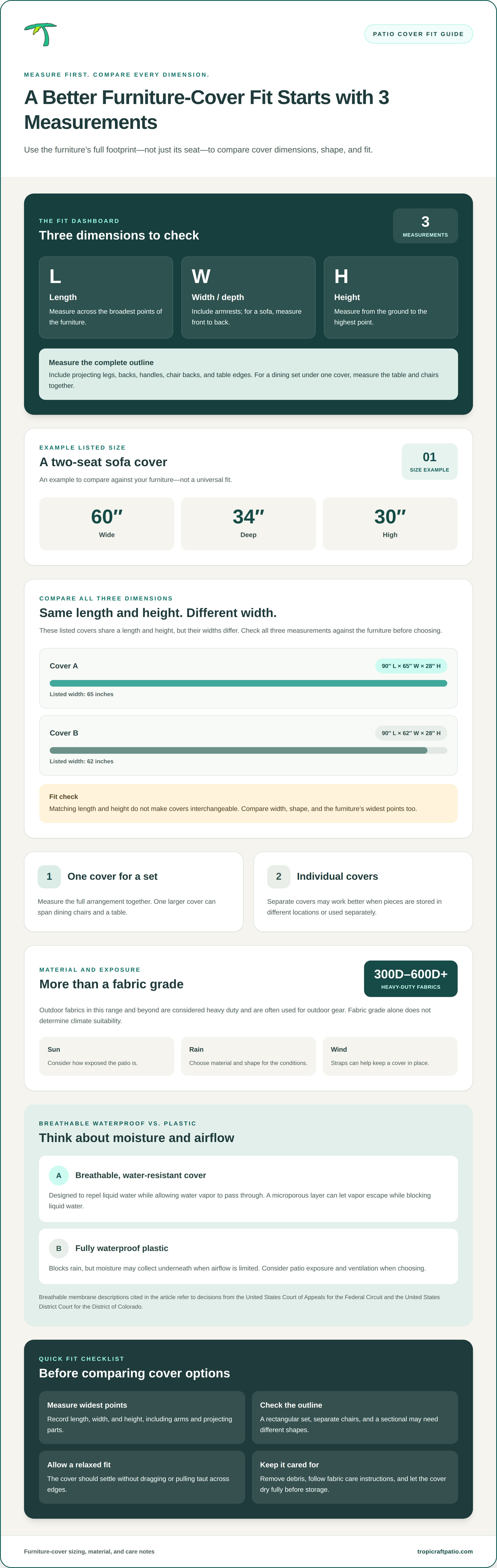
Measure the furniture’s full footprint, not just its seat. Record the length, width, and height at the widest points, including armrests. If one cover will go over a dining set, measure the table and chairs together. Note any projecting legs, backs, or handles that could catch the fabric.
Use a consistent method:
Measure the patio table’s length and width across its broadest points.
Measure height from the ground to the highest point.
For sofas, record width across the arms and depth from front to back.
Allow room for the cover to settle without dragging or pulling taut.
A listed two-seat sofa cover measures 60 inches wide, 34 inches deep, and 30 inches high. Treat that as an example, not a universal fit. Patio furniture covers vary by shape, so compare all three dimensions before selecting a standard size. Custom sizing may suit unusual frames, attached dining benches, or a patio table with an extended top. Confirm that the chosen fabric and construction match the furniture’s exposure.
Customer reviews are most useful when they discuss a similar furniture shape and share measurements. Look for comments about fit, movement in wind, moisture, and mildew, rather than relying on “excellent” as a standalone rating. For guidance using your measurements, discuss your cover-fit questions. Clear dimensions help make that conversation more specific, whether the cover is polyester or another fabric.
Furniture cover sizes and fit
A cover’s dimensions indicate the space it can cover. Compare its length, width, and height with the furniture’s widest points, then consider the shape. A rectangular dining set may need a different cut from separate chairs or a sectional, even if they take up similar patio space.
Two listed covers show why width matters: one measures 90 inches long, 65 inches wide, and 28 inches high; another measures 90 inches long, 62 inches wide, and 28 inches high. The matching length and height don’t make them interchangeable. Check all three measurements against the furniture, including chair backs, armrests, and table edges.
For a multi-piece set, decide whether you want one cover for the whole arrangement or individual covers for each piece. One large cover can span dining chairs, while separate covers may work better if you store pieces in different locations. Measure a sectional’s full outline, not just one seat. This helps avoid uncovered areas and excess fabric that can catch the wind or shift.
Consider how the cover will stay in place through changing weather. Straps can help secure it, while a shape tailored to the set can reduce loose fabric. For winter storage, allow the cover to sit without stretching tightly over corners. A durable, water-resistant cover still depends on a suitable fit and secure placement. The furniture’s frame can also inform the cover’s outline, as seen in resin wicker outdoor furniture styles.
Tropicraft Patio: Protective Covers
Tropicraft Patio offers protective covers for outdoor furniture. For resin wicker, cast aluminum, or extruded aluminum pieces, use the furniture’s shape and measurements to guide your selection. Choose a cover for the full arrangement or an individual piece, and account for arms, backs, and table edges.
A well-chosen cover is a practical addition to an outdoor retreat, helping shield furniture between gatherings. Bring your measurements and furniture details into the decision, especially if your set includes pieces with varied shapes. For help considering Protective Covers alongside your patio furniture, contact Tropicraft Patio.
Make Cover Care Part of Your Patio Routine
Make cover care part of your outdoor routine. Before leaving the patio unused for a while, clear away loose debris, let damp surfaces dry, and place each cover smoothly over its furniture. When you uncover the patio, remove the covers and air them before storing. This simple habit helps keep your space ready for the next morning or shared meal.
Tropicraft Patio offers resin wicker, cast aluminum, and extruded aluminum furniture. To plan how you’ll use covers, note which pieces stay outside between gatherings and which you move or use regularly. Keeping covers accessible for the furniture you want protected makes it easier to prepare the patio when plans change.
For help with your next step, contact Tropicraft Patio about breathable waterproof furniture covers. A thoughtful plan can help you enjoy your outdoor space with greater ease.
Frequently Asked Questions
What materials make furniture covers both breathable and waterproof?
Breathable waterproof furniture covers use a water-repellent layer or membrane that lets water vapor pass through. A microporous waterproof layer can release vapor while blocking liquid water, according to the United States District Court for the District of Colorado. Since construction varies, compare the cover’s material description with how exposed your furniture is to weather.
How do breathable waterproof furniture covers prevent moisture buildup and mold?
Breathable covers let some water vapor escape rather than trapping it beneath a non-breathable barrier. This can help reduce moisture buildup, but it does not guarantee mold prevention. When practical, let wet furniture dry before covering it after rain. If a cover is damp inside, remove it and air both the cover and furniture before storing them.
What types of indoor and outdoor furniture are these covers designed for?
These covers are intended for outdoor furniture, with shapes suited to dining tables, chairs, sofas, and sectionals. A patio cover should not automatically be treated as suitable for indoor upholstery. For cushions or delicate finishes, consider the material and choose a cover designed for that furniture.
How do I measure furniture for the right cover size and fit?
Measure the furniture’s overall length, width, and height, including projecting arms, backs, and table edges. For an L-shaped sectional, measure its complete outline rather than one seat. Compare those measurements with the cover’s listed dimensions. Check where corners or legs could catch the fabric, and avoid a fit that pulls tightly across the frame.
Which breathable waterproof furniture cover brands and models are highly rated in the US?
Better Homes & Gardens tested 21 outdoor furniture covers on decks and patios, but the number tested alone doesn’t establish a top-rated brand or model. Compare recent ratings for the specific cover, paying attention to comments about fit, water protection, and durability. Then match its dimensions and shape to your furniture rather than choosing by brand name alone.
Comments