


Best Outdoor Fabrics for Humid Climates: Luxury Guide
What if your carefully curated personal sanctuary became a source of stress rather than a place of quiet repose? In the Greater Philadelphia area, where summer humidity regularly exceeds 70 percent, many homeowners find their investment pieces plagued by damp cushions and unsightly mold spots. It's frustrating to see luxury furniture succumb to the heavy Delaware Valley air and intense sun. Selecting the best fabrics for outdoor use in humid climates is the only way to ensure your retreat stays fresh and inviting throughout the season.
We understand that you value quality and longevity above all else. This guide will reveal the high-performance textiles that justify the investment by resisting mildew, rot, and fading. You'll discover the technical craftsmanship behind solution-dyed acrylics, the benefits of breathable reticulated foam, and the simple maintenance routines that preserve your outdoor sanctuary for years to come.
Table of Contents
Understanding the Impact of Humidity on Outdoor Textiles
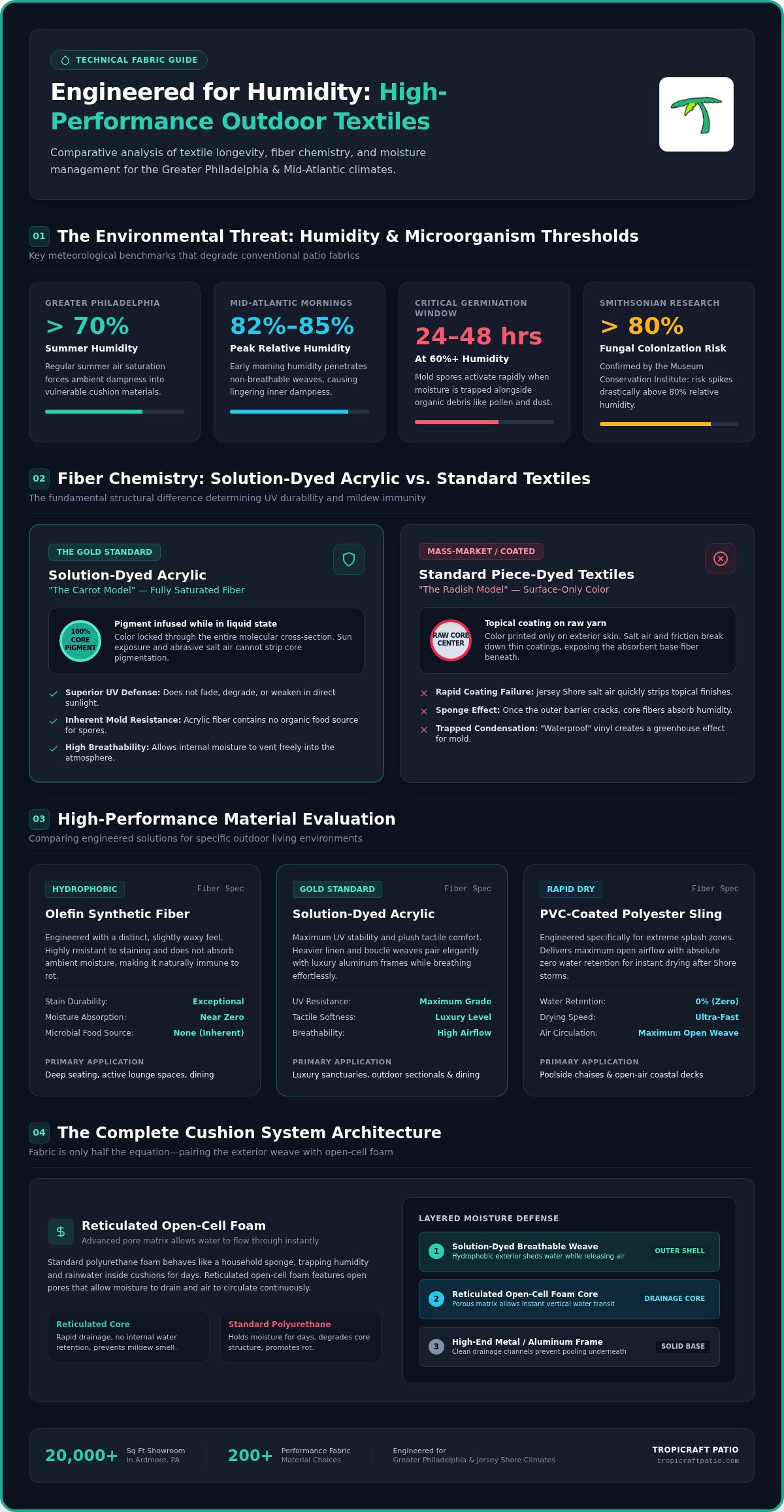
A true humidity-resistant fabric does more than just bead water. It acts as a breathable barrier that inhibits microbial growth while allowing internal moisture to evaporate. In our humid Mid-Atlantic climate, where early morning relative humidity regularly exceeds 82 to 85 percent, moisture easily becomes trapped within furniture. If a textile doesn't breathe, this dampness lingers in the cushion core, leading to internal degradation and a musty scent that ruins your Personal Sanctuary. Finding the best fabrics for outdoor use in humid climates is essential for protecting your investment.
The Jersey Shore presents unique challenges. Salt air is abrasive, often accelerating the breakdown of inferior "water-resistant" topical coatings found on mass-market pieces. Once these coatings fail, the base fabric absorbs moisture like a sponge. Selecting the best fabrics for outdoor use in humid climates involves looking beyond the surface to the molecular structure of the fiber itself to ensure it can withstand the corrosive coastal environment.
Mold vs. Mildew: The Hidden Enemies of Your Patio Sanctuary
While surface mildew is a nuisance that's easily wiped away, deep-set mold is a structural threat. Mold spores germinate when humidity remains at 60 percent or higher for 24 to 48 continuous hours, especially when trapped against organic debris like pollen or dust. Many homeowners mistakenly choose "waterproof" vinyl, but these non-breathable materials actually trap condensation inside the cushion, creating a greenhouse effect for fungi.
Antimicrobial Fibers: Modern luxury textiles, including olefin synthetic fibers, are inherently resistant to rot because the material itself doesn't provide a food source for microorganisms.
Breathable Weaves: High-end collections allow air to circulate through the fibers, ensuring that even after a heavy Shore thunderstorm, your retreat stays fresh.
We invite you to explore our outdoor furniture lines in Ardmore to feel the difference between standard fabrics and performance textiles designed for long-lasting comfort.
Comparing the Best Fabrics for Humid Outdoor Environments
Not all synthetic textiles are engineered to withstand the relentless moisture of a Philadelphia summer. When selecting the best fabrics for outdoor use in humid climates, the chemical composition of the fiber determines whether your furniture remains a pristine retreat or becomes a maintenance burden. Unlike natural fibers that absorb ambient moisture, high-performance synthetics are hydrophobic by design. Research from the Smithsonian Museum Conservation Institute confirms that relative humidity above 80 percent significantly increases the risk of fungal colonization on vulnerable materials, making the choice of fiber a critical decision for your home.
Why Solution-Dyed Acrylic Reigns Supreme
Solution-dyed acrylic is the undisputed gold standard for a luxury Personal Sanctuary. We often use the "carrot versus radish" analogy to explain its superiority. Standard outdoor fabrics are like a radish; the color is merely printed on the surface. In contrast, solution-dyed acrylic is like a carrot. The pigment is saturated through the entire fiber while it's still in a liquid state. This process ensures the material remains vibrant despite intense UV exposure and prevents mold from finding a foothold in the weave.
Olefin is another excellent candidate for the best fabrics for outdoor use in humid climates. It's a moisture-resistant alternative that offers a distinct, slightly waxy feel and exceptional durability against staining. For poolside environments where rapid drying is the priority, PVC-coated polyester sling fabrics offer maximum airflow and zero water retention. If you're ready to select the perfect texture for your home, our consultants can help you explore our 200+ fabric choices to find the ideal match for your lifestyle and our premium outdoor furniture lines.
Designing Your Retreat: Selection and Care in Philadelphia
Creating a Personal Sanctuary requires a thoughtful balance of form and function. When choosing textures to pair with your aluminum dining furniture, consider the weight and tactile feel of the weave. Heavier linens and bouclés provide a sophisticated contrast to the sleek, durable lines of high-end metal frames. Our Ardmore showroom features over 20,000 square feet of inspiration where you can touch and compare over 200 fabric options firsthand.
The fabric is only half the story. To truly invest in the best fabrics for outdoor use in humid climates, you must pair them with an advanced cushion core. We recommend reticulated open-cell foam for our Philadelphia and Jersey Shore clients. Unlike standard polyurethane, which can retain moisture for days, this material allows water to drain completely by gravity. It dries in as little as one hour, preventing the internal rot that often plagues mass-market collections.
Maintenance Secrets for High-Humidity Longevity
Preserving your retreat is simpler than you might think. Adhering to the University of Missouri Extension fabric care guidelines, we emphasize that mold doesn't grow on synthetic fibers themselves. It grows on the organic debris, such as pollen and dust, that settles on the weave. A routine of simple soap and water cleaning removes these particles before they germinate. This maintenance ensures you get the most longevity from the best fabrics for outdoor use in humid climates.
During the off-season or before a heavy Delaware Valley downpour, utilize custom-fit protective covers to shield your furniture. We invite you to experience the tactile quality of our collections in person at our flagship location. Our knowledgeable curators are ready to help you navigate the transition from standard comfort to high-end luxury. Contact Tropicraft Patio today for a personalized consultation on your custom outdoor project.
Elevate Your Outdoor Living Experience
Your patio should be a place of effortless relaxation, not a source of maintenance concerns. By selecting high-performance, hydrophobic materials and pairing them with breathable, reticulated foam cores, you ensure your furniture remains pristine. Understanding these technical nuances allows you to invest confidently in the best fabrics for outdoor use in humid climates, protecting your retreat from the Mid-Atlantic's heavy summer air.
Since 1977, our family-owned business has helped homeowners curate spaces that blend durability with high-end aesthetics. With over 200 designer fabric choices and white-glove delivery to Philadelphia and the Jersey Shore, we handle every detail of your transformation. It's time to step into the comfort you deserve. Design your personal sanctuary with our fabric experts today and enjoy a fresh, beautiful retreat all season long.
Frequently Asked Questions
Is Sunbrella fabric really mold-proof in humid climates?
Sunbrella fibers are inherently resistant to mold and mildew because they're synthetic, solution-dyed acrylics that don't provide a food source for fungi. However, mold can still grow on accumulated surface debris like pollen or dust. In humid environments like Villanova or Margate, we recommend regular light cleaning to ensure your Personal Sanctuary remains pristine and free from microbial colonization throughout the season.
How do I stop my outdoor cushions from smelling musty?
Musty smells are caused by moisture trapped within the cushion core, leading to bacterial growth. To stop this, you must pair your textiles with reticulated, open-cell foam that allows water to drain completely. For our clients in Stone Harbor and Avalon, selecting the best fabrics for outdoor use in humid climates is only the first step; proper internal drainage is what truly eliminates odors.
Can I leave my outdoor cushions out in the rain at the Jersey Shore?
While premium fabrics withstand moisture, leaving cushions exposed to heavy Jersey Shore rain and salt air can lead to long-term degradation. We suggest using high-quality protective covers during storms to keep your furniture dry and clean. This extra layer of care ensures that your investment stays fresh and ready for relaxation the moment the clouds clear over your coastal retreat.
What is the most breathable fabric for hot and humid summers?
PVC-coated polyester mesh is the most breathable option for the intense heat and humidity of a Philadelphia summer. It provides excellent airflow and dries almost instantly after a thunderstorm. For those who prefer the comfort of upholstery, solution-dyed acrylic is considered one of the best fabrics for outdoor use in humid climates due to its ability to wick moisture while maintaining a sophisticated, soft texture.


Comments