


Avoiding Cheap Patio Furniture Mistakes: A Guide to Long-Term Outdoor Luxury
Have you ever watched a serene Saturday afternoon dissolve into frustration because your new dining set is already showing signs of rust after just one season on the Jersey Shore? It's a common disappointment for homeowners who find that standard big-box options aren't built to withstand corrosive salt air or unpredictable Philadelphia winds. By focusing on avoiding cheap patio furniture mistakes, you can ensure your outdoor space remains a sanctuary rather than a source of recurring maintenance stress.
You'll discover how to identify low-quality pitfalls and invest in outdoor pieces that withstand our unique Mid-Atlantic climate. This guide provides the expert insight needed to transform your patio into a professional-grade retreat. We'll explore how to select materials that look brand new for a decade, ensuring your investment in comfort pays dividends in relaxation and social connection for years to come.
Key Takeaways
Identify the structural differences between low-end budget pieces and high-density materials designed to withstand the unique humidity and UV levels of the Greater Philadelphia area.
Gain confidence in avoiding cheap patio furniture mistakes by understanding the "replacement cycle" and why a material-first approach saves time and money over a decade.
Learn to select pieces that match the architectural scale of your home, ensuring your outdoor sanctuary feels balanced and intentional rather than sparse.
Explore the benefits of modular layouts over standard matching sets to create a flexible environment that adapts to your evolving social needs.
Discover how professional installation services ensure the structural integrity and longevity of premium materials like teak and cast aluminum.
Table of Contents
The False Economy of Budget Outdoor Materials
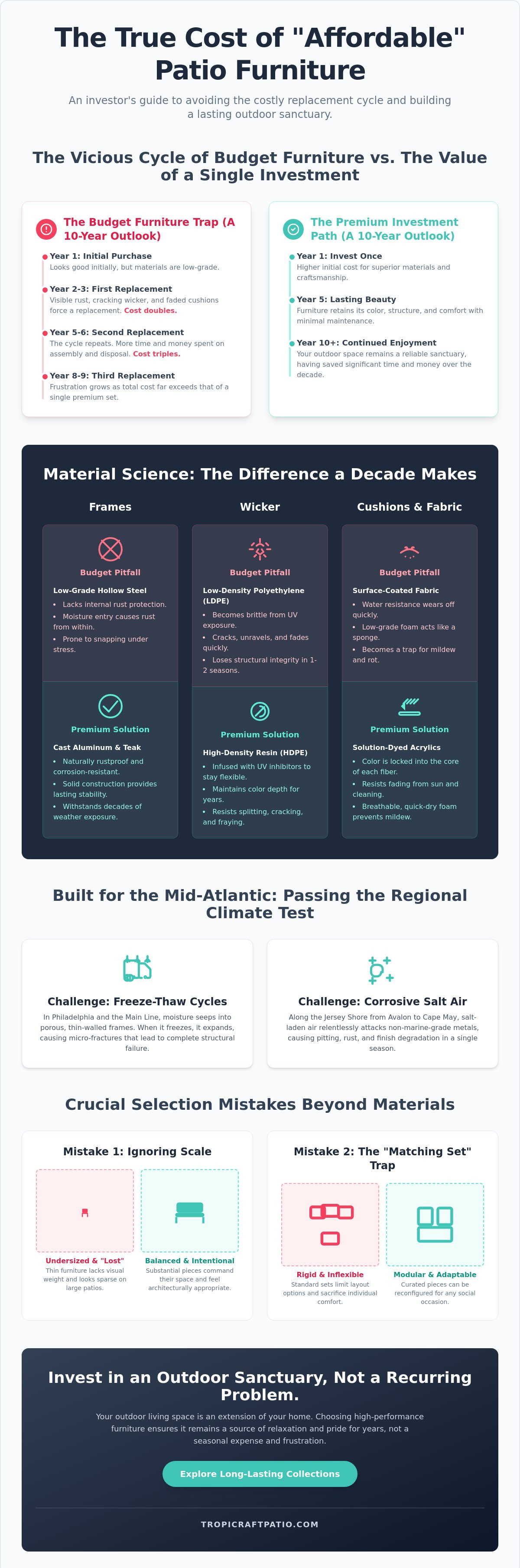
Choosing budget-friendly options often leads to a frustrating "Replacement Cycle." Many homeowners find themselves purchasing new sets every two to three years because of structural failures or aesthetic decay. This cycle turns a one-time purchase into a recurring expense that quickly exceeds the cost of a single high-end investment. Luxury isn't just about the label; it's about the chemistry and craftsmanship. For instance, cheap wicker is often made from low-density polyethylene (LDPE), which becomes brittle and cracks under solar exposure. In contrast, premium resin wicker uses high-density polyethylene (HDPE) infused with UV inhibitors to maintain its flexibility and color depth.
Another hidden pitfall involves low-grade steel frames. Often marketed as "weather-resistant," these frames lack the internal protection needed to stop oxidation. Moisture enters the hollow tubes, causing them to rust from within until the structure snaps. By avoiding cheap patio furniture mistakes, you shift your focus from a temporary setup to a permanent outdoor retreat. Understanding the nuances of common patio furniture materials helps you invest in pieces that endure rather than those that end up in a landfill after a few seasons. True luxury means your sanctuary is always ready for guests without the worry of failing joints or peeling finishes.
Why Philadelphia and Jersey Shore Climates Are Harsh on Low-End Sets
The Mid-Atlantic climate presents unique challenges that quickly expose the weaknesses of mass-market furniture. In Philadelphia and the Main Line, the freeze-thaw cycle expands moisture inside porous materials, leading to hairline fractures in thin-walled frames. Along the coast in Avalon or Cape May, salt air acts as a relentless corrosive agent on non-marine-grade metals. Avoiding cheap patio furniture mistakes in these regions requires a material-first mindset.
Freeze-Thaw Resilience: High-quality teak furniture and cast aluminum handle temperature swings without warping or cracking.
Coastal Protection: Marine-grade finishes and dense materials are essential for shorefront properties to prevent pitting and salt-induced oxidation.
Season-Long Care: Even the finest sets benefit from protective covers to shield against debris, pollen, and harsh winter elements.
Investing in quality ensures your sanctuary remains pristine regardless of the season. It's the difference between a patio that looks worn by June and one that remains a centerpiece of your home for a decade.
Crucial Selection Mistakes: Scale, Comfort, and the 'Matching Set' Trap
Visual weight is a cornerstone of professional design. On the expansive stone patios of Villanova or King of Prussia, thin-legged furniture often suffers from an "optical illusion" where it appears lost or undersized. A key part of avoiding cheap patio furniture mistakes involves selecting pieces with substantial silhouettes that command their space. While aluminum dining furniture offers a sleek, architectural profile, it provides a significantly different visual scale compared to the lush, textured presence of resin wicker.
Falling into the "matching set" trap often sacrifices individual comfort for a uniform look. A curated sanctuary prioritizes modularity, allowing you to reconfigure your layout for intimate gatherings or large social events. Many homeowners focus on the aesthetic of the set but ignore "sit-in" depth. If a chair doesn't support the natural curve of the spine or allow for deep relaxation, it remains an expensive ornament rather than a functional retreat. You can find more tips for selecting outdoor furniture that balances these aesthetic and ergonomic needs.
The Science of High-Performance Fabrics and Cushions
Comfort is deeply tied to the engineering of your cushions. Budget options typically use surface-coated fabrics that lose their water resistance after one season. In contrast, solution-dyed acrylics like Sunbrella lock color into the fiber itself. Cheap sets also hide a "mildew trap" within their cushions. They use low-grade foam that retains moisture, leading to internal rot that is impossible to clean. Consider these factors when evaluating quality:
Solution-Dyed Fibers: These resist fading from intense UV exposure and harsh cleaning agents.
High-Density Foam: This ensures cushions maintain their loft and support for a decade.
Breathable Liners: These prevent moisture from becoming trapped within the cushion core.
Investing in custom outdoor cushions ensures your sanctuary remains fresh and inviting for years. These high-performance materials offer an incredible return on investment through durability and style flexibility. If you are ready to elevate your outdoor experience, our team can help you design a layout that perfectly fits your patio's unique scale.
The Philadelphia Framework for Investing in Longevity
Building a permanent retreat requires the same design rigor as an indoor living room. By avoiding cheap patio furniture mistakes, you transition from viewing outdoor pieces as disposable items to seeing them as essential components of your private sanctuary. This mindset starts with selecting materials that have proven their worth in our specific regional climate. For Pennsylvania and Jersey Shore homes, teak furniture and high-density resin wicker represent the gold standards of durability. These materials don't just survive the humidity; they age with grace.
Quality isn't always visible in a photograph. To truly understand the difference, a tactile test is essential. Visiting a 20,000-square-foot facility like our Ardmore Theatre location allows you to experience the weight, texture, and ergonomics that digital browsing simply can't convey. Physical engagement helps you verify the craftsmanship before it reaches your home. Our "White Glove" service further protects your investment by preventing the common structural failures associated with incorrect DIY assembly. When furniture is professionally leveled and secured, it maintains its integrity for years.
Evaluating Craftsmanship: What to Look for in the Showroom
When inspecting aluminum frames, check for full-circumference welds. Unlike the spot welds found in budget sets, full welds provide a continuous bond that prevents moisture from entering the frame. You should also perform a "wicker pull test." High-density, UV-stabilized resin will feel firm and substantial, not brittle or thin like LDPE alternatives. These details ensure your sanctuary remains a place of relaxation rather than a site for constant repair.
If you prioritize ease of care without sacrificing aesthetics, poly lumber is the ultimate low-maintenance solution for the Philadelphia climate. It resists rot and never requires staining, making it a perfect fit for a sophisticated, worry-free environment. By focusing on these technical details, you'll ensure your outdoor space remains brand new for a decade, providing a consistent backdrop for social connection and peaceful reflection.
Crafting Your Permanent Outdoor Sanctuary
Creating a refined outdoor environment requires moving beyond the temporary convenience of mass-market sets. By prioritizing high-density materials like teak and solution-dyed fabrics, you ensure your retreat remains pristine through every Philadelphia winter and Jersey Shore summer. Avoiding cheap patio furniture mistakes allows you to focus on what truly matters: the comfort of your guests and the tranquility of your private space.
Since 1977, we've helped homeowners across the Main Line and beyond curate sophisticated lifestyles. Our 20,000-square-foot historic showroom in Ardmore provides the perfect setting to experience the tactile quality of our collections firsthand. With professional white-glove delivery to your home or coastal property, your transition to luxury is seamless and worry-free. Every piece we offer is a testament to craftsmanship and an investment in your home's long-term value.
We look forward to helping you design a space where every moment feels like a getaway.
Frequently Asked Questions
Is it worth paying more for Sunbrella fabric for my patio furniture?
Investing in Sunbrella fabric is a vital step for those prioritizing long-term value and comfort. Unlike surface-printed materials, these solution-dyed acrylics lock pigment into the core of every fiber. This prevents the unsightly fading and structural degradation caused by the Mid-Atlantic's intense UV levels. It's a choice that ensures your outdoor sanctuary remains inviting and luxurious for years, rather than requiring a complete cushion replacement after just one or two seasons.
How do I know if my patio furniture is actually rust-proof for the Jersey Shore?
To ensure your furniture is truly rust-proof for the Jersey Shore, verify that the frames are constructed from high-grade aluminum. While steel is often marketed as weather-resistant, it lacks the inherent resistance to salt air found in non-ferrous metals. Aluminum doesn't oxidize into rust, which is crucial for homes in coastal areas like Stone Harbor or Margate. Professional powder coating adds an extra layer of protection, maintaining a flawless finish against the elements.
What is the best patio furniture material for the Philadelphia climate?
Grade-A teak and high-density poly lumber are the most resilient materials for the Philadelphia climate. These options are specifically engineered to endure the region's dramatic freeze-thaw cycles without warping or cracking. By selecting these dense, non-porous materials, you're effectively avoiding cheap patio furniture mistakes that often result in the structural failure of budget sets. These investments provide the structural integrity required for a permanent outdoor retreat that looks brand new for a decade.
How can I tell the difference between high-quality and cheap resin wicker?
High-quality resin wicker is distinguished by the use of high-density polyethylene (HDPE) infused with UV inhibitors. This material remains supple and colorfast even after years of exposure to the elements. Cheap wicker often uses low-density polyethylene (LDPE), which feels like thin plastic and quickly becomes brittle and cracks. You should also look for a hand-woven finish over a heavy-gauge aluminum frame, which provides the necessary weight and stability to withstand coastal winds.


Comments