


The Most Durable Patio Furniture Materials for Philadelphia: A 2026 Longevity Guide
What if the secret to a "buy it once" outdoor sanctuary isn't the style you choose, but the molecular density of the frame beneath the cushions? You've likely seen beautiful teak turn an unintended grey or felt the frustration of cushions molding in our Mid-Atlantic dampness. Philadelphia homeowners understand that our climate, with its humid summers and freezing winters, demands more than just aesthetic appeal. Finding the most durable patio furniture materials Philadelphia requires a focus on moisture resistance and finish quality rather than just following fleeting trends.
This 2026 longevity guide reveals which premium materials actually withstand the Jersey Shore’s salt air and our city's temperature swings to ensure your retreat remains pristine for decades. We will explore the technical advantages of powder-coated aluminum, high-density polyethylene (HDPE), and Grade-A teak. You'll learn how to curate a low-maintenance, high-end environment that matches the sophistication of your home while resisting the elements with effortless grace.
Key Takeaways
Understand how the Philadelphia freeze-thaw cycle affects porous materials and why high humidity accelerates oxidation in standard outdoor sets.
Identify the most durable patio furniture materials Philadelphia experts recommend for withstanding both urban humidity and Jersey Shore salt air.
Compare the performance of cast aluminum, teak, and poly lumber to find the ideal balance of luxury aesthetics and long-term weather resistance.
Discover why solution-dyed acrylic fabrics are essential for preventing the mildew and fading common in the damp Mid-Atlantic climate.
Gain the knowledge to transition from temporary comfort to a high-end outdoor sanctuary that serves as a permanent extension of your home.
Table of Contents
Understanding the Philadelphia Climate: Why Material Choice Matters
Philadelphia’s climate presents a rigorous test for any outdoor investment. While we enjoy the distinct beauty of all four seasons, the transition between them creates a volatile environment for common outdoor furniture materials. The heavy air in the Delaware Valley acts as a catalyst for oxidation during our humid summers.
This is particularly devastating for low-grade metals. These materials can begin to corrode from the inside out before their first season ends. For homeowners on Main Line estates, direct UV exposure can be equally punishing. Intense sunlight doesn't just fade colors; it breaks down the chemical bonds in low-quality plastics and resins.
To maintain a true personal sanctuary, your furniture must possess the structural integrity to withstand these shifts. Selecting the most durable patio furniture materials Philadelphia requires looking beyond the surface finish to the material's core density and finish quality. Only then can you ensure your retreat remains a place of tranquility and leisure.
The Freeze-Thaw Cycle and Structural Integrity
The Mid-Atlantic winter is defined by the freeze-thaw cycle. This phenomenon occurs when temperatures fluctuate above and below freezing multiple times a week. It's a common occurrence in Pennsylvania that wreaks havoc on porous surfaces.
When moisture becomes trapped within materials like low-grade wood, it expands as it turns to ice. This internal pressure creates micro-cracks that eventually lead to structural failure or unsightly warping. High-density materials, such as those found in premium outdoor furniture lines, are the only reliable defense.
These professional-grade materials resist water absorption, ensuring the frame remains stable despite the cold. While the right material is paramount, we also recommend using heavy-duty protective covers to shield your investment from the weight of snow and ice. Choosing the most durable patio furniture materials Philadelphia allows you to preserve the refined atmosphere of your retreat for years to come.
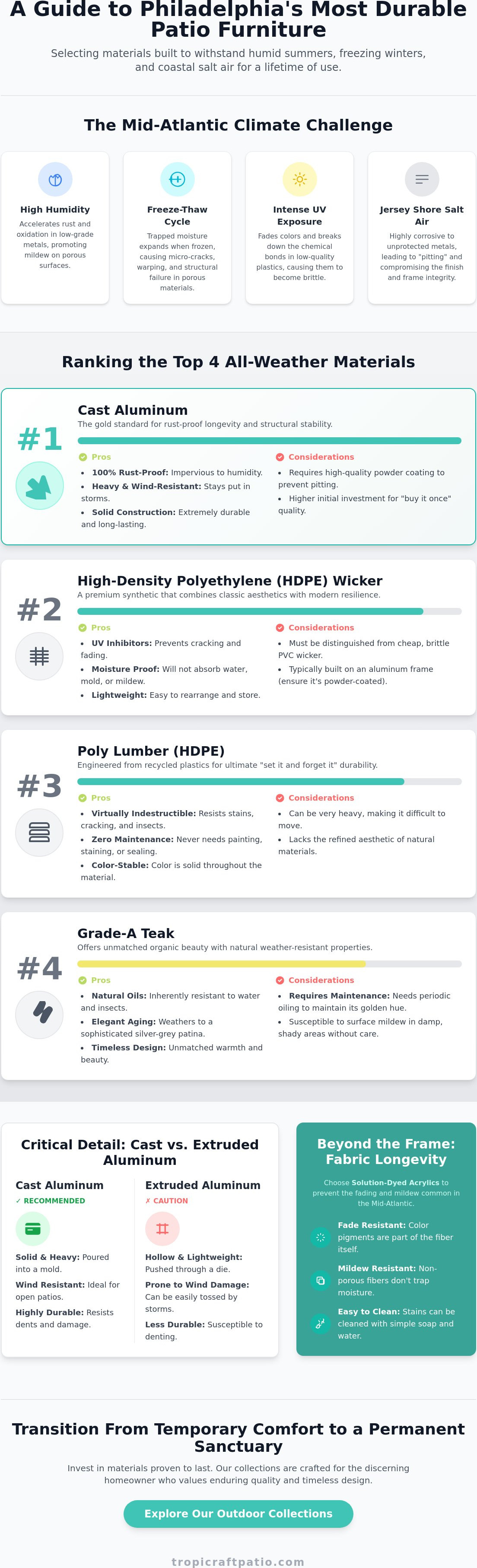
The Big Four: Ranking the Most Durable Patio Furniture Materials
Selecting the right foundation for your outdoor retreat requires an understanding of how specific materials respond to the local environment. Data from the National Centers for Environmental Information regarding Philadelphia climate patterns confirms that our region experiences significant moisture and temperature shifts. For 2026, we have ranked the most durable patio furniture materials Philadelphia based on their ability to maintain structural integrity and aesthetic beauty over decades of use.
Cast aluminum dining furniture: This remains the gold standard for rust-proof longevity. Its non-porous nature makes it impervious to the humidity that destroys lesser metals.
High-Quality Resin Wicker: Unlike cheap PVC alternatives, premium HDPE resin wicker is infused with UV inhibitors. This prevents the peeling and brittle cracking often seen in sun-drenched Ardmore or Chestnut Hill backyards.
Poly Lumber: Engineered from high-density sea-bound plastics, this material is virtually indestructible. It's the ultimate low-maintenance choice for those who prioritize a "set it and forget it" lifestyle.
Grade-A Teak: While it offers unmatched organic beauty, teak requires periodic oiling to maintain its golden hue in our damp climate. Without care, it will weather to a sophisticated silver-grey.
Cast Aluminum vs. Extruded Aluminum
The distinction between cast and extruded aluminum is critical for suburban Philadelphia homes. Cast aluminum is created by pouring molten metal into a mold, resulting in a solid, heavy frame. This added density provides essential wind resistance for open terraces and poolside settings. In contrast, extruded aluminum is hollow. While lightweight, it lacks the "heft" required to stay anchored during Mid-Atlantic summer storms.
A multi-stage powder-coating process is the second line of defense. This finish prevents "pitting," a form of surface corrosion that occurs when moisture reaches the raw metal. For a deeper look at these specifications, consult our Cast Aluminum Guide. If you have questions about which weight is right for your space, you can always speak with our design consultants for personalized advice.
The Jersey Shore Factor: Salt Air Resistance
For residents with secondary homes in Avalon, Stone Harbor, or Cape May, salt air is the primary enemy. Salt is highly corrosive and can degrade standard hardware in just a few seasons. We recommend Poly Lumber paired with 316 stainless steel hardware for coastal properties. This combination is specifically engineered to resist the "salt spray" that causes traditional furniture to crumble.
Even when using the most durable patio furniture materials Philadelphia offers, maintenance remains a factor. We advise a simple fresh-water rinse once a month for coastal furniture. This removes salt deposits before they can bond to the surface, preserving the luster of your investment for the long term.
Beyond the Frame: Longevity Factors for Luxury Outdoor Spaces
While the frame provides the essential skeleton of your outdoor retreat, the textiles you choose serve as its protective skin. High-performance fabrics, specifically solution-dyed acrylics like Sunbrella, are engineered to resist the intense UV rays and heavy humidity of the Mid-Atlantic. Unlike dip-dyed fabrics where the color only sits on the surface, solution-dyed fibers are saturated with pigment to the core. This science ensures your investment remains vibrant and mildew-resistant, making them the perfect companion to the most durable patio furniture materials Philadelphia homeowners trust.
Structural integrity also depends on how your furniture is handled before it reaches your terrace. Professional white-glove installation prevents the uneven stress and stripped bolts often caused by improper assembly. To truly understand the density and tactile quality of these collections, we invite you to visit our 20,000-square-foot Ardmore showroom. Feeling the weight of a cast aluminum chair or the smooth grain of high-density poly lumber is essential for making a confident, long-term investment.
Cushion Technology: The Battle Against Mildew
The interior of your cushion is just as vital as the exterior. In Philadelphia’s damp climate, standard foam often acts like a sponge, trapping moisture and inviting mildew. We recommend reticulated, or "quick-dry," foam which allows water to flow through the cushion freely. If your existing frames are still structurally sound, custom outdoor cushions featuring these advanced cores can revitalize your space with modern performance technology.
Maintenance vs. Durability
Even the most resilient materials benefit from a structured care routine. As noted by the University of Nebraska-Lincoln Extension on Furniture Materials, the longevity of outdoor pieces is often tied to how well surface finishes are preserved. For 2026, we suggest a simple quarterly schedule: spring deep cleaning, monthly summer rinses to remove pollen, and applying protective covers before the first autumn freeze. For those who prefer the organic warmth of wood, our Teak Buyer’s Guide provides specific routines for maintaining a prestigious golden finish.
Investing in Your Permanent Outdoor Retreat
Transforming your patio into a personal sanctuary is a journey that begins with material science. By prioritizing high-density cast aluminum and UV-resistant HDPE, you've addressed the core challenges of our local climate. These choices ensure your investment remains a source of tranquility rather than a maintenance burden. Selecting the most durable patio furniture materials Philadelphia homeowners trust is only half the equation. Professional assembly and high-performance textiles complete the promise of longevity.
Since 1977, our family-owned business has helped designers and homeowners navigate these technical nuances. We invite you to experience the tactile difference of our collections firsthand. Our 20,000-square-foot historic showroom in Ardmore provides the perfect space to explore weight and craftsmanship. Once you've made your selection, our professional white-glove delivery team ensures a seamless transition to your home across Pennsylvania and New Jersey.
Your ideal outdoor retreat is within reach, ready to serve as a backdrop for decades of relaxation and social connection.
Frequently Asked Questions
Which patio furniture material is best for the Philadelphia winter?
High-Density Polyethylene (HDPE) and powder-coated cast aluminum are the superior choices for surviving a Philadelphia winter. These materials are non-porous, so they don't absorb the moisture that leads to internal cracking during the region's frequent freeze-thaw cycles. While other materials may warp or split under the weight of snow and ice, these high-end options maintain their structural integrity. They're widely considered the most durable patio furniture materials Philadelphia residents can select for permanent outdoor installations.
Is cast aluminum or poly lumber more durable for a coastal Jersey Shore home?
Poly lumber is the most resilient choice for coastal Jersey Shore homes because it's completely immune to salt air corrosion. While cast aluminum is exceptionally durable in suburban environments, the intense salt spray of Avalon or Stone Harbor can eventually challenge even the best powder-coated finishes. Poly lumber is engineered from high-density sea-bound plastics and utilizes 316 stainless steel hardware. This ensures your investment won't rust, pit, or degrade when exposed to the harsh Atlantic environment.
How long should high-quality resin wicker last in the Mid-Atlantic?
High-quality resin wicker should last 10 to 15 years when crafted with UV-inhibited HDPE and sturdy aluminum frames. Unlike thin, brittle PVC wicker, professional-grade resin is designed to withstand the Mid-Atlantic’s high humidity and fluctuating temperatures. Its longevity is further extended by using protective covers during the off-season. This simple step preserves the most durable patio furniture materials Philadelphia designers recommend for creating a textural, inviting sanctuary that lasts for over a decade.
Does teak furniture require a lot of maintenance in a humid climate like PA?
Teak furniture requires moderate maintenance if you wish to preserve its original golden luster in Pennsylvania’s humid climate. Without regular treatment, the wood will naturally develop a sophisticated silver-grey patina within a few seasons. While this change is purely aesthetic and doesn't compromise the wood's strength, the high moisture levels in the Delaware Valley can encourage surface mildew. A simple annual cleaning with a soft brush and mild soap is essential to keep the grain healthy.


Comments