


Round vs Rectangular Patio Tables: Which Shape Fits Your Space
A rectangular table often suits a larger patio and frequent entertaining, while a round table can fit a compact, square space. Let your patio’s proportions and hosting style guide your choice. Allow about 36 inches between the table edge and nearby walls, railings, or grills for room to move.
Both shapes can make outdoor dining inviting, but the right choice should fit your layout without crowding it. This guide compares seating, circulation, and serving space to help you decide. As you consider outdoor furniture options, you’ll learn when a round table suits a smaller patio and when a rectangular table works better for larger gatherings.
Table of Contents
What shape dining table is best for a small space?
For a square patio, a round table often feels more at home; a narrow deck usually suits a rectangular design. For climate durability, material matters more than shape: outdoor poly furniture is designed to resist moisture, sunlight, and temperature changes. Well-made, maintained aluminum or all-weather wicker can last several years or even decades.
Shapes for Narrow and Square Spaces
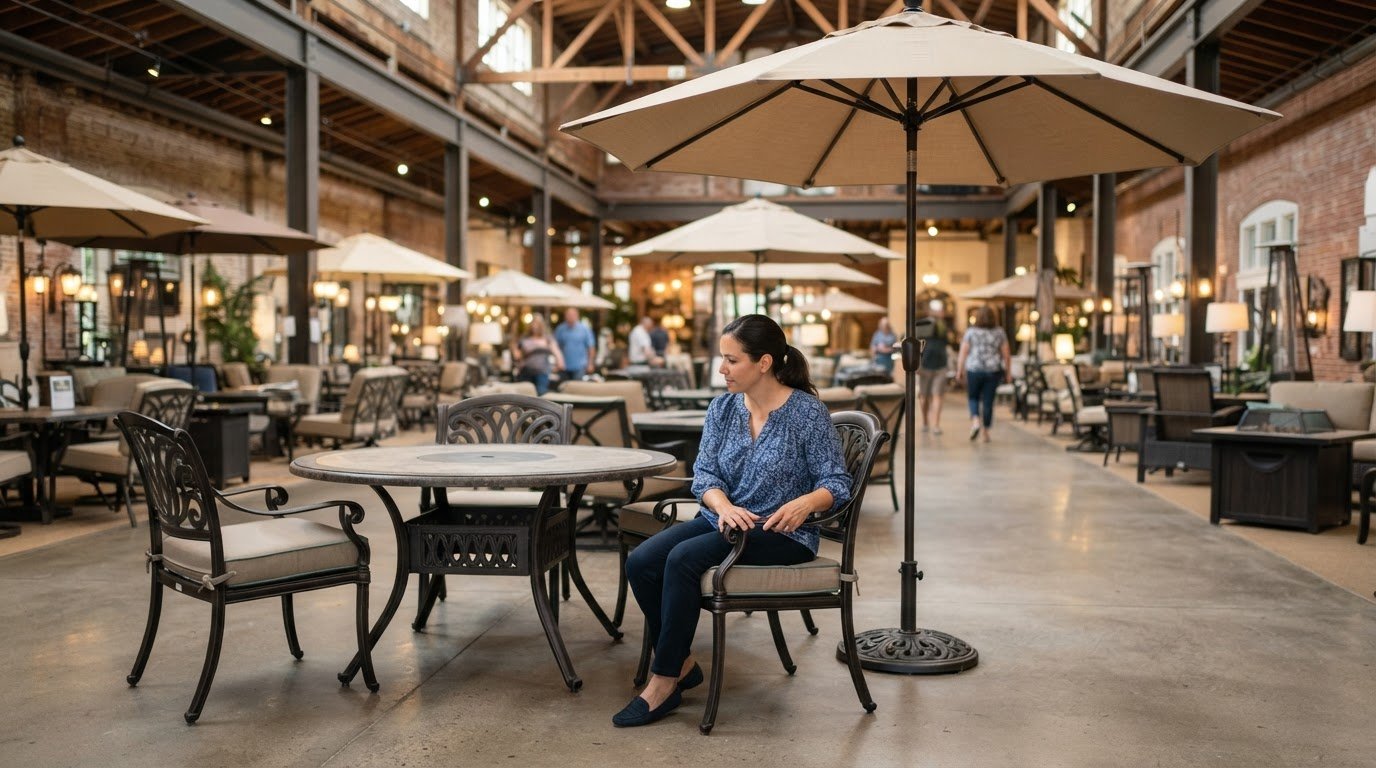
Choose a round patio table for a square balcony or compact patio where people need to move around it from different sides. Its curved edge has no corners and can create a relaxed setting for conversation. On a narrow deck, a rectangular table follows the available length and can leave a clearer route through the space. The best shape depends on both the layout and the seating you need.
Patio Layout and Table Shape
Measure the patio’s length and width, then map the table and pulled-out chairs before choosing. Leave about 36 inches between the table edge and nearby walls, railings, or grills. A rectangular table can sit near a wall or railing, while a round table generally needs open space around its full perimeter. For a square or roughly equal-sided area, compare round and rectangular patio tables by the clear walking route each leaves.
Tables for Typical Group Sizes
Start with the usual dining group, not the occasional gathering. A 36-44-inch round table usually works for four people on a smaller patio; a 48-60-inch round table can seat six. Rectangular tables sized 60-72 inches typically seat four to six. Bistro sets suit two, while a round or oval table with folding chairs can serve regular meals for two to four and occasional meals for six.
Choose the shape that fits your usual group and leaves a comfortable path around the furniture.
Round vs Rectangular Patio Dining Tables, Which is the Better?
The better choice depends on how many people dine together and how your outdoor space accommodates seating. Before deciding, compare the space available, legroom, upkeep, and the kind of gatherings you host.
Round Table Sizes and Seating
A round table encourages conversation because diners face toward one another, without a formal head of the table. A 24-30-inch diameter typically seats two, while a round table measuring 60 inches or more typically seats six. Pedestal bases improve seating flexibility by keeping legs away from chair positions. By contrast, a four-leg base may make extra seats awkward, especially when guests must straddle a leg.
Round designs suit intimate groups and informal dining. Their curved perimeter has no corners, which can make it easier to move around the table.
Rectangular Seating Efficiency and Capacity
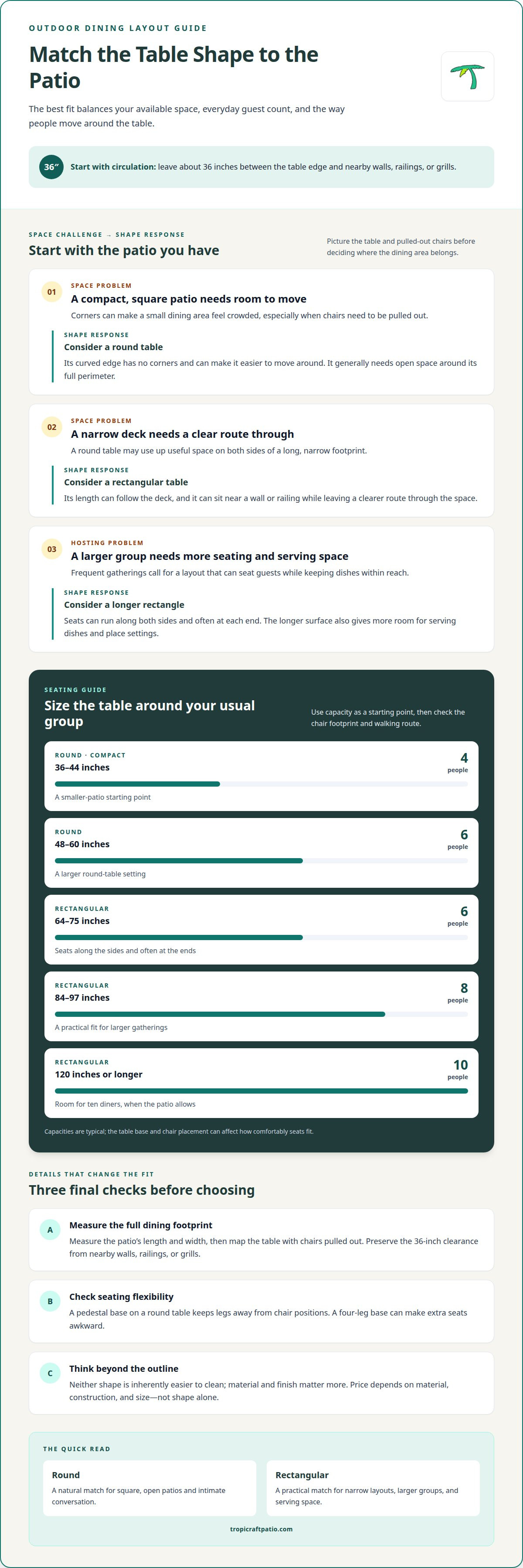
Rectangular tables use their length efficiently, with seats along both sides and often at each end. A 64-75-inch table typically seats six; an 84-97-inch table typically seats eight. For ten diners, a rectangular table measuring 120 inches or longer typically provides room. This shape can be a practical choice for larger groups or a narrow outdoor space.
Rectangular tables offer more surface for serving dishes, while round tables tend to keep conversation close. For upkeep, neither shape is inherently easier to clean; the surface material and finish matter more than the outline. Price also depends on material, construction, and size, so shape alone doesn’t determine cost. For stability, use level ground and a steady base; a round table’s weight is often more concentrated centrally, making it less likely to tip when bumped.
Choose a round table for flexible, intimate seating, or a rectangle for efficient capacity. For help thinking through your dining layout, discuss your patio table options.
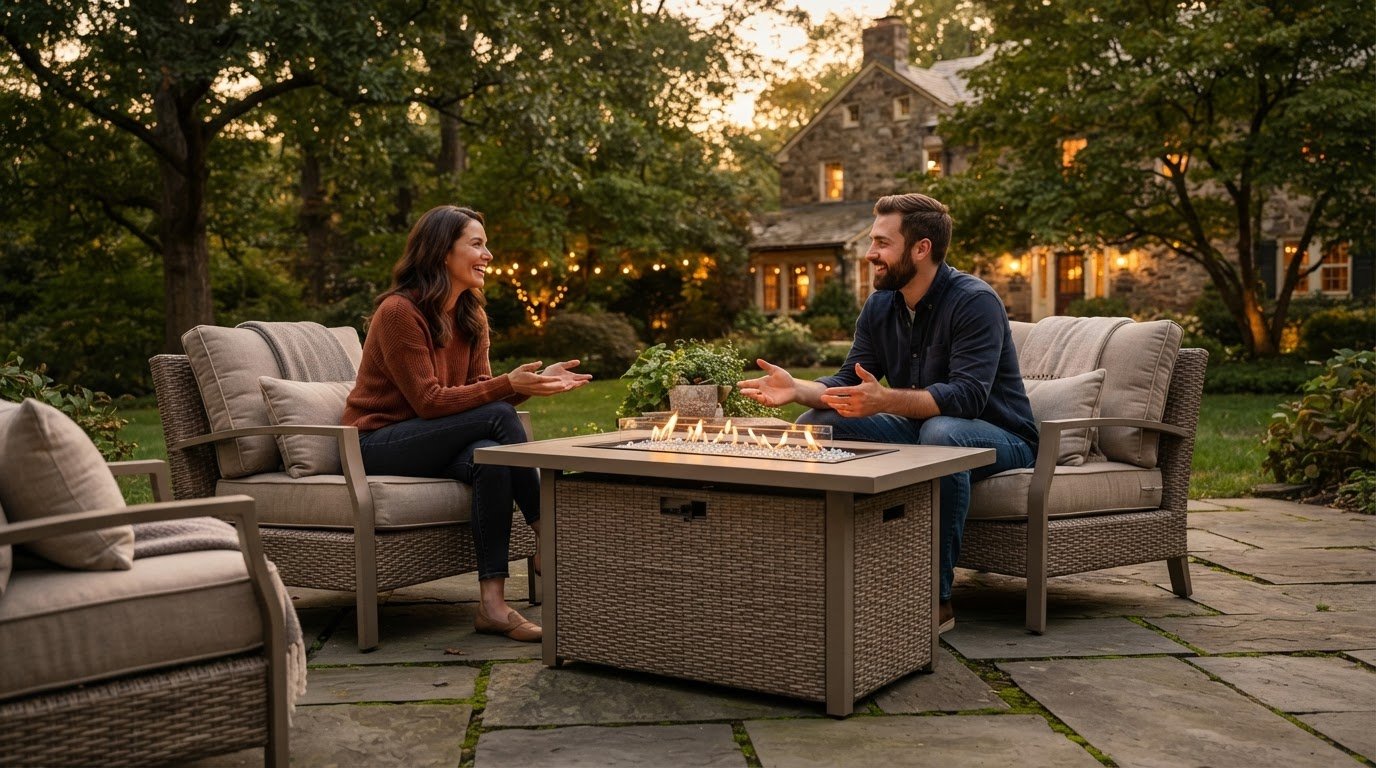
Rectangular tables for larger patios and entertaining
A rectangular dining table gives larger patios a defined gathering place, with room for serving dishes along its length. Tables measuring 84 inches or longer can accommodate a crowd. For frequent gatherings of eight or more people, a large rectangular or extending table offers a practical setup for shared meals.
Use the patio’s edges to make the layout feel intentional. A rectangular table can sit along a wall or patio boundary, with chairs on both long sides and at each end. On an extra-large patio, a seven-piece dining set can establish a distinct meal area without filling the entire outdoor space.
Plan for chairs to move back and guests to pass comfortably. Leave enough room behind seated diners for chairs to move and, where needed, for people to pass. These clearances help prevent a dining set from narrowing the main route across the patio.
Compare the table’s footprint with other shapes before settling on a layout. An eight-seat rectangular table measuring 38 by 96 inches is nearly two feet narrower than an eight-seat square table measuring 59 inches across. That slimmer width can be useful on a deck where dining space must share room with a walkway or lounge area. A balcony, by contrast, may not have enough length or clearance for this arrangement.
For larger patios, choose a rectangular table when its length supports your guest list and its placement preserves a clear route. Talk through your patio dining layout as you plan a comfortable setting for guests.
Tropicraft Patio
Tropicraft Patio helps homeowners in Ardmore, Philadelphia, King of Prussia, and Villanova choose outdoor furniture suited to their space and style. Its selection includes resin wicker, cast aluminum, and extruded aluminum furniture. Homeowners in Ventnor, Margate, Stone Harbor, Avalon, and Cape May can also explore options for creating a cohesive outdoor dining area.
If you’re weighing a round table for conversation against a rectangular table for larger gatherings, think about how you’ll use the space most often. Contact Tropicraft Patio to discuss your patio table needs and create a setting that feels right at home.
Shape an Outdoor Space You’ll Love to Use
A table is more than a place to serve a meal. Its shape influences how your patio flows, how guests gather, and whether the setting suits quiet mornings or lively evenings. Let the way you want to use the space guide your choice. The decision about round vs rectangular patio tables becomes more personal when you picture the moments you want the setting to hold.
Consider the atmosphere you hope to create, then picture the table in place alongside your chairs and other outdoor furnishings. A considered choice can bring comfort and connection to everyday dining and special gatherings alike. For thoughtful guidance as you plan your patio, contact Tropicraft Patio. Your next favorite place to gather can begin with the right table.
Frequently Asked Questions
Seating reality: how many people will actually fit?
Count usable seats, not just the chairs you can position around the tabletop. Armrests, wide chair frames, and table legs can take up room and make some places uncomfortable. Before choosing, arrange your intended chairs around a comparable table or mark their positions on the patio. Leave space for plates and serving dishes, too.
What are the pros and cons of round vs. rectangular patio tables?
Think about how guests will use the table. A round top brings diners together for conversation, while a rectangular top offers distinct sides for arranging place settings and shared dishes. Consider how the table will work with the rest of your furnishings: its orientation can affect access to doors, cooking areas, and lounge seating.
How many people can round and rectangular patio tables seat?
The practical seating capacity depends on more than the tabletop outline. Chair width, armrests, leg placement, and room for place settings all affect how comfortably guests can sit. Check the manufacturer’s stated capacity, then consider the chairs you plan to use. If you regularly serve platters, allow fewer diners than a close-fitting arrangement would suggest.
What patio table size should I choose for my space and number of guests?
Start by deciding how many people usually dine together, then map the table and chairs within the usable patio area. Painter’s tape can show the tabletop footprint; mark the chair positions and clear routes to doors or other seating, too. This simple floor plan can reveal whether a larger table would interfere with everyday movement or furniture you want to keep.
How much clearance is needed around a patio table for chairs and walkways?
Leave enough room for someone to pull out a chair, sit down, and rise without blocking a route. If guests will pass behind seated diners, plan that pathway separately from the chair space. Test the layout with chairs both occupied and pulled back, paying particular attention to gates, doorways, and routes between dining and lounge areas.
Comments