


Comfortable Deep Seat Patio Chairs for Outdoor Seating
A plush cushion can still leave you perched rather than settled. As a general guideline, deep-seating chairs often have a seat depth of at least 24 inches, measured from the front edge to the back cushion or backrest. This is not a universal standard, and a chair’s overall depth doesn’t tell you how much usable sitting space it provides.
That extra room creates a more lounge-like feel, but depth alone doesn’t guarantee comfort. Seat height, cushion firmness, arm height, and back angle all affect whether a chair supports your body naturally or lets you unwind.
This guide explains what deep seating means and how to assess those details. You’ll also learn why deep-seat lounge chairs suit slow afternoons, relaxed conversation, and a more inviting outdoor retreat.
Table of Contents
What Is Deep Seating Patio Furniture for Comfortable Deep Seat Patio Chairs?
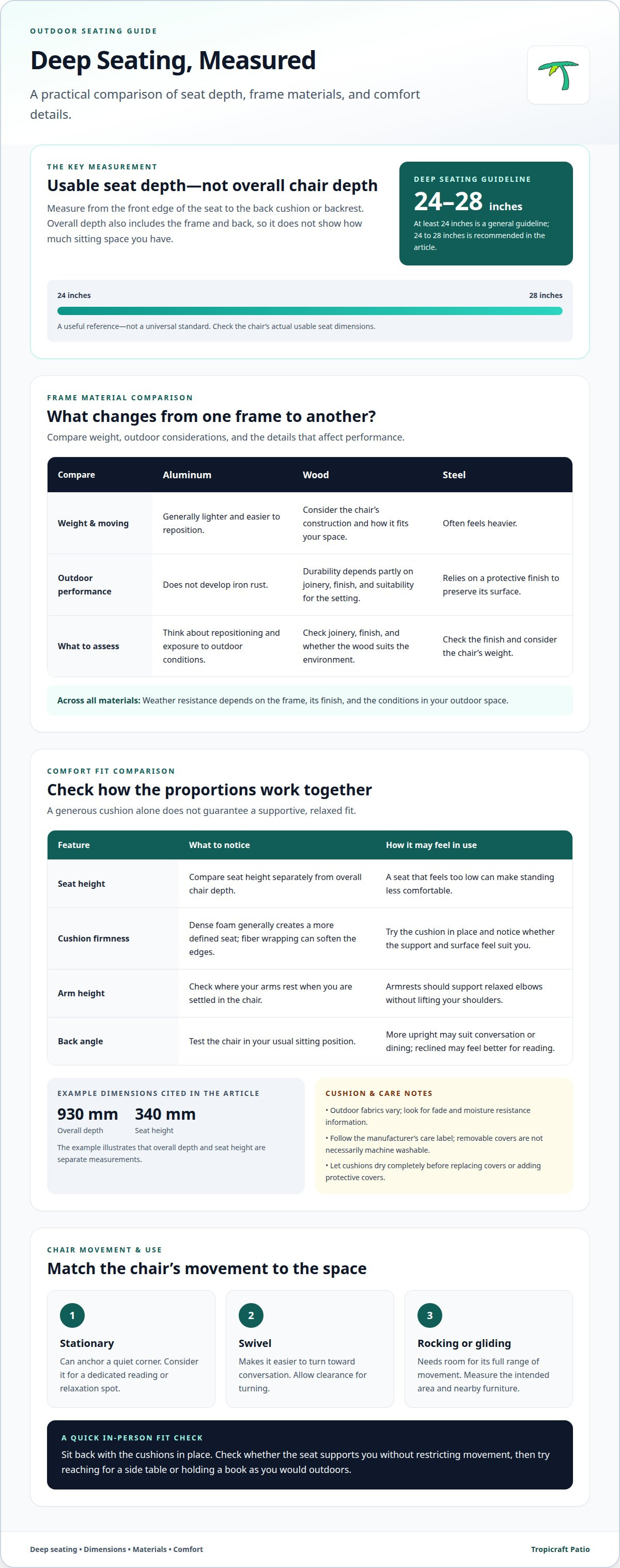
Deep seating describes outdoor chairs designed to let you settle back into generous cushions. The usable seat depth matters more than overall depth, which also includes the frame and back. Compare different outdoor furniture lines by looking at seat dimensions, frame construction, and how each design suits your space.
Frame Durability
Frame material affects a chair’s weight, upkeep, and performance outdoors. Aluminum is generally lighter to reposition and does not develop iron rust, which can be useful when rearranging a lounge area around a coffee table. Wood durability depends partly on joinery, finish, and suitability for the setting. Steel often feels heavier and relies on a protective finish to preserve its surface. Compare construction and finish as well as design.
Weather-Resistant Materials
Weather resistance depends on frame material, finish, and the conditions in your outdoor space. Aluminum does not develop iron rust and is easier to move when you need to shift chairs under shelter. Steel’s protective finish helps preserve its surface, while wood performance depends on suitable use, joinery, and finish. Consider how much direct weather the furniture will face, then choose materials and care that suit that exposure.
Check dimensions before choosing a lounge chair. Deep seating typically begins at a seat depth of 24 inches, with 24 to 28 inches recommended. Measure from the front edge to the back cushion or backrest, rather than relying on overall depth. This distinction helps you judge whether a generous seat will fit your body and available space.
When choosing outdoor furniture materials and colors, consider the whole setting. A neutral frame can complement different cushion shades, while a bolder color can echo nearby planting or architectural details. Picture the chair beside a coffee table and consider how its finish and tone work with the rest of your backyard.
Seat height, cushion firmness, arm height, and back angle
Comfort comes from how each proportion works with your body, not from cushion softness alone. According to the Victoria and Albert Museum, the chair is 930mm deep and has a seat height of 340mm. That example shows why overall depth and seat height are separate measurements. A seat that feels too low can make standing less comfortable, while armrests should support relaxed elbows without lifting your shoulders.
Check the back angle in your usual sitting position. A more upright posture may suit conversation or dining, while a reclined angle can feel better for reading. Try the chair with its cushions in place, since upholstery affects how the seat and back feel. Wicker frames and cushion thickness also shape the chair’s proportions.
Cushion construction affects support and surface feel. Dense foam generally creates a more defined seat, while fiber wrapping can soften its edges. Outdoor fabrics vary, so look for clear information about fade and moisture resistance, along with care instructions. “Quick-dry foam” describes a construction feature, but the phrase alone does not establish how the complete cushion handles moisture.
Removable covers aren’t necessarily machine washable; follow the manufacturer’s care label. After cleaning, let cushions dry completely before replacing covers or adding protective covers. For seasonal storage, keep cushions dry and sheltered, then arrange them again for your favorite outdoor living spot. A thoughtful conversation about your seating needs can help clarify which proportions and cushion feel suit your space.
Deep-seat lounge chairs
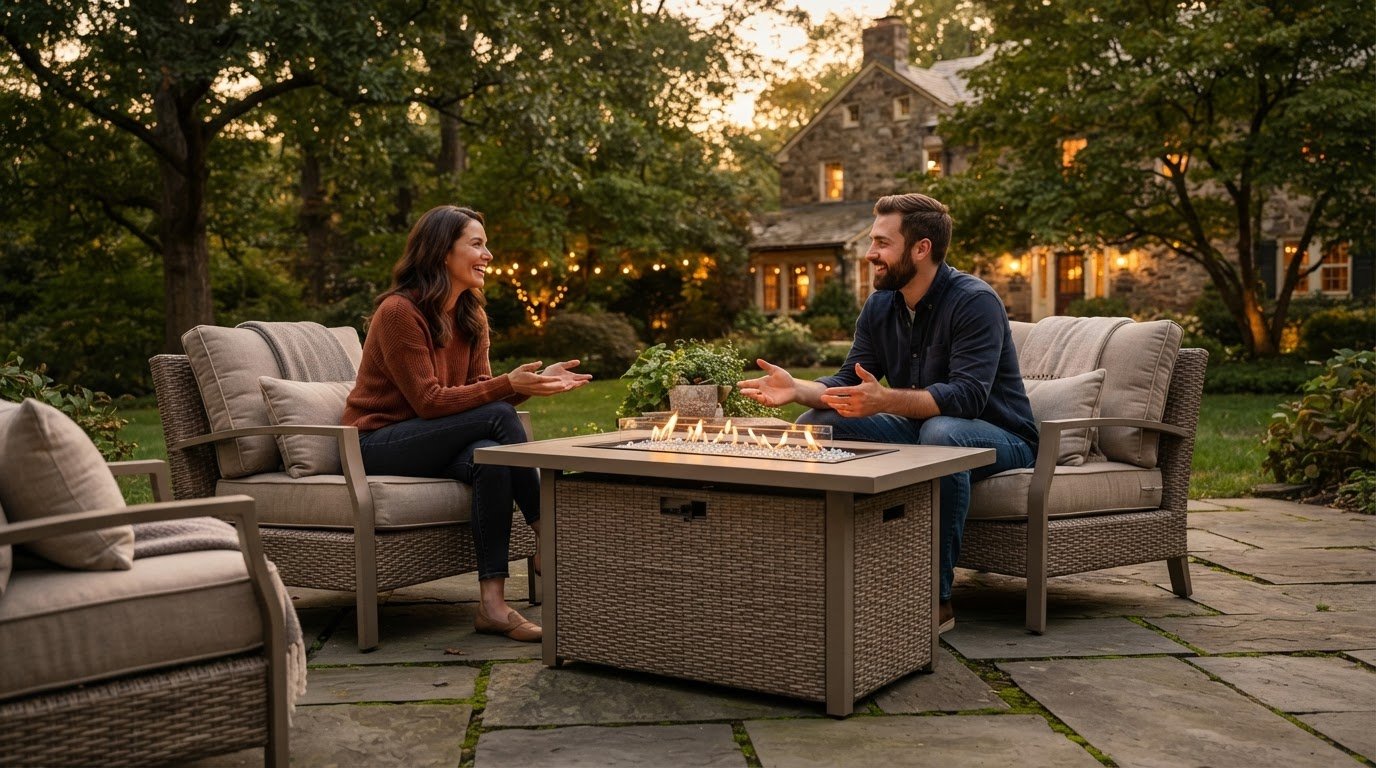
A deep-seat lounge chair creates a dedicated outdoor place to relax. A spacious seat and generous cushions encourage a casual posture, making these chairs a natural choice for reading, quiet conversation, or lingering after a meal. Comfortable deep seat patio chairs should suit how you plan to unwind, not simply look inviting. Pair a lounge chair with an ottoman to stretch your legs, or place it beside a coffee table for a book or drink.
Consider how the chair moves and fits your routine. A stationary design can anchor a quiet corner, while a swivel model makes it easier to turn toward conversation. Swivel chairs need clearance for turning; rocking or gliding designs need room for their full range of movement. Measure the intended area and account for neighboring furniture.
Try the chair in the position you expect to use it. Sit back, settle into the cushions, and notice whether the seat feels supportive without restricting movement. Try reaching for a side table or holding a book as you might during an afternoon outdoors. This can help you assess comfort and fit.
For comfortable deep seat patio chairs that can become a favorite outdoor retreat, balance generous cushioning with supportive construction and suitable proportions. Discuss a deep-seat lounge setup for your outdoor space to explore options around how you relax and entertain.
Tropicraft Patio
Tropicraft Patio helps homeowners compare outdoor chair materials and designs for their spaces. Whether you’re furnishing a patio in Ardmore, Philadelphia, Ventnor, Margate, Stone Harbor, Avalon, King of Prussia, Cape May, or Villanova, explore resin wicker, cast aluminum, and extruded aluminum options.
Compare how each material’s look and feel suits your setting and seating needs. Contact Tropicraft Patio to discuss your outdoor seating.
Make Your Outdoor Space Your Own
Let your outdoor seating become a natural extension of how you live outside. The right chair can create a quiet reading corner, an inviting place for conversation, or a relaxed setting on a larger patio. When considering comfortable deep seat patio chairs, look beyond a single seat: picture how its materials, shape, and surrounding furnishings will work together in your outdoor retreat.
Tropicraft Patio offers resin wicker, cast aluminum, and extruded aluminum options for different outdoor styles. Discuss your space and how you plan to use it with the Tropicraft Patio team to make your next decision with confidence.
Contact Tropicraft Patio to discuss your outdoor seating, and take the next step toward a space that feels welcoming and distinctly yours.
Frequently Asked Questions
What is considered a deep seat for patio chairs, in inches?
A deep patio chair generally has a usable seat depth of at least 24 inches. A depth of 24 to 28 inches is a general guideline, not a universal standard, since comfort depends on the chair design and the person using it. If you’re comparing two chairs, check the seat measurement rather than relying on product names such as “lounge” or “club.” Cushion shape can affect how much of that space feels usable once you sit down.
What are the best materials for deep-seat outdoor chairs in different climates?
Choose materials by considering the chair’s exposure and the care it will receive. A sheltered porch and an open patio face different conditions, so assess the sun, rain, and seasonal weather where the chair will sit. Then compare the frame’s finish and care guidance with that setting. Resin wicker, aluminum, and teak each bring a distinct look to outdoor spaces.
How can I measure my patio space and choose the right chair dimensions?
Measure the space for the chair, then mark its footprint on the ground with removable tape. Include room for nearby tables and the route people use to pass through. If choosing a swivel, rocker, or glider, mark its movement area too. This simple layout helps reveal potential crowding before the furniture arrives.
How do I clean and store deep-seat patio chairs and cushions?
Make care easier by regularly brushing away leaves and debris, especially around frame joints and cushion seams. Before seasonal storage, inspect the chair for loose parts and store cushions where they won’t obstruct access to other items. Use a protective cover suited to the chair’s shape, and keep its care instructions handy for future cleaning.
What seat depth is most comfortable for different heights and body types?
A seat depth of 24 to 28 inches is a general guideline for deep seating, not a universal standard. Since comfort also depends on your proportions and the chair’s seat height, cushion firmness, arm height, and back angle, try the chair in person and assess how it feels.
Comments