


Quick-Dry Foam Cushions Explained: How They Work and What to Choose
What if the foam drains well, but the cushion still feels damp? Quick-dry foam cushions explained means looking beyond the label: the foam, cover fabric, seams, and cushion construction all affect how moisture moves and how the seat feels.
Outdoor cushions need to balance practical moisture management with lasting comfort. Reticulated polyurethane foam has an open structure that allows water and air to pass through more readily than standard cushion foam, which may hold more moisture. But the foam is only one part of the cushion.
This guide explains how quick-dry foam works, how it compares with standard foam, and what to consider when choosing cushions for your furniture and the way you use your outdoor space.
Table of Contents
Quick-dry foam cushions explained: what the foam does
Quick-dry foam refers to a foam core designed to let water pass through more readily than conventional cushion foam. One common type is reticulated polyurethane foam. Its open, interconnected structure is created by removing the thin membranes between foam cells, allowing water and air to move through the core. Reticulated foam offers a technical overview of how this material is formed.
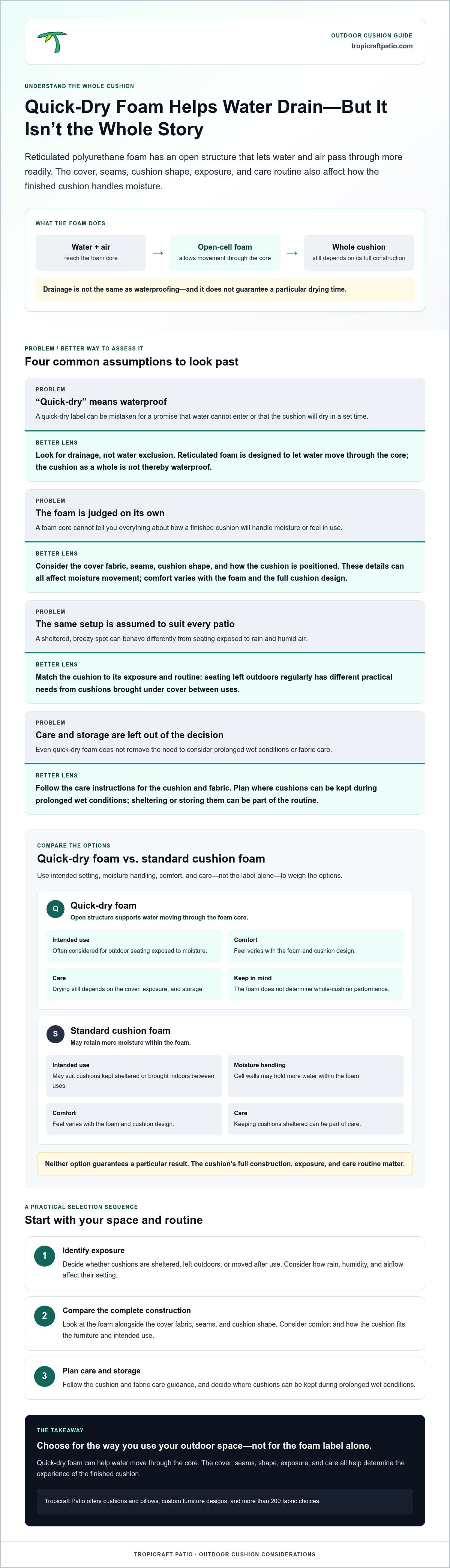
Quick-dry foam can help water drain through a cushion core, but it does not make the entire cushion waterproof or guarantee a particular drying time. The foam is one component of a finished seat, not a measure of the whole cushion’s performance.
Does quick-dry foam mean a cushion is waterproof?
No. Water resistance describes how well a surface limits water entry. Drainage describes how water moves through a material, while drying describes how moisture leaves the cushion over time. These properties are related, but they are not interchangeable. Open-cell reticulated foam is designed to let water move through it, rather than prevent water from entering the cushion.
The cover fabric, seams, cushion shape, and the way the cushion is positioned can all affect moisture movement. Exposure matters too: a cushion in a sheltered, breezy spot may behave differently from one exposed to rain and humid air. When choosing outdoor cushions, consider the full construction and your storage routine, not just the foam label. A well-matched cover and core can support both comfort and practical outdoor use.
Quick-dry foam vs. standard cushion foam: what to compare
Compare foam based on your routine, not the label alone. Reticulated foam’s open structure lets water pass through more readily, while standard cushion foam may retain more moisture. Comfort depends on the foam’s feel and the cushion’s full construction. Use these factors to weigh your options.
Neither option guarantees a particular result. Foam alone does not determine whole-cushion performance; the cover, seams, shape, exposure, and care routine matter too. A seat left outside through frequent rain has different demands from one stored under cover between occasional gatherings. For related reading on exterior upholstery, Marine Fabricator Magazine’s guide to foam solutions for outdoor cushions explores material choices for demanding environments.
Which cushion details matter beyond the foam core?
Consider whether the fabric and seams suit the cushion’s exposure, and whether its shape fits the furniture and intended use. Explore Tropicraft Patio's outdoor furniture options as you assess your setting. Tropicraft Patio offers cushions and pillows, with fabric choices available for custom designs. If you’re considering cushions for your space, discuss your outdoor seating needs with Tropicraft Patio.
Choosing outdoor cushions for Philadelphia patios and Jersey Shore homes
Start with how you use your outdoor space. A Philadelphia patio where cushions stay outside regularly has different practical needs from a Jersey Shore seating area where cushions are brought under cover between visits. Use this sequence to focus your choice:
Identify exposure: Consider whether the cushions are sheltered, left outdoors, or moved after use.
Compare construction: Look at the foam alongside the cover fabric, seams, and cushion shape. The Specialty Fabrics Review guide to how foam materials are chosen offers further context on seating materials.
Plan care and storage: Decide where cushions can be kept during prolonged wet conditions, and follow their care instructions.
Quick-dry foam cushions are a practical selection question, not just a material label. Match the construction to your furniture and routine, while considering the comfort and appearance you want. Tropicraft Patio offers cushions and pillows, along with custom furniture designs and more than 200 fabric choices to help bring those decisions together.
How should you care for quick-dry outdoor cushions?
Follow the care instructions for the cushion and its fabric rather than assuming one cleaning method suits every material. During prolonged wet conditions, removing cushions or storing them under cover can be a sensible part of your routine. To explore cushion options for your outdoor space, discuss your needs with Tropicraft Patio.
Choose cushions for the way you live outdoors
Understanding quick-dry foam starts with one distinction: the foam can help water move through the cushion core, but it does not determine how the whole cushion performs. Covers, seams, exposure, and care all shape the experience. Compare foam types alongside the cushion’s construction, comfort, and how often it will be left outdoors.
For a Philadelphia patio or a Jersey Shore retreat, consider your space and routine before choosing. Follow the care guidance for the cushion and fabric, and plan where cushions can be stored during prolonged wet conditions. The right combination can make outdoor seating feel welcoming and thoughtfully coordinated.
Family-owned Tropicraft Patio serves the Philadelphia area and offers cushion options, custom furniture designs, and more than 200 fabric choices. Explore cushion options with Tropicraft Patio and take the next step toward a comfortable outdoor space made for lingering.
Frequently Asked Questions
Is quick-dry foam waterproof?
No. “Quick-dry” describes a foam-related moisture-drainage characteristic, not a guarantee that the complete cushion is waterproof. The foam core may let water move through, while the cover fabric and seams affect how moisture enters and exits. Rainfall, humidity, placement, and care also influence the result, so assess the whole cushion rather than relying on its label.
How does quick-dry foam work in outdoor cushions?
In simple terms, reticulated polyurethane has an open, interconnected cell structure that allows water and air to pass through the foam core. That can support drainage, but it does not set a guaranteed drying time. The cover, seams, cushion shape, airflow, and exposure also affect how moisture leaves an outdoor cushion.
Can quick-dry foam cushions stay outside in the rain?
They can be exposed to rain, but quick-dry foam is not carefree, all-weather protection. Suitability depends on the complete cushion and how long it remains wet. Follow the cushion and fabric care guidance, and consider moving or storing cushions under cover during prolonged wet conditions. This helps manage exposure without assuming foam alone makes a seat weatherproof.
Is quick-dry foam more comfortable than standard cushion foam?
Not universally. Comfort depends on the foam’s feel, cushion design, support, and personal preference; foam marketed for drainage is not automatically softer or more comfortable. Compare how the cushion feels with how and where you’ll use it. For homeowners in Ardmore, Philadelphia, King of Prussia, Villanova, Ventnor, Margate, Stone Harbor, Avalon, and Cape May, Tropicraft Patio offers cushion options to consider.


Comments