


Reticulated Foam for Outdoor Cushions: How to Choose
What if your outdoor cushions could feel inviting after a passing shower without holding water like a sponge? Reticulated foam for outdoor cushions has an open-cell structure that lets air and water move through more freely than standard cushion foam.
That can matter when a patio sees rain or humidity, but drainage is only one part of the decision. You also want support that suits how you sit, a comfortable feel, and cushions that fit your furniture. This guide explains how reticulated foam works, how it compares with conventional fillings, and how to weigh cushion fit, fabric, construction, and exposure. Use these criteria to narrow your options, whether you’re furnishing a dining set or a deep lounge seat.
Table of Contents
What Is Reticulated Foam for Outdoor Cushions, and How Does It Work?
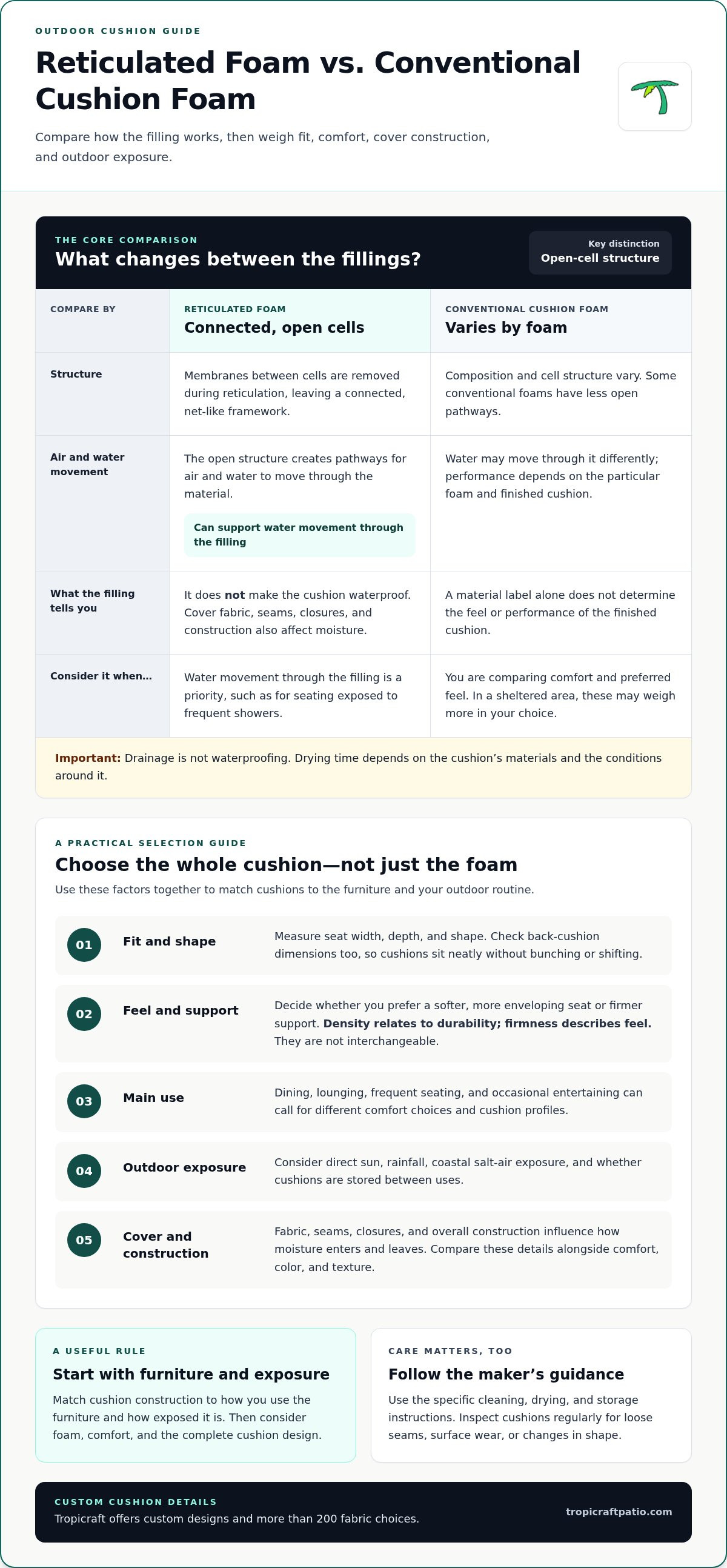
Reticulated foam is a type of open-cell polyurethane foam. During reticulation, membranes between the foam’s cells are removed, leaving a connected, net-like framework. This structure creates pathways for air and water to move through the material. The Reticulated foam overview describes this structure and how the material is produced. For outdoor cushions, reticulated foam can be a practical choice when water movement through the filling is a priority.
Drainage is not waterproofing. Reticulated foam allows water to pass through its structure; it does not prevent water from reaching the cushion or make the cushion itself waterproof. The cover fabric, seams, closures, and overall construction also affect how moisture enters and leaves. Even if water can pass through the filling, drying time depends on the cushion’s materials and the conditions around it.
Reticulated foam versus conventional cushion foam
Conventional cushion foams vary in composition and cell structure. Some have less open pathways, so water may move through them differently from reticulated foam. A material label alone does not tell you how a finished cushion will feel or perform. Consider the intended use, comfort preference, cushion design, and outdoor exposure together.
For a seat that stays outdoors through frequent showers, an open foam structure may suit the goal of encouraging water to pass through the filling. In a sheltered seating area, comfort and the preferred feel may matter more. In either setting, foam is only one part of the cushion system.
In brief: Reticulated foam supports water flow through its open structure, while waterproofing depends on the complete cushion and its materials. Assess the filling alongside the cover and construction to find cushions that fit your furniture and outdoor routine.
How to Choose Reticulated Foam for Outdoor Cushions
Start with the furniture, not the foam. Measure the seat’s width, depth, and shape, then consider cushion thickness and how the seat will be used. A dining chair needs a different profile and feel from a deep lounge seat meant for relaxed afternoons. Reticulated foam for outdoor cushions may suit settings where drainage matters, but the cushion still needs to fit the frame and feel comfortable.
Check the fit: Measure the seat and note its contours. Check the back cushion dimensions too, so the finished cushions sit neatly without bunching or shifting.
Choose the feel: Decide whether you prefer a softer, more enveloping seat or firmer support. Foam density relates to durability, while firmness describes how the cushion feels. The terms are not interchangeable.
Think about use: Dining, lounging, frequent seating, and occasional entertaining place different demands on comfort and cushion shape. Choose a profile that works for the main way you’ll use the furniture.
Assess exposure: Consider direct sun, rainfall, whether cushions are stored between uses, and coastal conditions such as salt-air exposure around the Jersey Shore.
Which cushion details matter as much as the foam?
Fit, fabric, seams, and construction work together. A filling designed to encourage water movement cannot determine how the cover handles moisture or how the complete cushion performs outdoors. Compare those details alongside color, texture, and comfort so the cushions suit both the setting and your design preferences.
Decision rule: Match the cushion construction to how you use the furniture and how exposed it is. For a coordinated look, Tropicraft Patio’s custom cushion designs and fabric choices can bring comfort and style together. Discuss cushion dimensions and fabric choices as you refine your selection.
Caring for Outdoor Cushions and Finding a Cohesive Solution
Start with the care instructions for the specific fabric and cushion. Follow the maker’s guidance for cleaning and drying, and avoid cleaners or treatments unless they’re recommended. A routine inspection can help you spot loose seams, surface wear, or changes in shape before the next season of regular use.
Consider where cushions will be stored during extended periods of poor weather or between seasons. Follow the maker’s storage guidance and prepare cushions for use according to those instructions. After periods of exposure, check them for visible wear, especially in sunny, rainy, or coastal settings. Care cannot prevent all wear, but regular checks help you notice when a cushion needs attention.
When custom cushions help complete an outdoor seating area
Custom cushions can bring comfort and visual harmony to furniture with distinctive proportions. Coordinated dimensions help cushions sit neatly, while fabric choices can tie the seating to the frame, surrounding landscape, or other outdoor accents. Tailored cushions can soften the structured lines of resin wicker furniture while keeping the seating area polished and inviting.
Tropicraft offers custom cushion designs and more than 200 fabric choices, making it possible to consider color, texture, furniture style, and intended exposure together. If you’re weighing reticulated foam for outdoor cushions, include the complete cushion and your care routine in the decision. From Ardmore, Philadelphia, and Villanova to King of Prussia and Jersey Shore communities such as Ventnor, Margate, Stone Harbor, Avalon, and Cape May, consider how your local setting affects the way you use and care for outdoor seating. Discuss dimensions and fabric options for your space with Tropicraft.
Shape an Outdoor Retreat That Feels Like Yours
Think of your patio as an extension of your home, shaped around the moments you want to enjoy there. A considered cushion choice can help an outdoor setting feel welcoming and personal, whether you’re refreshing a favorite chair or bringing new life to a seating area.
If you’re weighing reticulated foam for outdoor cushions, start with your furniture and outdoor routine. Tropicraft Patio is a family-owned business serving the Philadelphia area since 1977, with custom designs and fabric choices to help you bring your seating and style together.
Talk with our team about outdoor cushions and explore options for your space.
Frequently Asked Questions
Is reticulated foam good for outdoor cushions?
It can be a practical filling for outdoor seating, particularly when moisture management matters. Comfort is personal, so consider how the seat feels during the activities you enjoy, whether that’s a quick meal or a long afternoon outdoors. Choose a cushion that feels supportive for the way you use the furniture.
Is reticulated foam waterproof?
No. Reticulated foam itself is not a waterproof barrier, so it should not be treated as protection against rain or prolonged exposure. Think of the foam as one component of a cushion, not a substitute for following care guidance or protecting cushions when they’re not in use.
Can reticulated foam cushions stay outside all year?
Whether cushions can remain outdoors year-round depends on the complete cushion and its maker’s care guidance. Seasonal conditions vary across the Philadelphia region and Jersey Shore, so consider how exposed your seating is and how you’ll care for it through winter. Before each new outdoor season, inspect cushions for changes in shape or visible wear.
How do I choose the right foam for outdoor cushions?
Balance your comfort preference with how the seating will be used. If possible, try a cushion in a position similar to how you’ll sit at home rather than judging it by appearance alone. A dining cushion and a lounge cushion serve different purposes, so focus on the feel and profile that suit your furniture and routine.


Comments