


Premium Patio Furniture Covers: Protecting Your Philadelphia & Jersey Shore Investment in 2026

Last March, a Longport homeowner discovered that a single season of trapped moisture under a generic tarp had compromised the hand-woven wicker of their entire dining set. It's a frustrating reality for many who rely on standard protection that fails during a coastal gale or a heavy Pennsylvania snowstorm.
You've invested in a premium outdoor sanctuary to create your own oasis, and you rightfully expect that craftsmanship to endure for years. This guide helps you select high-performance patio furniture covers designed to shield your luxury investment from Philadelphia's freezing cycles and the Jersey Shore's corrosive environment. We'll examine the technical fabrics that provide essential ventilation while remaining entirely waterproof, ensuring your furniture remains pristine for the 2026 season.
Key Takeaways
Identify the specific climate threats facing your Philadelphia or Jersey Shore property, including ice expansion and the corrosive effects of salt air.
Learn how to select high-performance patio furniture covers that utilize breathable membranes to prevent moisture buildup and structural damage.
Discover why a 600D denier count is the essential standard for shielding luxury materials against heavy snow loads and wind-driven debris.
Master the professional preparation and maintenance techniques required to preserve your outdoor oasis and ensure the longevity of your investment.
Table of Contents Why High-End Patio Furniture Covers Are Essential in the Mid-Atlantic Climate Selecting the Right Protective Covers: Material, Breathability, and Fit Maximizing Longevity: Maintenance and Storage for Your Outdoor Oasis
Why High-End Patio Furniture Covers Are Essential in the Mid-Atlantic Climate
High-end outdoor living requires more than just quality furniture; it demands a sophisticated preservation strategy. A premium protective cover acts as a breathable, multi-layered shield specifically engineered for luxury materials. Unlike generic alternatives, these patio furniture covers use advanced textiles that block external precipitation while allowing internal vapors to escape. This breathability is vital for maintaining the integrity of your investment through the shifting seasons of the Mid-Atlantic.
Philadelphia winters present a dual threat of heavy snow loads and invasive ice. When moisture settles on your pieces, it doesn't just sit on the surface. It seeks out the smallest vulnerabilities in various types of patio furniture materials, leading to significant structural stress. Without a tailored shield, the weight of a single heavy snowfall can put hundreds of pounds of pressure on delicate frames and woven textures.
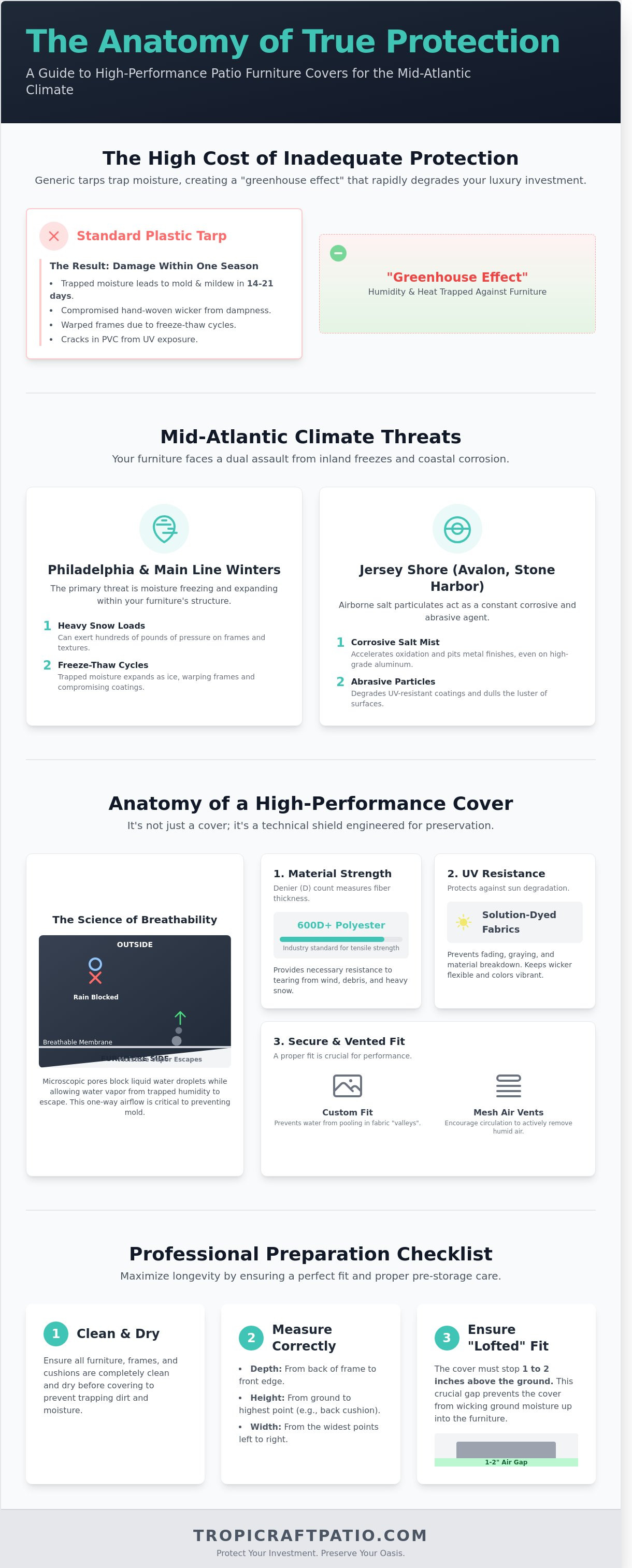
Many homeowners inadvertently create a "greenhouse effect" by using non-breathable plastic tarps. These cheap covers trap humidity and heat against the fabric, causing rapid mold and mildew growth on luxury cushions within just 14 to 21 days of stagnant conditions. True protection requires a technical fabric that balances absolute water resistance with high-performance ventilation to keep your oasis pristine.
The Impact of Freeze-Thaw Cycles on Main Line Patios
In Ardmore and across the Main Line, sub-zero nights cause moisture trapped in micro-cracks to expand with immense force. This expansion can warp frames or compromise specialized powder coatings. High-performance premium outdoor furniture lines require specialized venting systems to remain durable. These vents ensure that internal moisture escapes before the temperature drops, preventing the structural fatigue caused by repeated freezing and thawing throughout January and February.
Salt Air Protection for Avalon and Stone Harbor Homes
Coastal living in Avalon or Stone Harbor brings the beauty of the Atlantic, but it also introduces airborne salt particulates. These crystals act as a microscopic abrasive on finishes and a relentless catalyst for oxidation. Even high-grade aluminum requires a physical barrier to maintain its luster against the 24/7 salt exposure found at the water's edge. 'For coastal properties, a cover is the primary defense against the corrosive salt mist that characterizes the Jersey Shore shoreline.' Using patio furniture covers year-round in these environments ensures that salt doesn't pits the metal or degrade the UV-resistant coatings of your outdoor sanctuary.
Selecting the Right Protective Covers: Material, Breathability, and Fit
Investing in your outdoor sanctuary requires a technical understanding of the textiles designed to preserve it. The durability of patio furniture covers is often measured by their Denier (D) count, which indicates the thickness and weight of the individual fibers. For the high-wind environments of the Jersey Shore, a 600D or higher polyester is the industry standard. This density provides the necessary tensile strength to resist tearing when snagged by airborne debris or buffeted by seasonal storms.
Material Science: Beyond Simple Waterproofing
While basic PVC-backed fabrics are common in big-box stores, they often become brittle and crack when exposed to the intense UV rays of a Philadelphia summer. Professional-grade covers utilize solution-dyed acrylics or high-density polyethylene to ensure long-term colorfastness and structural integrity. This is particularly vital for rattan and wicker outdoor furniture. Without high UV-rated protection, these intricate fibers can lose their flexibility, leading to premature snapping and graying in as little as two seasons.
Advanced covers also incorporate breathable membranes. These specialized layers utilize microscopic pores that are small enough to block liquid water droplets but large enough to allow trapped water vapor to escape. It's this one-way airflow that prevents the "greenhouse effect" where trapped moisture fosters mold and mildew growth on your premium cushions. High-quality designs often feature integrated mesh vents to further encourage circulation without compromising the shield against rain.
Achieving the Perfect Fit for Your Oasis
A cover's effectiveness depends heavily on its silhouette. While universal options offer general protection, custom-fitted covers are essential for complex sectional configurations to prevent water pooling in fabric "valleys." Don't settle for a generic size that leaves your investment vulnerable. When measuring your pieces, follow this checklist:
Measure the total depth from the back of the frame to the front edge.
Record the height from the ground to the highest point, usually the back cushion.
Ensure the cover stops 1 to 2 inches above the ground to prevent moisture wicking.
This "lofted" fit is crucial for protecting aluminum dining furniture. Keeping the hem off the damp pavement prevents moisture from being drawn up toward the frame, while the fabric shields the powder-coated finish from acidic sap and bird droppings. To ensure your covers remain secure during 40-mile-per-hour gusts, look for security features like heavy-duty buckle straps, reinforced seams, and elastic shock cords. You can explore our outdoor collections to find high-performance pieces that deserve this level of dedicated care.
Maximizing Longevity: Maintenance and Storage for Your Outdoor Oasis
Philadelphia winters and Jersey Shore salt air require a disciplined approach to preservation. Before you deploy your patio furniture covers, ensure every piece is pristine. Trapping organic debris or moisture beneath a protective layer creates a greenhouse effect for mold and mildew. Follow this professional preparation sequence to ensure your investment remains flawless:
Sanitize: Remove pollen, bird droppings, and dust using a soft-bristle brush and a pH-neutral cleaner.
Dehumidify: Allow furniture to air-dry for at least 24 hours. Moisture is the primary catalyst for wood rot and metal oxidation.
The Air Bridge: Use an inflatable air bag or high-density foam blocks in the center of dining tables and deep-seating sets. This creates a peak that forces rain and melting snow to slide off, preventing the heavy water pooling that can stretch fabric or stress furniture frames.
The financial logic of protection is undeniable. Investing roughly $200 in high-grade patio furniture covers can extend the life of a $5,000 premium teak or cast aluminum set by more than 10 years. By shielding materials from the relentless freeze-thaw cycles of the Mid-Atlantic, you preserve the structural integrity and aesthetic finish of your sanctuary.
Cleaning and Storing Your Covers in the Spring
When the warmth returns, don't simply toss your covers into a corner. Clean the fabric with mild dish soap and lukewarm water to remove winter grime. Avoid harsh chemical solvents or power washers, as these strip the specialized water-repellent coatings. Once completely dry, store them in a sealed plastic bin. This prevents rodents from nesting in the fabric or chewing through the seams during the summer months.
Professional Support and Custom Solutions
Standard sizes don't always accommodate the unique silhouettes of luxury outdoor collections. We invite you to visit our Ardmore showroom for a personal consultation on custom-fitted solutions tailored to your specific layout. For homeowners managing expansive estates, our white-glove delivery and installation provides a seamless transition into the off-season. Contact our design team to find the perfect protective fit for your outdoor collection and ensure your oasis remains ready for its next debut.
Secure Your Outdoor Sanctuary for the Seasons Ahead
Protecting your investment requires more than a standard tarp. High-quality patio furniture covers act as the first line of defense against the unique microclimates of the Philadelphia area and the salt-heavy air of the Jersey Shore. By prioritizing breathable fabrics and a precision fit, you prevent moisture buildup and ensure your pieces remain pristine for decades. Our team has been family-owned since 1977. We understand exactly how Mid-Atlantic humidity and winter storms impact luxury materials like teak, cast aluminum, and wrought iron.
Don't leave your retreat to chance when the seasons shift. Proper maintenance and custom-fitted protection extend the life of your furniture; they transform a simple backyard into a lasting legacy of relaxation. We offer custom fabric and fit consultations to help you navigate these technical choices with ease. Our experts use nearly 50 years of local experience to guide you toward the perfect protective solution for your specific property. Your outdoor space deserves a level of care that matches its beauty.
Explore our protective outdoor cover collections and begin creating your own enduring oasis today.
Frequently Asked Questions
Should I leave my cushions under the patio furniture cover all winter?
It's best to store your cushions in a dry, indoor climate rather than leaving them under your patio furniture covers during the winter. While high-quality covers provide a shield, the 72% average humidity in the Philadelphia region can trap moisture against the fabric. This creates an environment where mold thrives, potentially damaging your investment in luxury comfort.
How do I prevent my furniture covers from blowing away in high Jersey Shore winds?
You can secure your covers by utilizing built-in buckle straps and adjustable drawstrings designed to withstand the 45 mph wind gusts common along the Jersey Shore. For added security, many homeowners use specialized furniture weights or bungee systems. Ensuring a snug fit prevents the fabric from acting like a sail, which protects both the cover and your premium frames from friction.
Are waterproof patio furniture covers better than water-resistant ones?
Water-resistant covers are the preferred choice for sophisticated outdoor spaces because they balance moisture protection with essential breathability. Unlike 100% waterproof plastic, these breathable fabrics prevent the condensation buildup that causes 90% of frame oxidation issues. This airflow is vital for maintaining the integrity of your teak or aluminum pieces throughout the changing seasons.
How do I clean mold or mildew off my furniture covers without damaging the fabric?
You should clean mold by applying a mixture of one cup of bleach and two ounces of mild detergent per gallon of water. Apply this solution to the affected area and let it soak for 15 minutes before scrubbing with a soft-bristle brush. Rinsing the fabric thoroughly ensures you maintain the protective coatings that define high-performance patio furniture covers.


Comments