


Is Poly Lumber Fade-Proof? What to Expect Outdoors
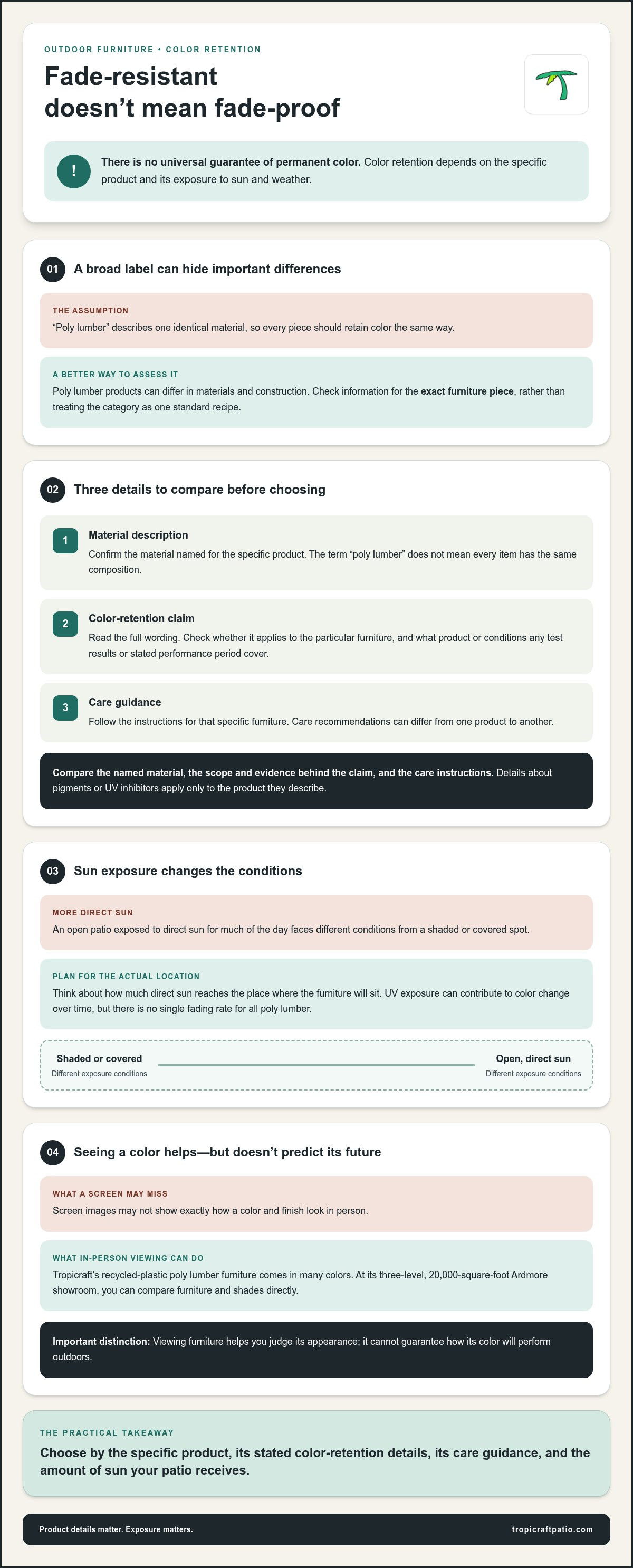
A patio chair can look vivid on day one and still change after years beneath an open sky. So, is poly lumber fade-proof? Not entirely. “Fade-resistant” describes an effort to limit visible color change, not a promise that furniture will keep its original color forever. The result depends on the specific product and the sun and weather it is exposed to.
If you’re choosing furniture for an exposed patio, compare the details for the exact piece and consider where it will sit. This guide explains how to assess color-retention claims, what to look for in product information, and how to make a practical choice for your outdoor space. Tropicraft Patio’s recycled-plastic poly lumber furniture comes in many colors, which you can compare at the Ardmore showroom.
Table of Contents
Is Poly Lumber Fade-Proof? Understand What Fade-Resistant Really Means
No, “fade-proof” is not a universal guarantee for poly lumber. If you’re asking, “is poly lumber fade-proof,” the practical answer is that color retention depends on the specific product. “Fade-resistant” indicates that a material is designed to limit color change, but the phrase alone does not define one performance standard for every brand or piece of furniture.
Poly lumber is a broad category, not one identical recipe. Materials and construction can vary by manufacturer, so a general overview of plastic lumber cannot establish how a particular furniture piece will perform. Focus on product-specific information rather than assuming all recycled-plastic lumber is made or tested the same way.
Why does sunlight affect outdoor furniture color?
Ultraviolet (UV) exposure can contribute to color changes in materials left outdoors over time. The amount of change varies with the product and its exposure conditions. A piece in direct sun for much of the day faces different conditions from one on a shaded or covered patio, so there is no single fading rate that applies to all poly lumber.
Fade-resistant means designed to slow or limit color change, not guaranteed never to fade. Claims about pigments or UV-protective ingredients should be understood as specific to the product described, not as standard features of every poly lumber item. Tropicraft’s poly lumber furniture is made from recycled plastic and comes in many colors. Compare the available shades with your outdoor setting and consider how much sun the furniture will receive.
How to Evaluate Poly Lumber Color Retention Before You Choose
Start with details about the exact furniture you’re considering, rather than relying on broad claims about recycled plastic. Tropicraft’s poly lumber furniture guide introduces the product category. For a particular item, review its material description, any stated color-retention information, and its care instructions.
Which product details help you compare fade-related claims?
Use this checklist when comparing furniture:
Material: Check the material named for the specific product. The category term “poly lumber” does not mean every item has the same composition.
Color-retention claim: Read the full wording and note whether it applies to the particular furniture or makes a general statement. If the information describes test results or a performance period, make sure you understand which product and conditions it covers.
Care guidance: Follow the instructions for that furniture. Care recommendations can differ, so don’t assume advice for one product applies to another.
Compare the named material, the scope and evidence behind any color-retention claim, and the product’s care instructions. This gives you a useful basis for evaluating claims without treating one manufacturer’s formulation as a category standard. Details about pigments or UV inhibitors, for example, apply to the product they describe. They do not establish how other recycled-plastic furniture is made or how it will look over time.
Tropicraft offers recycled-plastic poly lumber patio furniture in many colors. When you browse, consider the specific pieces and shades that suit your space, along with the product information. You can also connect with Tropicraft about your outdoor furniture project.
Choosing Poly Lumber for a Philadelphia-Area Outdoor Space
For an outdoor space in the Philadelphia area, choose poly lumber with realistic expectations: color retention depends on the product and its exposure to sun and weather. No general statement about recycled plastic can predict exactly how a particular chair or dining set will look over time.
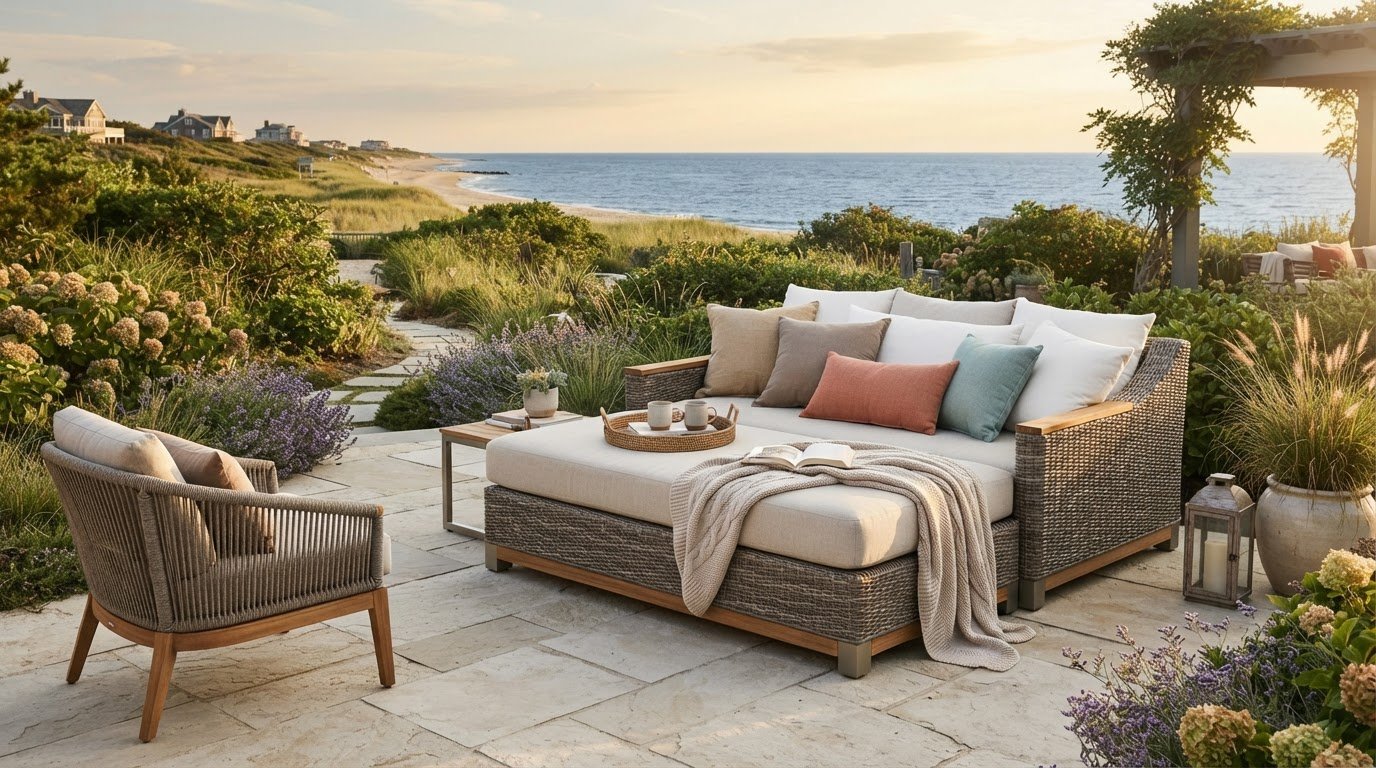
Before choosing a color, think about where the furniture will sit and how much direct sun reaches that spot. A shaded porch and an open patio have different exposure conditions. You can also consider whether the color works with the rest of your outdoor setting and whether you prefer to coordinate or create contrast. Tropicraft’s poly lumber furniture selection offers many colors to consider alongside the details for each piece.
How can seeing poly lumber in person help with your decision?
Screen images can help you narrow your preferences, but they may not show exactly how a color and finish look in person. At Tropicraft’s three-level, 20,000-square-foot Ardmore showroom, you can compare furniture and colors directly and see how different shades work with one another. Free parking is available behind the building. Viewing the furniture helps you decide on its appearance, but it cannot guarantee how its color will perform outdoors.
As you compare, keep the product’s color-retention information and care guidance in mind, along with the exposure of your chosen spot. That keeps the decision focused on the specific furniture and setting rather than a blanket promise about all poly lumber. Tropicraft serves customers in Ardmore, Philadelphia, King of Prussia, Villanova, Ventnor, Margate, Stone Harbor, Avalon, and Cape May. If you’re planning a patio update, talk with Tropicraft about your outdoor space.
Make Your Patio Feel Like Your Own
Your outdoor space should feel inviting season after season. Choose furniture with a clear understanding of its product-specific color claims, and account for how much sun your patio receives. Asking “is poly lumber fade-proof” is a useful starting point. The next step is finding a style and color that suit your space and how you plan to use it.
Tropicraft is a family-owned business serving the Philadelphia area since 1977, with a three-level, 20,000-square-foot showroom in Ardmore. Explore poly lumber furniture in person and compare its many colors as you plan a comfortable outdoor retreat.
Plan your outdoor furniture project with Tropicraft and explore options for your patio.
Frequently Asked Questions
Can poly lumber furniture be left outdoors year-round?
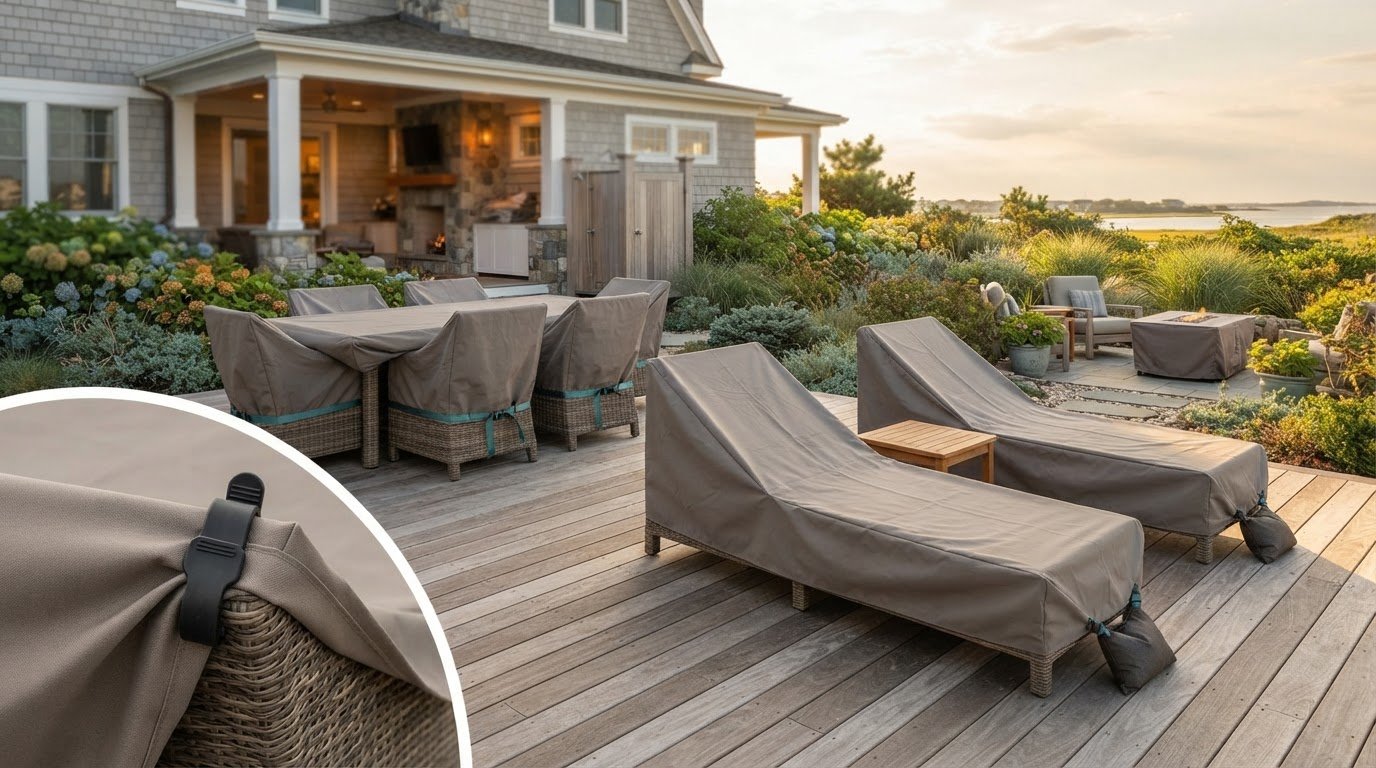
Year-round care guidance can differ by product. The answer to “is poly lumber fade-proof” is not a guarantee that every item is suited to every exposure. Follow the care instructions for the specific furniture and consider how much direct sun, rain, and seasonal weather your patio receives. A sheltered porch and an exposed garden terrace have different conditions.
Is poly lumber made from recycled plastic?
Yes. Tropicraft’s poly lumber patio furniture is made from recycled-plastic lumber. However, “poly lumber” describes a product category, and materials can differ among manufacturers. Check the material description for the specific furniture rather than assuming every piece has the same composition.
How should I clean poly lumber patio furniture?
Follow the care instructions provided for your specific furniture. Poly lumber products can differ, so use a cleaning method or product only when the manufacturer’s guidance allows it. If you no longer have the instructions, consult the maker’s care information before cleaning. This helps you avoid using a cleaner or technique that is unsuitable for the furniture’s surface.
Does poly lumber color run all the way through the material?
That depends on the product’s construction, so don’t assume every poly lumber piece has color throughout. Look for product details explaining whether the color is integral to the material or applied as a surface layer. If the information does not specify, treat the color construction as product-specific rather than drawing conclusions from another brand’s furniture or the category name alone.

Comments