


High Performance Outdoor Fabric for Different Climates
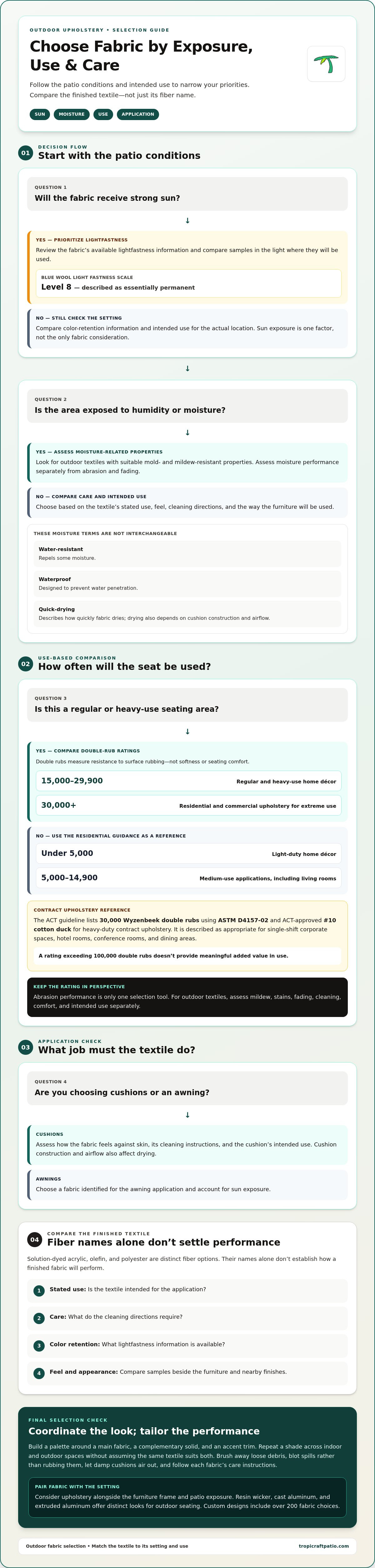
The most beautiful fabric isn’t automatically the best fit for your climate. Choose high performance outdoor fabric by matching its lightfastness and resistance to mold and mildew with your patio’s sun and moisture exposure. On the Blue Wool Light Fastness Scale, level 8 is described as essentially permanent, while outdoor fabrics are also available with mold- and mildew-resistant properties.
Sun, humidity, and frequent use all affect how fabric looks and feels over time, so consider more than color alone. This guide to high performance outdoor fabric explains what to look for in different climates, how to assess textiles for busy spaces, and how to coordinate fabric choices across indoor and outdoor settings. Use these practical criteria to weigh durability, care, and design as you create an inviting place to relax and gather.
Table of Contents
Fabric durability for high-traffic spaces
Frequent use exposes upholstery to friction, spills, and shifting weight. For busy seating, compare abrasion performance alongside comfort and cushion support. A double-rub rating measures resistance to surface rubbing, not softness or seating comfort. Use it as one selection tool, not as a complete forecast of how a seat will feel or perform.
Residential guidance places fabrics under 5,000 double rubs in light-duty home décor use. Ratings from 5,000 to 14,900 suit medium-use applications, including living rooms. Fabrics rated from 15,000 to 29,900 are classified for regular and heavy-use home décor. Ratings of 30,000 and above suit residential and commercial upholstery subjected to extreme use.
For heavy-duty contract upholstery, the ACT guideline lists 30,000 Wyzenbeek double rubs using ASTM D4157-02 and ACT-approved #10 cotton duck. That rating is described as appropriate for single-shift corporate spaces, hotel rooms, conference rooms, and dining areas. A rating exceeding 100,000 double rubs doesn’t provide meaningful added value in use.
Outdoor textiles address mildew, stains, abrasion, and fading through their material properties, treatments, and ease of cleaning. Assess these qualities separately rather than assuming an abrasion rating covers every exposure. For a busy dining area, look for suitable abrasion performance while choosing a weave and cushion that stay comfortable through longer meals. For lounge seating, consider how the fabric feels against skin and how often the seat will be used.
Indoor/outdoor performance fabric pairings
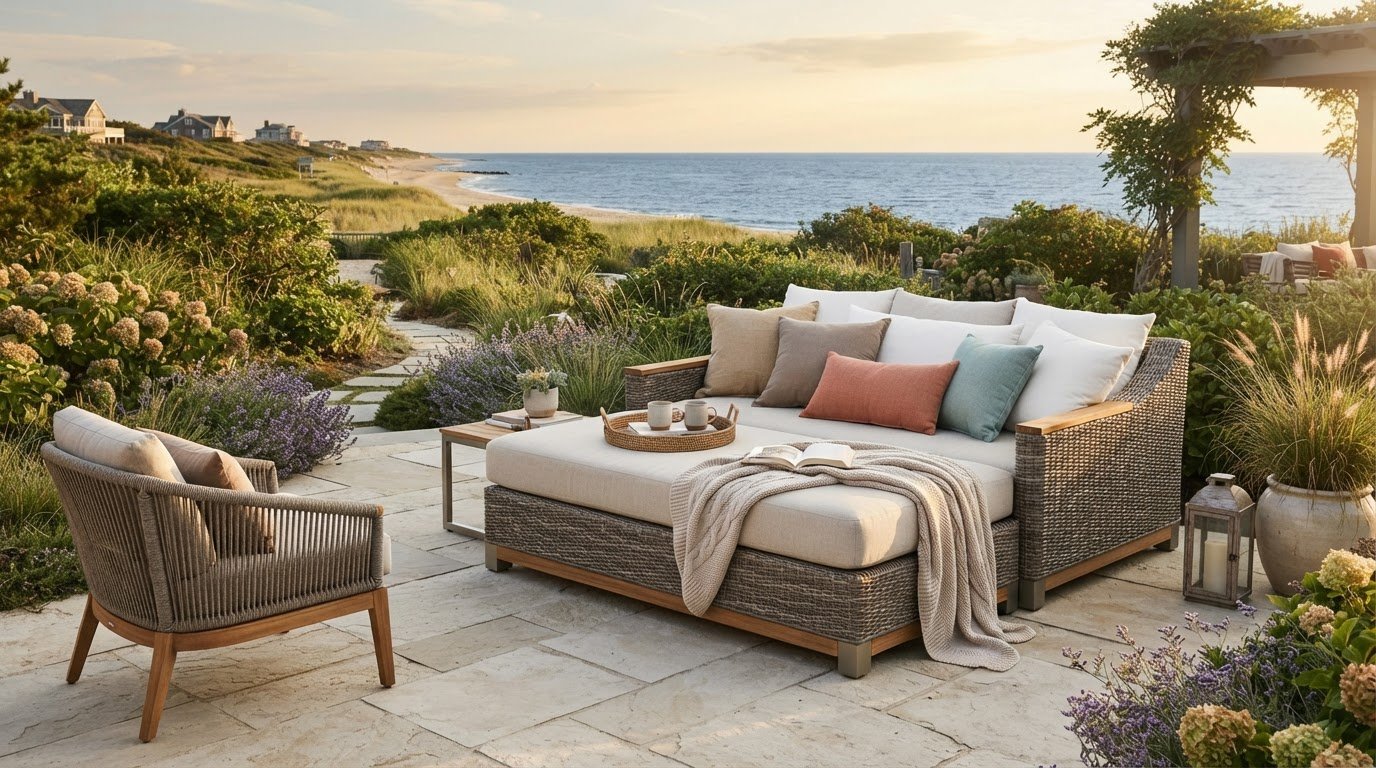
Coordinate indoor and patio textiles through a shared palette, while choosing each fabric for its setting. For example, repeat a soft blue from a living-room chair in outdoor pillows, then vary the weave to suit each space. This creates continuity without assuming indoor upholstery can withstand outdoor exposure.
Waterproof, water-resistant, and quick-drying describe different qualities. Water-resistant fabrics repel some moisture; waterproof fabrics are designed to prevent water penetration; quick-drying describes how quickly fabric dries. The terms are not interchangeable, and drying also depends on cushion construction and airflow.
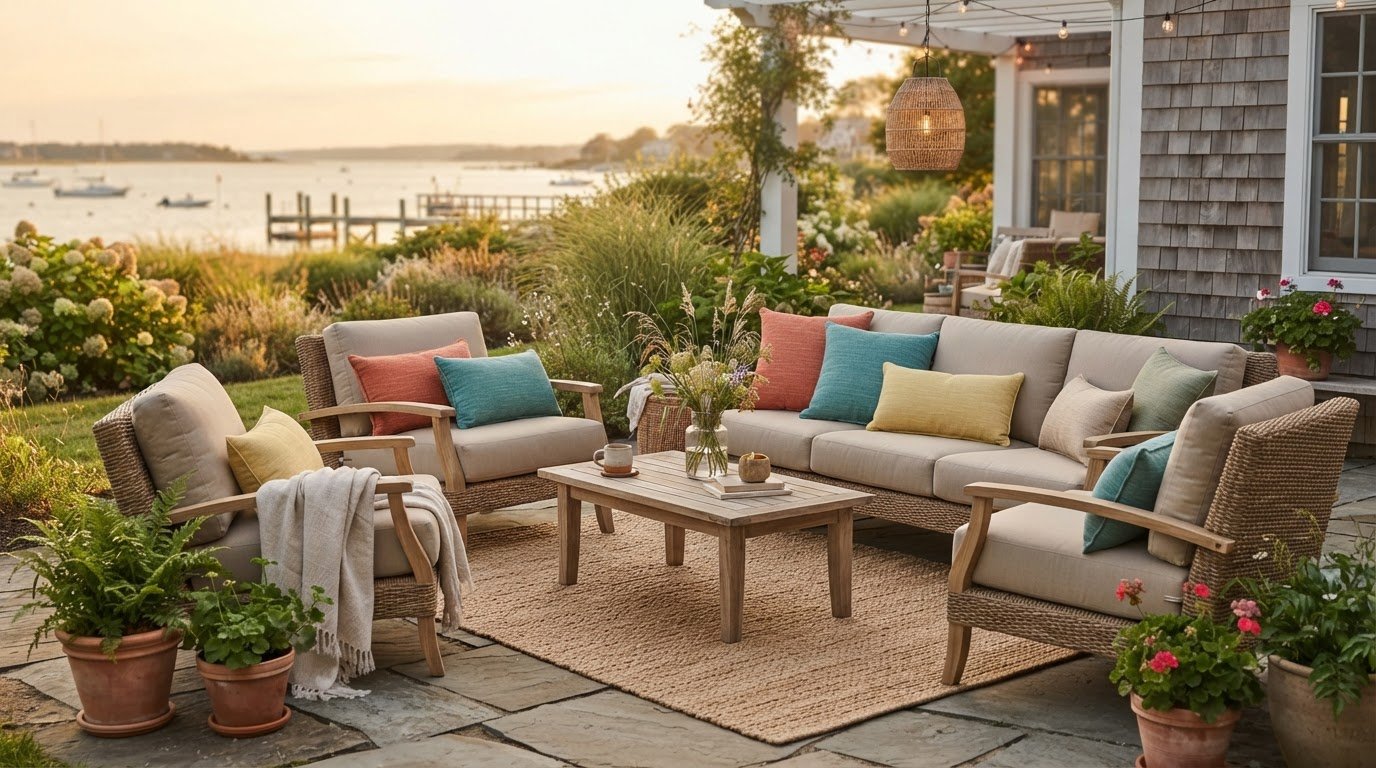
Build a lookbook around a main fabric, a complementary solid, and an accent trim. Place samples beside the furniture and flooring they’ll accompany, then compare them in the light where they’ll be used. An outdoor pillow pattern can pick up a color from an indoor rug, while a solid cushion keeps the patio setting visually calm.
For indoor and outdoor trims and pillows, prioritize color relationships and intended use over identical textures. If an indoor fabric isn’t suited to patio conditions, carry its colors outdoors with an outdoor-appropriate accent instead. Keep the look cohesive by repeating a shade, not necessarily the exact textile.
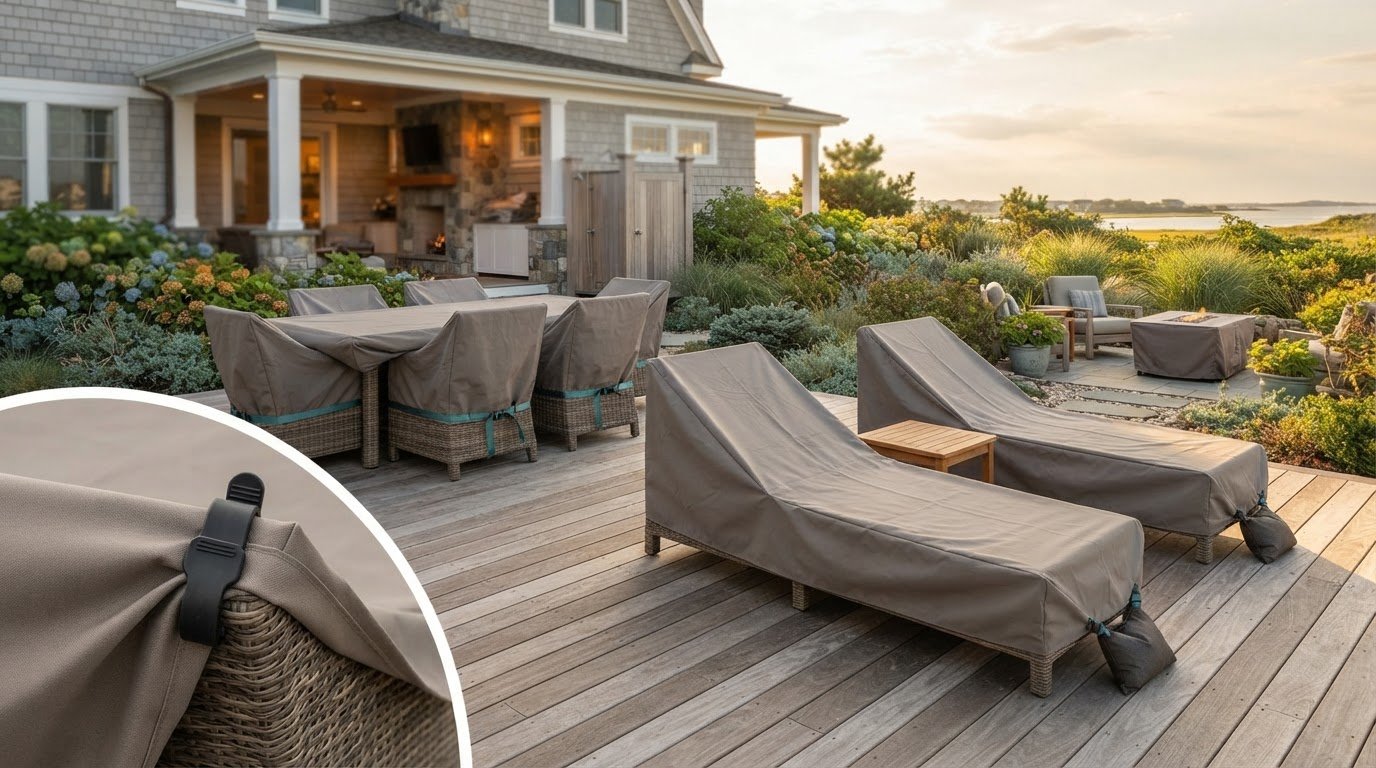
For routine care, brush away loose debris, blot spills rather than rubbing them, and let damp cushions air out. Follow each fabric’s care instructions before cleaning. To align fabric choices with your planned setting, discuss your outdoor fabric options.
Outdoor upholstery fabric selection
Start with the patio’s exposure and the role each textile must serve. Dining chairs, deep-seat cushions, and awnings each call for different selection priorities.
Comparing Outdoor Fabric Types
Solution-dyed acrylic, olefin, and polyester are distinct fiber options, but their names alone don’t establish a fabric’s overall performance. Compare each finished textile’s stated use, care directions, color-retention information, and feel instead of assuming one fiber always performs best.
For sunny seating, review the available lightfastness information and consider how the texture feels against skin. In a frequently used dining area, weigh cleaning guidance and comfort alongside the fabric’s intended use. Base the comparison on the actual location and how people will use the furniture.
High-Performance Outdoor Fabric Options
High performance outdoor fabrics are intended for outdoor upholstery, with performance characteristics suited to their application. A fiber name alone doesn’t identify a suitable option. Consider how exposure, use, preferred feel, and care needs shape your choice.
For cushions, assess feel and cleaning instructions; for awnings, choose fabric identified for that application and account for sun exposure. Compare samples beside the furniture and nearby finishes. Review the care guidance, then narrow your options to fabrics that suit both the setting and your preferred look.
To discuss fabric choices for your outdoor setting, contact Tropicraft Patio.
Tropicraft Patio: Resin Wicker
Tropicraft Patio helps you match fabric priorities with outdoor furniture for a cohesive, comfortable setting. Whether you’re choosing upholstery for a covered lounge or a sunny dining area, consider fabric options alongside the furniture frame and the space’s exposure.
Resin wicker, cast aluminum, and extruded aluminum offer distinct looks for outdoor seating. Tropicraft’s custom designs include over 200 fabric choices, making it possible to consider color and texture while planning the setting. Bring your preferred palette and intended use into the decision, then consider which furniture material best suits your patio’s style.
For a closer look at the materials and fabric options, contact Tropicraft Patio.
Shape a Patio That Feels Entirely Yours
Let the way you use your patio guide your choice of fabric and furniture. A quiet reading corner, a busy dining area, and an open lounge each call for a different balance of comfort, color, and care. High performance outdoor fabric is one part of creating a considered, inviting setting.
Tropicraft Patio offers resin wicker, cast aluminum, and extruded aluminum furniture to pair with your fabric palette. Consider the atmosphere you want to create, then use those preferences to guide your selection.
Contact Tropicraft Patio about fabric options and take the next step toward a patio that feels like your own retreat.
Frequently Asked Questions
How do I choose fabrics for different climates?
Start with the conditions at the exact seating location, not just the regional climate. A humid, shaded patio calls for attention to mold and mildew resistance, while direct sun makes color retention especially relevant. In coastal or exposed settings around Ventnor, Margate, Stone Harbor, and Avalon, consider how often furniture faces moisture and sunlight. Compare fabrics’ stated outdoor suitability and care instructions before choosing a color or weave.
Product Specification: Abrasion Rating?
An abrasion rating helps estimate how well upholstery withstands repeated rubbing, but it doesn’t measure resistance to fading or moisture. Use it to compare options based on how each seat will be used: a frequently occupied dining chair experiences different wear from a decorative accent cushion. Consider the weave and cushion construction, too, since the rating describes the fabric’s abrasion performance.
What is Light Fastness?
Lightfastness describes a textile’s ability to retain color when exposed to light. It helps when comparing fabrics for a sunny terrace, but it doesn’t measure abrasion, mildew resistance, or cleanability. Review the fabric’s stated lightfastness information, then view a sample where it will be used. Seeing it beside the furniture and surrounding colors can help you judge the overall look.
What are the best outdoor fabrics for UV resistance and colorfastness?
Choose based on documented lightfastness performance rather than relying on a fiber name alone. Solution-dyed acrylic, olefin, and polyester are distinct options, but the specific fabric’s rating and intended use matter more than a broad material label. For a sun-exposed cushion, compare the available performance information and view the color in its actual setting before coordinating it with other textiles.
What are the best high-performance outdoor fabrics for cushions, upholstery, and awnings?
The best choice depends on the application and its exposure. For cushions, weigh comfort, cleaning needs, and outdoor suitability; for frequently used upholstery, compare abrasion performance. Awnings have different demands from removable cushions, so select textiles specifically intended for that application. Don’t assume one fabric suits every use. Compare each option’s care guidance and performance details against where and how it will be installed.
Comments