


How to Prevent Outdoor Cushions from Blowing Away
A gust can turn a serene patio into a scramble. To prevent outdoor cushions from blowing away, secure them to the furniture with ties or discreet grips, add weight where suitable, and bring them indoors when the wind picks up. Cushions can catch gusts from underneath, so act before stormy weather arrives to protect both the cushions and your carefully arranged outdoor space.
It’s frustrating to find cushions scattered across the patio just as you’re preparing to relax or entertain. A few thoughtful adjustments can help keep them in place during ordinary breezes, while storing them is the safer choice when stronger winds approach.
Explore practical ways to use ties, fasteners, anti-slip materials, and added weight, as well as how to prepare your seating area when the forecast turns unsettled.
Table of Contents
Securing cushions with ties, grips, or fasteners
Use existing cushion ties first. Knot each tie around a sturdy chair slat or frame member, keeping the cushion centered. This simple attachment works well for outdoor dining chairs with accessible frame sections.
If a cushion has no ties, add fabric ties at its corners and secure them around the frame. For a discreet, removable option, place adhesive-backed hook-and-loop coins beneath the cushion and on the seat frame.
Choose adhesive fasteners rated for outdoor use. Press each surface firmly into place, then let the adhesive set according to its product directions before relying on the grip.
For exposed frame edges, use cushion clips that clamp onto the frame and grip the fabric. Check that each clip sits securely without pinching seams or pulling the cushion out of shape.
Thread adjustable straps beneath the seat through gaps in the furniture frame. Short bungee cords can also loop around the cushion and under the frame; tuck any excess cord out of sight.
For a low-profile alternative, cut rubberized shelf liner or an anti-slip rug pad to fit between the cushion and seat. It adds friction without attaching hardware to the fabric or frame.
Inspect fasteners regularly and at the start of each season. Replace adhesive grips if they loosen, and repair or replace ties when the stitching frays. A secure fit depends on sound attachment points.
If cushions continue to blow away, use heavy-duty clips in very windy areas or store them. Small fabric pouches filled with sand or pebbles can serve as anchors. On a deck, strap furniture to secure points underneath or to railing posts.
Adding weight with planters or storage benches
Weighted cushions can resist movement better than unweighted ones, but added weight isn’t a substitute for securing or storing them. Heavier outdoor fabric alone isn’t a reliable anchor; wind can still catch a cushion’s broad surface.
Place a deck box, storage bench, or weatherproof bin near your seating area. Store cushions inside when they’re not in use, keeping them protected and close at hand for your next gathering.
Choose a storage spot that’s easy to reach from the chairs. A bench beside the seating group makes it simpler to put cushions away instead of leaving them exposed overnight.
Position heavier planters near furniture legs or feet to help stabilize patio furniture. Keep them close enough to add weight, but leave a clear path for moving chairs and accessing the seats.
For cushions that need to stay outdoors, consider a weighted insert. Sand-filled inserts or a weighted layer inside the cover add mass while keeping the cushion’s exterior appearance intact.
Use weight as one part of your setup, not the only safeguard. Pair weighted cushions with ties or grips, and move them into storage as the wind picks up.
Before arranging planters or a storage bench, consider how they fit your patio’s layout and daily use. To talk through your patio seating needs, share the space and comfort you have in mind.
Preventing cushions from blowing away in stormy weather
Bring cushions indoors as the wind begins to rise, rather than waiting for severe weather. A cushion’s broad, flat surface can catch gusts from below and lift away from its seat.
Don’t rely on a universal wind rating for fasteners. Results depend on the attachment, fabric, and frame. One customer review reported a pack protected a pillow in winds up to 40 mph, but that isn’t a general rating for other products.
Use short bungee cords only when they fit securely beneath the seat. Tuck hooks and excess cord away from walkways to reduce snagging or tripping. Place heavy objects where they won’t shift or obstruct movement around the patio.
Position seating near a house, garage, fence, or hedge for shelter. Avoid gaps between structures where wind can funnel through and buffet furniture from different directions.
Consider how your outdoor furniture options fit the patio’s exposed areas. Planters, slatted screens, and outdoor curtains can soften wind around seating; designs that allow some airflow help avoid turbulence from a solid barrier.
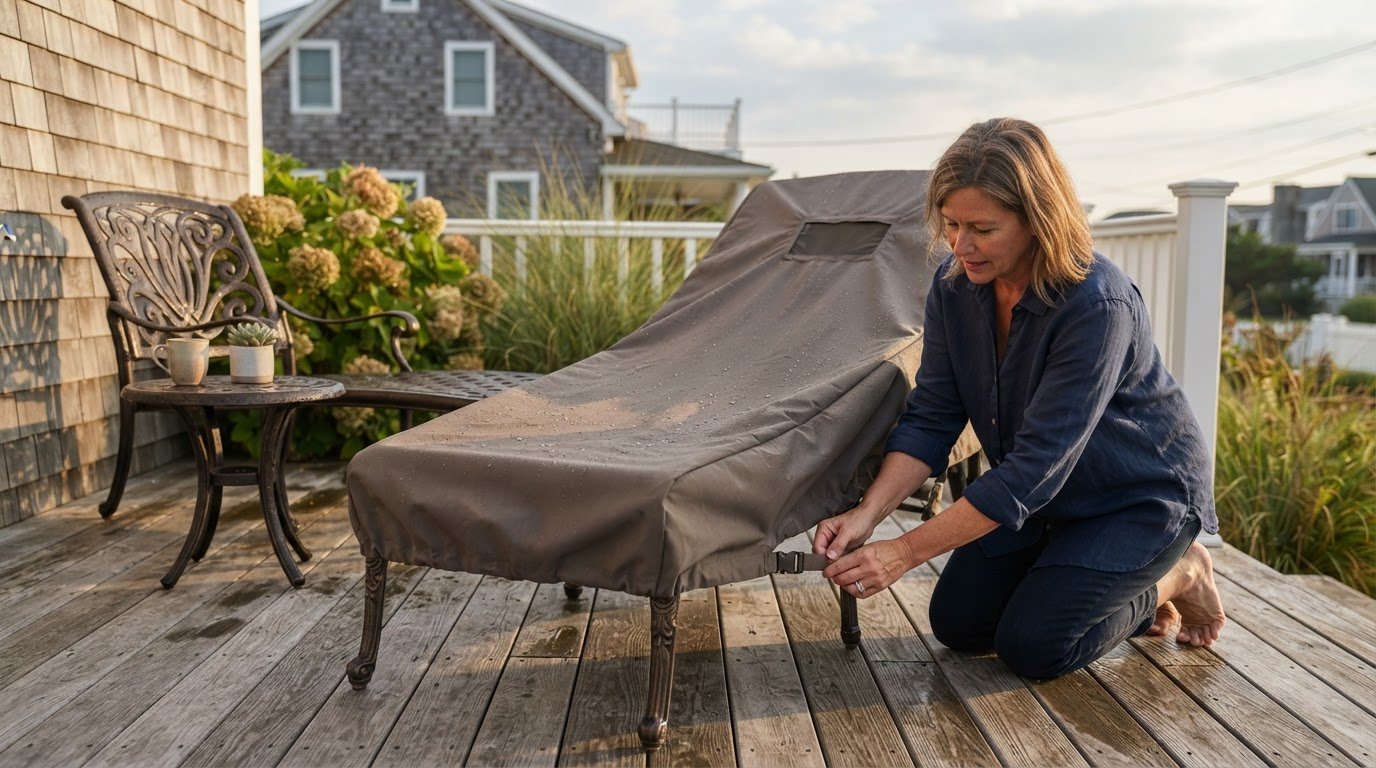
Secure furniture covers with drawcords or buckles. A loose cover can catch the wind and pull at the furniture underneath. Remove a cover if strong gusts arrive and it cannot stay close to the frame.
Before a storm, clear loose items from the patio and move cushions to a protected indoor space. This simple reset helps preserve an orderly seating area and keeps cushions ready for calmer weather.
Tropicraft Patio: Cushions & Pillows
Tropicraft Patio offers Cushions & Pillows for homeowners refreshing an outdoor seating area or choosing cushions to suit their furniture. A well-matched cushion sits neatly on its seat, making it easier to use ties, grips, or other fastening methods without awkward gaps or excess fabric.
If you’re updating the whole setting, explore seating in Resin Wicker, Cast Aluminum, or Extruded Aluminum alongside your cushion choices. The right combination can bring comfort and a considered look to your patio, while practical securing and storm-preparation habits help keep cushions in place and protected.
Contact Tropicraft Patio to discuss your outdoor seating needs.
Make your patio easier to enjoy in every season
Make cushion care part of how you use your patio, not an afterthought. A simple routine for how to prevent outdoor cushions from blowing away can help keep your seating ready for quiet afternoons and spontaneous gatherings.
Consider how your outdoor space changes through the seasons, and choose a cushion-care routine that’s easy to maintain. Small, consistent habits can help preserve the calm, welcoming atmosphere you’ve created.
Ready to shape a more comfortable outdoor space? Contact Tropicraft Patio to discuss your ideas and take the next step toward a welcoming patio.
Frequently Asked Questions
What are the best ways to keep outdoor cushions from blowing away?
The best method depends on the chair’s shape, cushion fit, and exposure to gusts. For a sheltered seating nook, a simple attachment may be enough for everyday use; exposed seating needs a plan for unsettled weather. Think of how to prevent outdoor cushions from blowing away as a combination of choosing a suitable attachment and knowing when to put cushions away.
How do outdoor cushion ties, straps, and Velcro fasteners work?
Each option connects the cushion to the furniture differently, so frame design is the deciding factor. A chair with open spaces beneath its seat accommodates a different attachment than one with a solid base. Consider how often you remove cushions, too: a fastener that releases easily can make routine cleaning and seasonal storage more convenient.
Are outdoor cushion clips or furniture-grip fasteners effective in wind?
Clips can help in ordinary breezes when they match the frame and cushion. An exposed patio or strong gusts place greater demands on any attachment, so don’t treat a clip as a storm safeguard. If the cushion shifts or the fastener loosens during use, choose another approach before relying on it.
How can you add ties or fasteners to cushions that do not have them?
First consider the cushion cover’s construction and the furniture’s attachment points. A fastener needs a secure place on both surfaces, and adding stitching may affect the cover’s appearance or integrity. For a tailored finish, choose an attachment that suits the cushion’s seams and frame rather than placing hardware where it could press against the sitter.
Do non-slip pads or cushion grippers keep patio cushions in place?
Anti-slip pads are most useful when cushions slide across smooth seats during ordinary use. Measure the seat area and trim the pad so it lies flat without protruding around the cushion’s edges. A neat fit helps prevent bunching when someone sits down. For cushions that lift in gusts, friction alone may not solve the problem.

Comments