


Heavy Duty Patio Umbrella for Wind: The Philadelphia Luxury Buyer’s Guide
Imagine a Saturday afternoon on your Main Line terrace, the scent of blooming jasmine in the air and a chilled glass of Sancerre in hand. Suddenly, a sharp gust from the Delaware Valley sends your standard umbrella into a frantic, metal-clanging dance. It is a jarring disruption to the peace of your outdoor retreat. You shouldn't have to choose between industrial-grade stability and the refined aesthetic of your luxury furniture. We understand the frustration of flimsy designs that compromise your safety and your style.
This guide helps you discover how to select a heavy duty patio umbrella for wind that transforms your Philadelphia or Jersey Shore patio into a durable, private sanctuary. You will learn the secrets of high-end engineering, from flexible fiberglass ribs to the specific base weights needed for coastal breezes. We will explore how to invest in quality materials that offer peace of mind during even the most spirited afternoons, ensuring your space remains a calm center for relaxation and social connection.
Key Takeaways
Understand how "dynamic flex" engineering allows fiberglass ribs to bend with the wind rather than breaking under pressure.
Identify why marine-grade aluminum and specialized powder coatings are essential for preventing corrosion in coastal areas like Avalon and Stone Harbor.
Learn the specific criteria for a heavy duty patio umbrella for wind, focusing on the critical relationship between canopy size and anchored mass.
Compare the structural advantages of traditional market umbrellas against the versatile elegance of high-end cantilever models featuring integrated rotation locks.
Master seasonal maintenance and storage techniques designed to preserve the beauty and longevity of your outdoor investment through Philadelphia winters.
Table of Contents
Anatomy of a Sanctuary: Engineering the Wind-Resistant Umbrella
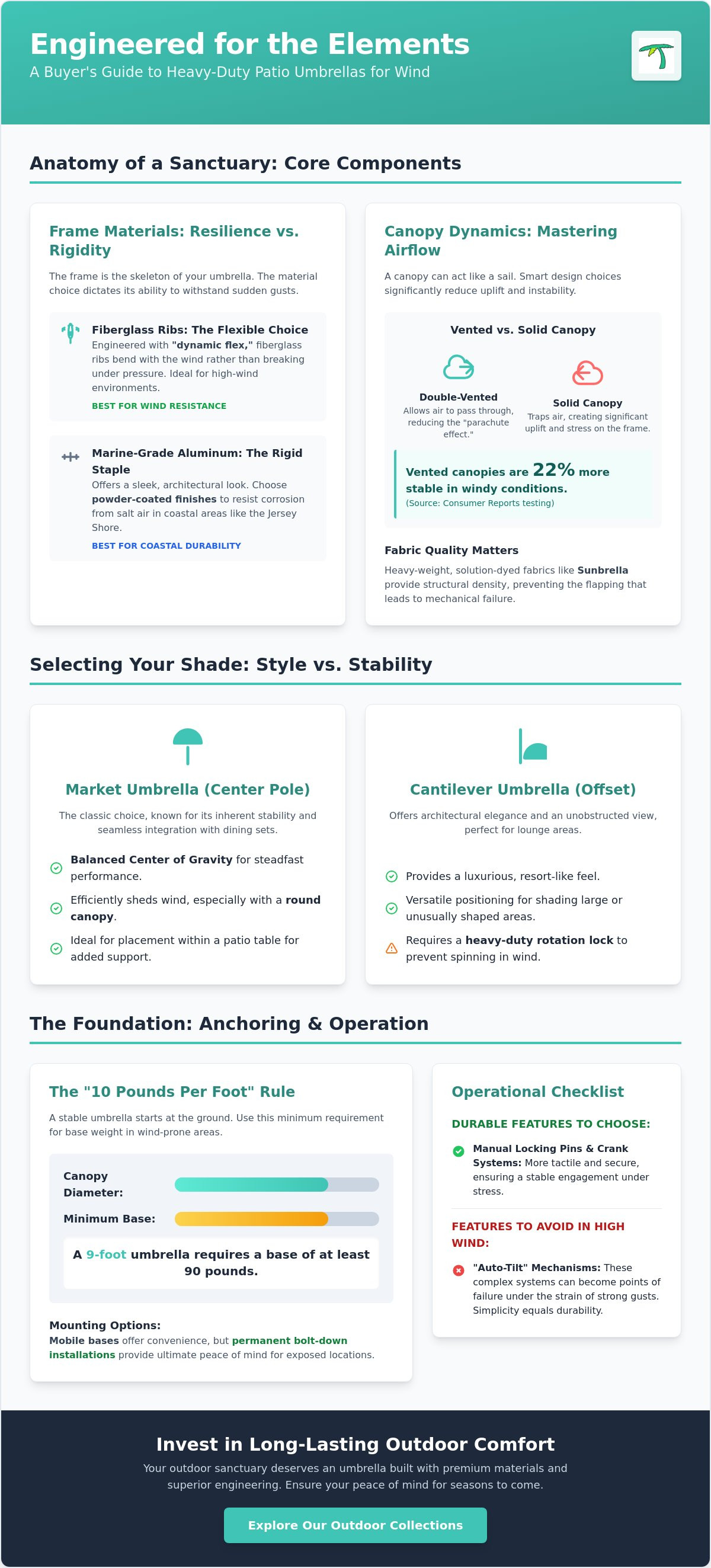
True luxury lies in the details that remain unseen until they are tested by the elements. While the basic design of an umbrella has changed little over centuries, modern engineering has introduced "dynamic flex" to ensure your retreat remains undisturbed. A heavy duty patio umbrella for wind is defined by its ability to dissipate kinetic energy through structural movement rather than resisting it with brittle force.
Frame Materials: Aluminum vs. Fiberglass
Selecting the right skeleton for your shade is a balance of rigidity and resilience. Fiberglass ribs are the preferred choice for high-wind environments because they mimic the action of a high-end fishing pole. They bend and bow under pressure, absorbing the shock of a sudden gust without snapping or warping. This flexibility is the secret to surviving a surprise Philadelphia thunderstorm.
For those prioritizing a sleek, architectural look, high-performance aluminum remains a staple. We recommend marine-grade, extruded aluminum frames for Jersey Shore properties. These frames feature specialized powder-coated finishes that resist the corrosive effects of salt air. It's an investment that ensures your furniture retains its luster despite the harsh coastal environment.
Canopy Dynamics and Airflow
The canopy is often the most vulnerable component, acting as a sail during sudden updrafts. To prevent the "parachute effect," look for double-vented or tiered designs. These openings allow air to pass through the structure, significantly reducing uplift. Testing by Consumer Reports indicates that vented canopies are, on average, 22% more stable in windy conditions than solid alternatives.
Fabric quality also dictates stability. Heavy-weight Sunbrella fabric provides a structural density that lighter polyesters lack. This added weight helps the canopy hold its shape, preventing the frantic flapping that often precedes mechanical failure. A heavy duty patio umbrella for wind combines these vented architectures with superior textiles to create a stable, silent sanctuary for your outdoor living space.
Selecting Your Shade: Cantilever vs. Market Styles for High-Wind Areas
Choosing the right silhouette for your heavy duty patio umbrella for wind is a balance of physics and personal style. For many homeowners on the Main Line, the traditional market umbrella remains the gold standard. Its center-pole design ensures a balanced center of gravity, allowing it to remain steadfast even when a sudden gust sweeps across the lawn. This classic profile integrates seamlessly with premium resin wicker or timeless teak collections, creating a cohesive and inviting sanctuary.
Luxury cantilevers offer a distinct, architectural elegance by keeping the support pole out of your line of sight. While they provide an unhurried, resort-like feel, they require a heavy-duty rotation lock to prevent the canopy from spinning during a breeze. In urban Philadelphia patios, where wind tunnel effects are common, canopy shape matters. Round canopies tend to shed wind more efficiently than square designs, which can catch the air like a sail. We recommend following industry testing standards to ensure your selection meets the rigorous demands of coastal or city environments.
The Foundation: Anchor Systems and Base Weights
A stable heavy duty patio umbrella for wind begins at the ground. For wind-prone decks, the "10 pounds per foot" rule is your minimum requirement. A nine-foot umbrella requires a base of at least 90 pounds to remain secure. While mobile bases with casters offer convenience, permanent bolt-down installations provide the ultimate peace of mind for exposed areas. If you are unsure which mounting system suits your space, our team can help you curate the perfect setup for your home.
Operational Ease: Winch and Tilt Mechanisms
Simplicity is often the hallmark of durability. We advise avoiding "auto-tilt" features for umbrellas used in high-wind conditions. These mechanisms can become points of failure under stress. Instead, opt for manual locking pins and crank systems. These components offer a more tactile, secure engagement, ensuring your retreat remains stable and silent throughout the afternoon.
Mid-Atlantic Resilience: Longevity in Philadelphia and the Jersey Shore
Living in the Mid-Atlantic requires a specific type of durability that standard retail options simply cannot provide. For homes in Avalon or Stone Harbor, salt air is a constant factor that quickly degrades inferior metals. A heavy duty patio umbrella for wind must feature high-performance finishes to prevent pitting and oxidation. This resilience ensures your investment remains a centerpiece of your sanctuary for years, rather than a single season.
Nor'easters and sudden coastal gusts demand a structural integrity that goes beyond basic aesthetics. When the Philadelphia winter arrives, proper seasonal storage is essential. We recommend professional-grade protective covers or climate-controlled storage to shield the intricate mechanical components from ice and debris. Choosing quality from the outset provides a significant return on investment through longevity and the quiet confidence that your retreat is prepared for any weather.
Sunbrella Fabric and UV Stability
The canopy's endurance is just as vital as the frame. Solution-dyed acrylics, such as Sunbrella, are engineered to lock color deep into the fiber. This prevents the unsightly fading that often plagues cheaper polyesters under the intense summer sun. For maximum wind resistance, the canopy must be "drum-tight." Proper fabric tension prevents the material from snapping or stretching, which helps the umbrella maintain its aerodynamic profile during a sudden breeze.
Professional Installation and Customization
True luxury is found in a seamless experience. Our white-glove delivery and assembly service ensures your base-to-pole weighting is perfectly calibrated for your specific environment. We invite you to experience the tactile reality of our collection at our Ardmore showroom. You can feel the weight of the frames and see the vibrant fabric options in person. If you require a bespoke solution, feel free to contact Tropicraft Patio for custom fabric and frame configurations tailored to your unique outdoor retreat.
Elevating Your Private Outdoor Retreat
Your outdoor space is an extension of your home's character. By prioritizing dynamic engineering and robust materials, you ensure your retreat remains a place of absolute serenity. Selecting a heavy duty patio umbrella for wind is an investment in both safety and sophisticated design. Whether you prefer the architectural lines of a cantilever or the balanced strength of a market style, the right choice preserves your peace of mind and enhances your home's aesthetic.
Since 1977, we have served the Philadelphia area by curating premium outdoor solutions that stand the test of time. Our 20,000-square-foot showroom allows you to experience the world's leading shade brands through tactile engagement. We provide white-glove delivery and professional installation across the Main Line and the Jersey Shore to ensure every detail is handled with care. This personalized approach removes the guesswork, allowing you to focus on the leisure you deserve.
Ready to elevate your environment? Explore our collection of wind-resistant luxury umbrellas and let our experts guide you toward the perfect sanctuary. We look forward to helping you create an outdoor space that inspires relaxation and connection for years to come.
Common Questions Regarding Wind-Resistant Umbrellas
What is the best umbrella shape for a windy patio?
Round or octagonal shapes are the most aerodynamic choices for exposed outdoor spaces. These silhouettes allow air to flow evenly around the canopy, reducing the pressure that can cause an umbrella to tilt or lift. In the urban courtyards of Philadelphia, where wind tunnel effects are common, these rounded edges offer a significant advantage over square designs by minimizing the surface area that catches sudden gusts.
Can I leave my heavy-duty umbrella open during a storm?
No, you should always close your canopy when sustained winds exceed 25 mph or during any severe weather event. While a heavy duty patio umbrella for wind is engineered for superior resilience, it is not designed to remain open during a Nor'easter or heavy thunderstorm. Closing the umbrella when it is not in use is the most effective way to protect your investment and ensure the safety of your property.
How heavy should my umbrella base be for 20-30 mph winds?
For a standard 9-foot center-pole umbrella, a base weighing at least 50 lbs is required for stability in 25 mph winds, though 75 lbs is recommended for added security. Cantilever models require significantly more mass, often needing 200 lbs or more to offset the weight of the reaching arm. Having the correct anchored mass is essential for maintaining the tranquility of your retreat during a breezy afternoon at the Jersey Shore.
Is fiberglass better than aluminum for wind resistance?
Fiberglass is often the preferred choice for wind resistance because its natural flexibility allows the ribs to bend and absorb energy without snapping. High-end aluminum is valued for its rigid strength and architectural beauty, but it lacks the "dynamic flex" found in fiberglass. A heavy duty patio umbrella for wind that utilizes fiberglass components effectively acts as a shock absorber, dissipating the force of the wind to prevent structural failure.


Comments