


Custom Cushions for Comfortable Built-In Bench Seating
What if the most comfortable bench cushion starts with a measuring tape, not thicker foam? Custom cushions for built-in benches fit best when you measure the seat wall to wall at both the front and back, since the sides may not be perfectly square. A regular-use bench should finish 18 to 20 inches high from the floor to the top of the cushion.
A well-fitted cushion can make a built-in bench comfortable and inviting, while the wrong dimensions or construction can make it awkward to sit on. This guide explains how to measure the seat, when a Dacron batting wrap may add comfort, and why a wide cushion in striped or patterned fabric may need a center seam. You’ll also learn how bench use and cushion thickness affect your choices, so you can plan a comfortable, polished seating area.
Table of Contents
Should I add Dacron batting to my bench cushion?
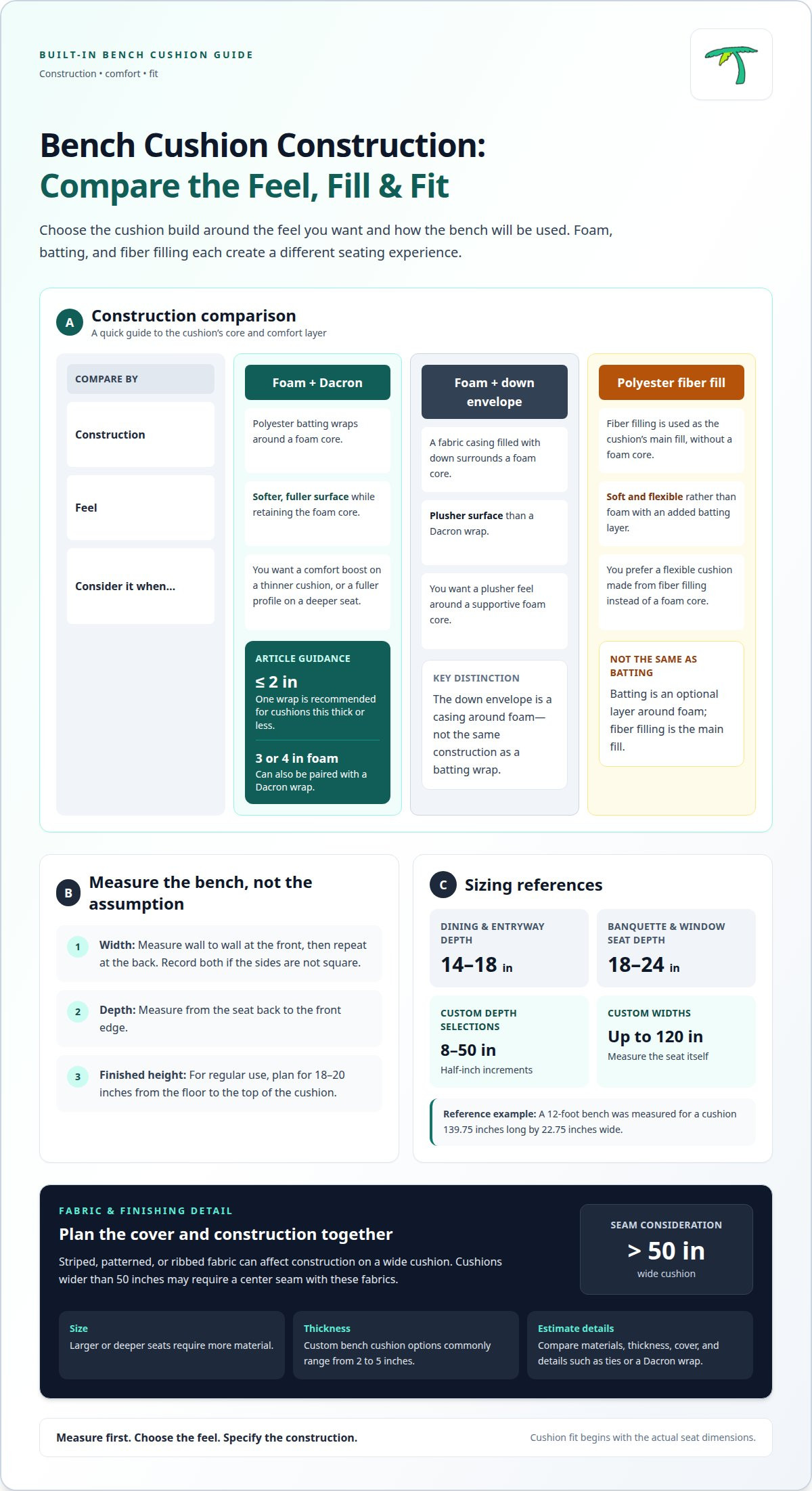
Dacron is polyester fiber batting wrapped around foam, adding a softer, fuller surface beneath the cushion cover. A single Dacron wrap is recommended for bench cushions 2 inches thick or less when you want a noticeable comfort boost. For a deeper seat, 3 or 4 inches of high-density foam can also be paired with a Dacron wrap.
Batting is different from polyester fiber filling used as a cushion’s main fill. Fiber filling creates a soft, flexible cushion without a foam core, while batting is an optional layer around foam. The right construction depends on whether you prefer a supportive seat or a softer, more yielding feel.
A down envelope is another construction option: a fabric casing filled with down surrounds a foam core. Compared with a Dacron wrap, it creates a plusher surface. Consider how you use the bench and how much softness you want before choosing either option.
For a thin cushion: Add one Dacron wrap to cushions 2 inches thick or less for a softer feel.
For a deeper seat: Pair 3 or 4 inches of high-density foam with a Dacron wrap for a fuller profile.
For a plush surface: Consider a down envelope around the foam core rather than a simple batting layer.
For a flexible cushion: Choose polyester fiber filling as the main fill instead of a foam core with batting.
Batting can soften the surface, but it doesn’t replace choosing suitable foam thickness. Match the fill to the bench’s purpose, whether it’s a firm dining seat or a relaxed reading nook.
Measuring built-in benches and banquettes
Start by measuring the seat’s width and depth, from wall to wall at both the front and back. Built-in walls may be out of square, so the width measurements can differ. Record each one separately rather than assuming the back edge matches the front.
For depth, measure from the back of the seat to its front edge. Dining and entryway benches are often 14 to 18 inches deep, while built-in banquettes and window seats are often 18 to 24 inches deep. These ranges offer a useful reference, but the seat itself determines the cushion dimensions.
Measure the width twice: Take a wall-to-wall measurement along the front, then repeat along the back.
Measure the depth: Record the distance from the seat back to the front edge.
Note the finished height: A regular-use bench should measure 18 to 20 inches from the floor to the cushion top.
Keep the readings together: Label each dimension and identify whether it came from the front, back, or seat depth.
Custom sizing can accommodate unusual layouts: bench-cushion configurators offer depth selections from 8 to 50 inches in half-inch increments, with widths up to 120 inches. A long banquette deserves particular care. One measured example had a 12-foot bench and a cushion sized 139.75 inches long by 22.75 inches wide, showing why the actual seat measurements matter more than a rounded estimate.
For an irregular alcove, discuss your bench dimensions and how the seating will be used before settling on a fit.
How much do custom cushions for built-in benches cost?
The cost depends on the cushion’s dimensions, materials, and construction. A long banquette uses more foam and fabric than a compact breakfast-nook seat. Thickness also affects material requirements: custom bench cushions commonly offer options from 2 to 5 inches. Consider the finished dimensions and intended use together, since both influence the amount and type of material needed.
Fabric and details shape the final specification, too. A plain fabric avoids pattern-matching considerations, while striped, patterned, or ribbed fabric can affect construction on a wide cushion. Cushions wider than 50 inches may require a center seam with those fabrics. A seam changes the finished look, so weigh the visual effect alongside the fabric choice.
Before comparing estimates, define what each cushion includes. Check the materials, thickness, cover, and finishing details such as ties or a Dacron wrap. These choices can make cushions with similar dimensions very different projects.
Size: Larger or deeper seats require more material.
Thickness: Options commonly range from 2 to 5 inches.
Fabric: Patterned or ribbed designs may call for a center seam beyond 50 inches wide.
Construction: Foam, batting, cover, and finishing details affect the specification.
For a clear estimate, assemble the seat measurements and preferred materials before discussing the project. Discuss your cushion dimensions and design choices to clarify which details will shape your custom seating.
Tropicraft Patio: Cushions & Pillows
Tropicraft Patio’s Cushions & Pillows help bring comfort and a considered finish to outdoor seating. If you’re coordinating a patio retreat, custom designs with over 200 fabric choices offer room to match your style and setting. Pair cushions with Resin Wicker, Cast Aluminum, or Extruded Aluminum furniture for a cohesive outdoor space.
Consider these options when planning new outdoor seating or refining the look and feel of an existing patio. Fabric, color, and furniture style all contribute to a welcoming setting, whether you’re creating a quiet corner or a place to gather.
Contact Tropicraft Patio to discuss your outdoor seating plans.
Shape an Outdoor Nook You’ll Love to Use
Give your built-in bench a clear role in your patio. It might frame a dining area, soften a quiet corner, or provide extra seating when friends gather. Thinking about its purpose helps the finished space feel intentional, rather than like a collection of separate pieces.
Custom cushions for built-in benches can bring comfort and visual continuity to your patio. Choose a cushion color that picks up a tone from nearby furniture, and compare its texture with the bench finish. Resin Wicker, Cast Aluminum, and Extruded Aluminum each offer a distinct look, so coordinate the bench with the furniture already in your seating area.
For a dining area, match the bench cushion to the chairs’ upholstery or choose a complementary neutral. In a quiet corner, use a cushion that contrasts with the bench to make the seat easy to distinguish. Check that the cushion’s length and depth fit the bench, and leave enough room for nearby chairs to move freely.
Start a conversation with Tropicraft Patio about coordinating a built-in bench, cushion, and outdoor furniture for your space.
Frequently Asked Questions
How can I make my bench seat more comfortable?
Match the cushion’s support to how you use the bench. For everyday dining, firmer foam supports an upright posture; for a reading nook, softer foam can feel more relaxed. A back pillow can also make a deep seat more comfortable by supporting your lower back. Consider how long people typically sit there before choosing.
How do I keep a bench cushion from sliding?
Ties can help anchor a cushion to a bench, especially where people sit down and stand up frequently. Position them to secure the cushion without pulling its cover out of shape. Bench cushion ties are commonly 10 inches long, and some designs allow up to eight sets. A nonslip liner beneath the cushion is another practical option.
Is there a standard bench cushion size?
No single size fits every built-in bench. A dining nook, entry bench, and window seat can all have different proportions, even within the same home. Measure the actual seat rather than relying on a ready-made size. For an unusual alcove, a cushion made to the seat’s shape can provide a more tailored fit.
How do I measure a built-in bench for a custom cushion?
Record the seat’s width, depth, and any changes in shape, such as angled corners or a curved front. If the bench has a backrest, note where the seat meets it so the cushion fits without obstruction. For an irregular outline, make a paper template and label its front edge before sharing the measurements.
What cushion thickness and foam density are best for a built-in bench?
For daily-use dining benches, high-resilience polyurethane foam with a density of about 2.8 to 2.9 lb/ft³ and an ILD of 44 to 54 is recommended. For lounging window seats, softer foam around 30 to 40 ILD can suit a 3 to 4-inch cushion. The best choice depends on whether support or a relaxed feel matters more.


Comments