


Creating a Comfortable Outdoor Workspace: A Practical Guide
What if your patio could support a focused workday, not just a quiet afternoon? Creating a comfortable outdoor workspace takes more than setting a laptop on a lounge table. Direct sun, screen glare, and seating designed for relaxation can make concentration difficult, while Philadelphia-area weather can change how comfortable the setup feels from one day to the next.
With a little planning, an outdoor office can feel like a private retreat and still work for everyday tasks. This guide covers how to define a work zone, choose a practical surface and seat, and position shade to manage changing light. You’ll also find ways to adapt the setup to local conditions, whether you’re working from home in Ardmore, Philadelphia, or a Jersey Shore community.
Table of Contents
Creating a Comfortable Outdoor Workspace Starts with a Dedicated Work Zone
A patio arranged for lounging invites you to settle back, but focused work calls for a different setup. A low lounge table can make typing awkward, and a deep seat may feel relaxing at first but less practical for sustained tasks. Give work its own place, even if it’s a quiet corner rather than a separate room.
An outdoor work zone is a designated area arranged for focused tasks and comfortable breaks, distinct from a general outdoor living area. This distinction helps you make clear choices about seating, table height, shade, and access to the house. The idea is similar to a garden office, scaled to fit a patio or garden without requiring a separate structure.
What makes an outdoor work area comfortable for everyday use?
Look for balance, not a perfect replica of an indoor office. Choose a seat that lets you sit upright, a surface that allows you to use your laptop without hunching, and a position with natural light but manageable glare. Check that the route back inside is clear, especially if you’ll carry a drink, charger, or notebook between the house and patio.
For example, a quiet patio corner near the house can hold a compact table and supportive chair, while the main seating area stays open for conversation. Separating work essentials from dining and lounging also makes it easier to start a session: you won’t need to clear plates or find a place for your notebook first. A considered selection of outdoor furniture lines can help the work zone feel intentional while complementing the rest of the patio.
Start by deciding what the area needs to do on a typical workday. Will you mainly answer emails, join calls, or spend longer periods writing or using a laptop? The answer helps you prioritize table space, seating, shade, and a quiet location. Creating a comfortable outdoor workspace is easier when the layout reflects your routine, with room to concentrate and a natural place to pause.
How to Set Up an Outdoor Workspace for Shade, Seating, and Focus
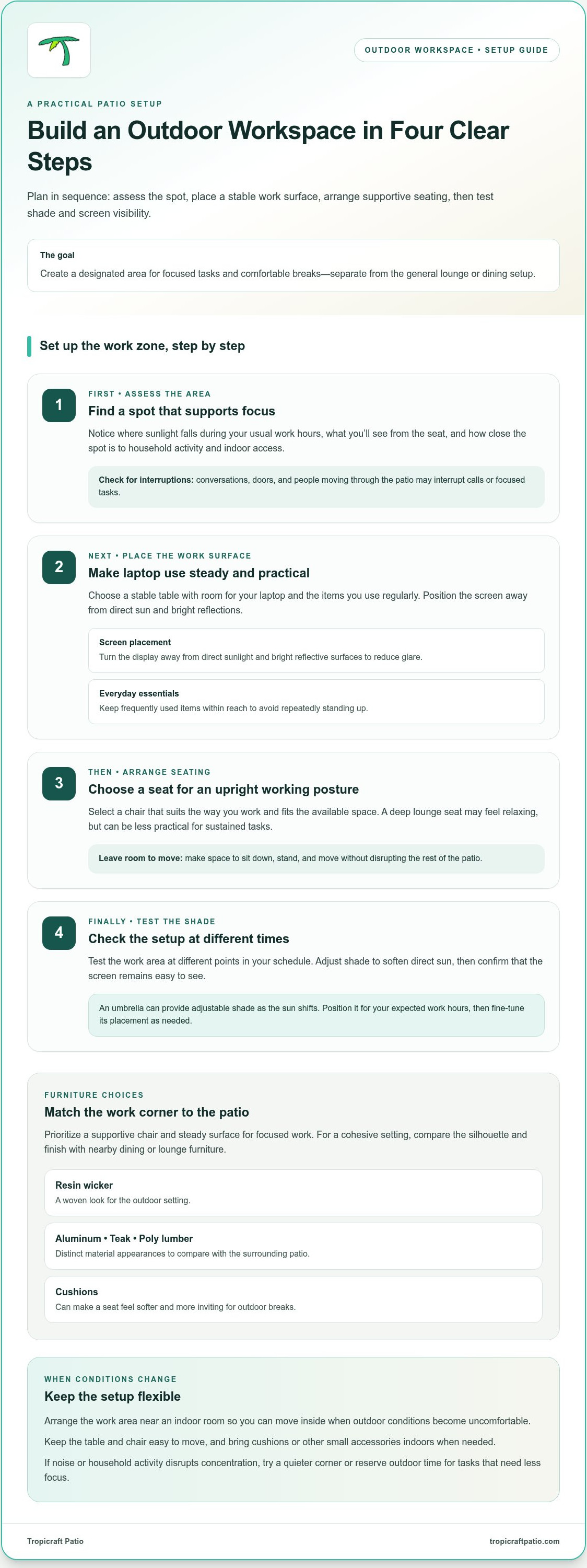
A thoughtful setup follows a simple order: assess the work area, place the surface, arrange seating, then test the shade. This sequence helps you spot practical issues before settling in, rather than rearranging furniture after glare or foot traffic becomes distracting.
1. Assess the area. Notice where sunlight falls during your usual work hours, what you can see from the seat, and how close you are to household activity or indoor access. Consider whether conversations, doors, or people moving through the patio might interrupt calls or focused tasks.
2. Place the work surface. Choose a stable table with room for your laptop and the items you use regularly. Position the screen away from direct sun and bright reflections, and keep essentials within reach so you’re not repeatedly standing up.
3. Arrange seating. Select a chair that suits your working posture and fits the available space. Leave enough room to sit down, stand, and move without disrupting the rest of the patio.
4. Test the shade. Check the setup at different points in your work schedule. Adjust the shade to soften direct sun, then confirm that the screen remains easy to see.
How should you manage shade, seating, and outdoor distractions?
An umbrella can provide adjustable shade as the sun shifts. Position it for the times you expect to work, then fine-tune its placement as needed. Tropicraft Patio offers umbrellas and cantilevers as part of its outdoor furnishings. Shade and greenery can also help create a more considered work setting, as discussed in designing outdoor workspaces.
Plan for everyday distractions, too. If household activity or neighborhood noise interrupts your concentration, try a quieter corner or reserve outdoor time for tasks that need less focus. Keep the route indoors clear so you can move your work inside when conditions change. For ideas on furniture and shade for your patio, connect with the Tropicraft team.
Choose Outdoor Furniture That Makes Your Workspace Feel Like Home
Choose furnishings around the way you’ll use the patio. For focused work, prioritize a supportive chair and a steady surface. If the space will also be a retreat, consider how the work setup can sit alongside more relaxed seating. The goal is an inviting arrangement that feels considered, rather than office furniture temporarily placed outdoors.
Material helps shape the setting’s character. Resin wicker brings a woven look, while cast or extruded aluminum, teak, and poly lumber each have a distinct visual presence. Compare the outdoor furniture lines by silhouette, finish, and how well each material complements the surrounding patio. Cushions can make a seat feel softer and more inviting, especially if you plan to take breaks outside.
When comparing options, consider the whole setting as well as the work corner. A material and finish that coordinate with your dining or lounge furniture can make the patio feel unified. Tropicraft Patio’s Ardmore showroom features resin wicker, aluminum, teak, and poly lumber, so you can see how different styles fit your plans in person.
How can Philadelphia-area homeowners adapt a work patio to changing conditions?
Plan for a setup that can respond to shifting sun and weather. An umbrella gives you adjustable shade: position it for your typical work hours, then reposition it as the light changes. Keep the work surface and chair easy to move, or arrange the zone near an indoor room so you can transition inside when outdoor conditions become uncomfortable.
For flexibility, avoid making the work area depend on one fixed arrangement. A cushion or other small accessory can be brought indoors, while a table and chair can remain part of the broader patio setting between work sessions. This makes creating a comfortable outdoor workspace a practical extension of your home, rather than a setup you have to rebuild each day.
Thoughtful material and seating choices can help the space feel cohesive with the rest of your outdoor living area. Tropicraft Patio serves homeowners across Ardmore, Philadelphia, King of Prussia, and Villanova, as well as Jersey Shore communities including Ventnor, Margate, Stone Harbor, Avalon, and Cape May. To discuss furniture options for your patio, contact Tropicraft Patio.
Bring Your Outdoor Workday to Life
Let your patio evolve with the way you work. A setup that feels considered today can remain flexible as your routines shift, making outdoor time a more inviting part of the day. Creating a comfortable outdoor workspace is an opportunity to shape a personal retreat around both concentration and ease.
Tropicraft Patio is a family-owned business serving the greater Philadelphia area since 1977. Its 20,000-square-foot showroom in Ardmore features furniture in resin wicker, aluminum, teak, and poly lumber. Visit to see the materials and styles in person and consider how they might complement your outdoor space.
Plan your outdoor workspace with Tropicraft Patio, and take the next step toward a patio setup that feels naturally your own.
Frequently Asked Questions
Can you use regular patio furniture for an outdoor workspace?
Yes, if the furniture suits the work you plan to do. A dining chair and table may work well for answering emails or joining a brief call, while longer writing or computer sessions may call for a more supportive seat and a surface that lets you work comfortably. Try the setup with your usual work items before settling in for a longer session.
How do you reduce screen glare in an outdoor workspace?
Adjust your viewing angle and position before changing your device settings. Turn the screen so it isn’t facing direct sunlight or reflecting a bright wall or window, then shift your seat if glare persists. A matte screen protector may help some users, but test visibility first. These small adjustments can make creating a comfortable outdoor workspace easier without relying on a darker display.
Is it practical to work outside in Philadelphia throughout the year?
Outdoor work can be enjoyable in suitable conditions, but it isn’t practical every day of the year. Temperature, wind, rain, and changing daylight can affect comfort, so treat the patio as a flexible option rather than your only workspace. This applies in Ardmore, Philadelphia, King of Prussia, and Villanova, as well as Jersey Shore communities including Ventnor, Margate, Stone Harbor, Avalon, and Cape May.
What should you do with a laptop and work materials when you finish outside?
Bring your laptop, chargers, papers, and other work essentials indoors after each session. Outdoor furniture covers are intended for furniture, not as a substitute for storing electronics or documents in a protected place. Before packing up, save your work, disconnect accessories, and check that small items such as pens or earbuds haven’t been left on the patio table.


Comments