


Choosing a Color Palette for Your Outdoor Space
What if the most inviting outdoor palette starts with colors you already have? Choosing a color palette for your outdoor space can feel surprisingly difficult when your home, stonework, greenery, and favorite fabrics all point in different directions. Inspiration photos can spark ideas, but colors may look different beside your own finishes and in your own light.
You don’t need every piece to match to create a polished look. Start with the fixed surroundings, then choose furniture tones, cushion fabrics, and a few considered accents. This guide explains how to balance those elements, compare colors in your setting, and use texture to create an outdoor retreat that feels distinctly yours.
Table of Contents
Choosing a Color Palette for Your Outdoor Space Starts with Three Color Roles
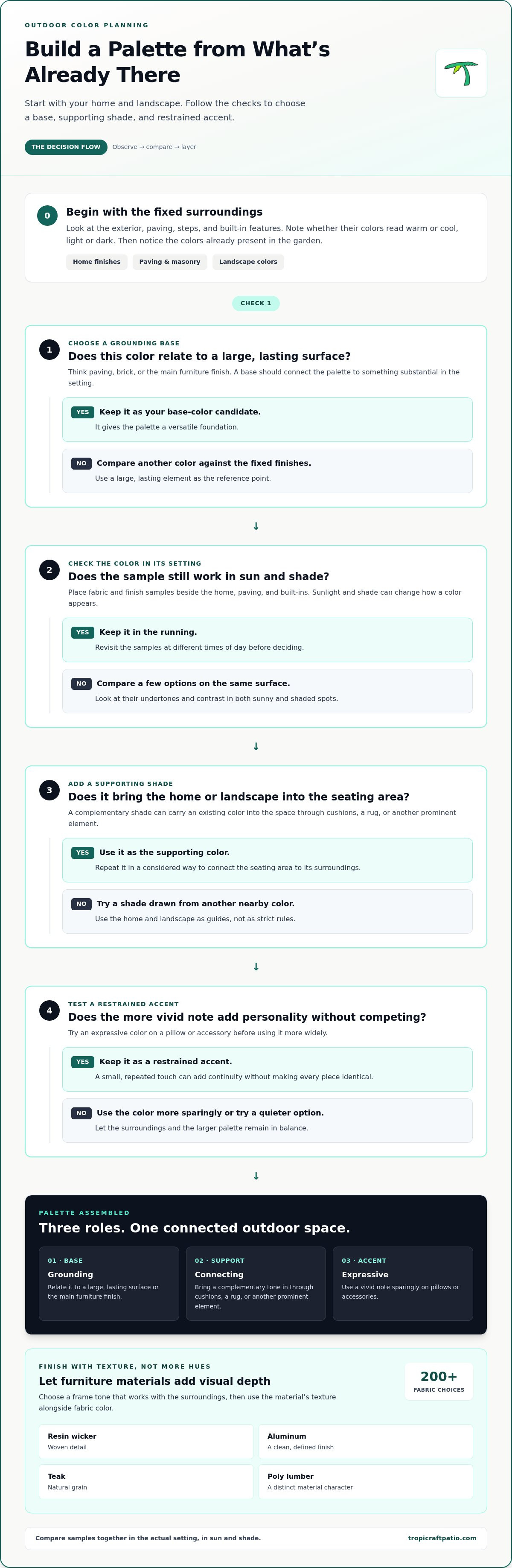
A color palette is a group of colors that connects your home, garden, and furnishings. When choosing a color palette for your outdoor space, give each color a role: a grounding base, a supporting color, and a restrained accent.
Grounding base: Choose a versatile color drawn from a large, lasting element, such as paving, brick, or the main furniture finish.
Supporting color: Use a complementary shade to bring the home or landscape into the seating area, perhaps through cushions or a rug.
Restrained accent: Add a more vivid note sparingly on pillows or accessories, so it brings personality without competing with the surroundings.
Consider both undertones and contrast when combining colors. These principles of color theory offer useful context, but the right combination also depends on your patio’s materials and the mood you want to create. Repeat a color in more than one place, such as echoing a cushion shade in a small accessory, to create continuity without making every piece identical.
How many colors should an outdoor palette include?
Three color roles are a flexible starting point, not a strict limit. Add depth through material and texture before introducing more hues: woven resin wicker, smooth aluminum, and the grain of teak each contribute a distinct look. For example, a Philadelphia-area patio might use brick as a warm visual base, green foliage as inspiration for a supporting shade, and a muted cushion color as an accent. The palette relates to its setting while still feeling personal.
How to Choose Outdoor Colors Around Your Home, Light, and Landscape
Choosing a color palette for your outdoor space starts with what’s already there. Let the home and garden guide your decisions, then choose furniture and fabrics that feel intentional rather than copying an inspiration photo.
Observe permanent finishes. Look at the exterior, paving, steps, and built-in features. Note whether their colors read warm or cool, light or dark.
Look at the surrounding colors. Main Line greenery can inspire a nature-led palette. Philadelphia-area masonry may offer warm or muted tones, while Jersey Shore surroundings can suggest sandy neutrals or weathered hues. Treat these as starting points, not rules.
Choose a base. Select a flexible color that relates to a large fixed surface or the main furniture finish.
Add a supporting shade. Bring in a complementary tone through cushions, a rug, or another prominent element.
Test an accent. Try a more expressive color in a pillow or accessory before using it more widely.
How do light and existing finishes change color choices?
Sunlight and shade can change how a color appears. A fabric that looks soft and subdued in a shaded seating area may seem brighter in direct sun. Place fabric and finish samples beside your home, paving, and built-in features. Check them in both sunny and shaded spots, and revisit them at different times of day before deciding.
Compare a few options at once, holding each sample against the same surface so you can see their undertones and contrast. For another perspective as you refine the palette, talk through your outdoor color choices.
Bring Your Outdoor Color Palette Together with Furniture, Cushions, and Accents
Furniture gives the palette its visual foundation, while cushions and accessories offer flexible ways to introduce color. As you’re choosing a color palette for your outdoor space, consider how each layer looks alongside the others. Start with the frame finish and material, then choose fabrics and accents that complement them.
Tropicraft’s outdoor furniture lines include resin wicker, aluminum, teak, and poly lumber. Each brings its own texture and visual character, from woven detail to natural grain or a clean, defined finish. Choose a frame tone that works with your surroundings, then use the material’s appearance to add depth to the palette.
Which furniture and fabric choices make a palette feel balanced?
Use the furniture finish as a steady element, then bring in a supporting hue or a measured contrast through cushions. Tropicraft offers more than 200 fabric choices for custom designs, giving you a broad range of colors and patterns to compare with your home and garden. Bring your samples together before settling on a combination, and consider how the fabric looks beside the furniture in both sun and shade.
Keep accessories flexible. A pillow or rug can echo a cushion shade or introduce a subtle contrast; not every piece needs to match. Discuss a palette for your outdoor space with the Tropicraft team.
Shape an Outdoor Retreat That Feels Like Yours
A considered palette doesn’t require every piece to match. Begin with your home’s finishes and landscape, then balance furniture, fabrics, and accents so the space feels connected yet personal. Compare colors in the actual setting, and let material texture add depth alongside hue. Choosing a color palette for your outdoor space is ultimately about creating a welcoming place you’ll enjoy returning to.
Tropicraft Patio is a family-owned business serving the greater Philadelphia area since 1977. Explore more than 200 fabric choices for custom designs, or see furniture materials in person at the 20,000-square-foot Ardmore showroom. Visit Tropicraft Patio to explore outdoor furniture and plan a palette for your space.
Frequently Asked Questions
How do I choose a color palette for my outdoor space?
Start with the colors that are difficult to change, such as your home’s exterior, paving, and built-in features. Notice the tones in nearby planting, then choose a furniture base color, a supporting shade, and a small accent. Compare samples in the space at different times of day, since changing light can affect how colors appear.
What colors work best for outdoor furniture?
The best furniture colors are those that complement your home and suit the mood you want, rather than a single universal shade. Neutral finishes can provide a versatile foundation, while natural-looking tones can echo surrounding materials. For patios in Ardmore, Philadelphia, Villanova, King of Prussia, Ventnor, Margate, Stone Harbor, Avalon, or Cape May, compare options against the specific colors and finishes in your setting.
How many colors should an outdoor space have?
Three color roles are a useful starting point: a grounding base, a supporting color, and a restrained accent. They don’t have to mean exactly three shades, and the palette can evolve as you furnish the space. Create variety through texture, too. Woven resin wicker, aluminum, and teak can each add a distinct impression without introducing another color.
How can I coordinate patio cushions with outdoor furniture?
Choose cushions that relate to the furniture finish or a color already present in the home or garden. For a calm look, select a complementary tone; for more contrast, use a stronger color on cushions and repeat it in a small accessory. Tropicraft offers more than 200 fabric choices for custom designs, so you can compare options and tailor the combination to your space.


Comments