


Best Patio Furniture for Windy Conditions in Ventnor: A Coastal Stability Guide (2026)
Imagine waking to a serene Ventnor morning, only to find your favorite designer chaise has migrated to the bottom of the pool after a standard coastal breeze. It's a frustrating reality for many shorefront homeowners; the very Atlantic gusts that provide cooling relief also threaten to uproot your outdoor sanctuary. Finding the right patio furniture for windy conditions Ventnor requires a sophisticated balance of aerodynamic design and high-density materials that refuse to budge when the gusts hit 40mph.
We understand that your outdoor space is a vital extension of your home's luxury, and you shouldn't have to sacrifice elegance for sheer weight. This guide will show you how to curate a secure retreat using materials engineered to withstand both high salinity and heavy winds. You'll discover the specific craftsmanship behind poly lumber and cast aluminum collections that offer a permanent, worry-free lifestyle, allowing you to enjoy the salt air without the constant need to store cushions or chase furniture.
Key Takeaways
Understand how "Wind Load" impacts your outdoor layout and why choosing slatted silhouettes prevents your investment from becoming airborne during Atlantic gusts.
Explore the durability of high-density poly lumber, a material that provides the necessary weight to stay grounded while resisting salt-air corrosion.
Learn why cast aluminum is a top-tier choice for patio furniture for windy conditions Ventnor homeowners trust for its blend of aerodynamic lattice work and structural density.
Discover the technical requirements for secure coastal shade, including the necessity of 75lb+ bases and vented canopies for your umbrellas.
Gain expert strategies for selecting open-weave designs that allow sea breezes to pass through seamlessly, ensuring your private sanctuary remains undisturbed.
Table of Contents
Navigating the Ventnor Breeze: Why Coastal Wind Demands Specialized Furniture
Living on the coast in Ventnor means embracing the rhythm of the Atlantic. While the gentle sea breeze is a signature of summer, the seasonal gusts and localized wind tunnels between beachfront estates present a unique challenge for your outdoor living space. Choosing patio furniture for windy conditions Ventnor requires more than just picking a heavy chair; it involves understanding the physics of your specific environment.
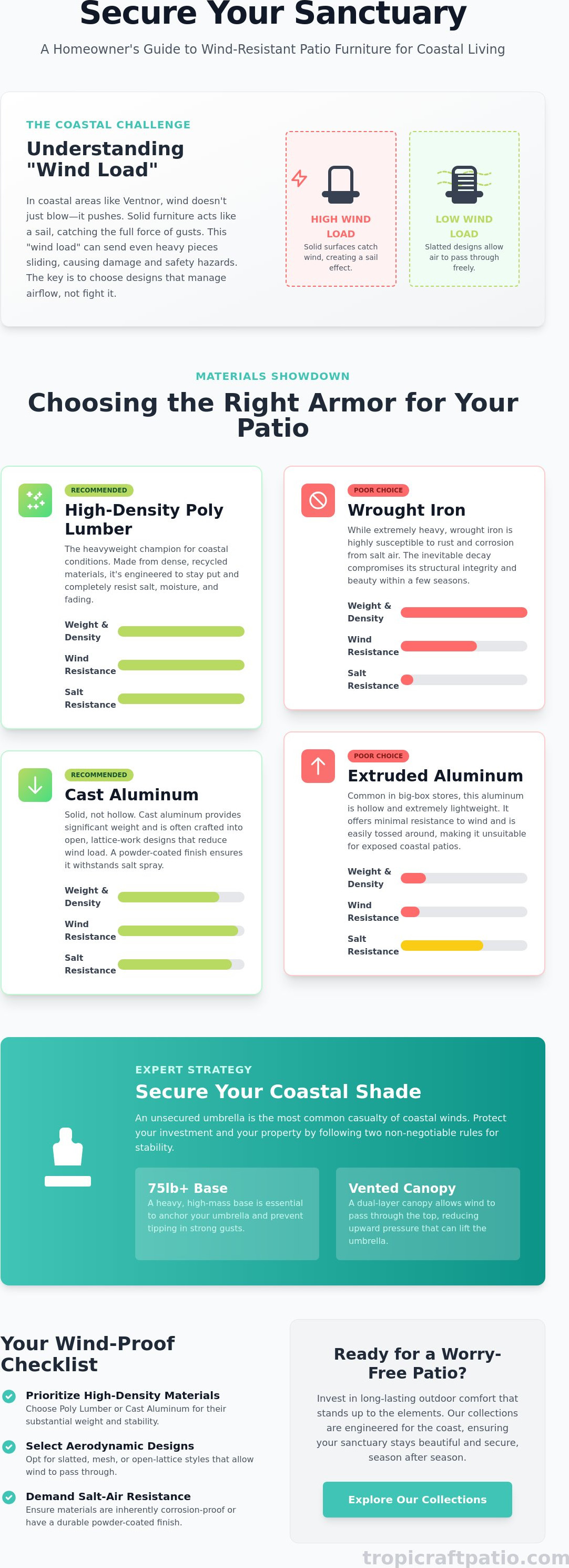
Many homeowners overlook the concept of "Wind Load." A solid-back chair or a tightly woven sofa acts like a sail, catching the full force of a 40mph gust. This pressure can send even moderately heavy pieces sliding across your deck. In contrast, slatted or open-lattice designs allow air to flow through the frame, significantly reducing the risk of tipping and ensuring your sanctuary remains exactly where you designed it.
The geography of the Ventnor-Margate corridor often creates "wind tunnels" where air accelerates between tall residential structures. Lightweight furniture in these zones doesn't just blow over; it becomes a projectile. The hidden costs of inadequate furniture are often steep:
Property Damage: Scratched mahogany or composite decking from dragging furniture legs.
Safety Hazards: Shattered glass railings or furniture ending up in a neighbor's pool.
Structural Fatigue: Frequent impacts and tipping weaken joints, leading to a loss of long-term stability.
The Intersection of High Wind and Salt Air
In a coastal environment, wind is never just air; it's a delivery system for corrosive salt spray. High-velocity winds force moisture and salinity into every crevice of your furniture. While wrought iron is heavy, it's a poor choice for our climate because salt-induced oxidation will cause it to rust from the inside out within a few seasons. It simply can't withstand the chemical reality of the shore.
True coastal stability requires materials that resist both physics and chemistry. When evaluating the wind tolerance for outdoor structures and furnishings, focus on 360-degree powder coating. This protective layer ensures that even the wind-exposed underside of your cast aluminum frames remains impervious to the corrosive Atlantic air, preserving your investment for a lifetime of relaxation.
High-Performance Materials for High-Wind Coastal Patios
Selecting the right materials is the cornerstone of a secure, high-end coastal retreat. In an environment where gentle sea breezes can quickly transform into powerful gusts, your selection must prioritize density and structural integrity. High-performance materials don't just stay put; they resist the corrosive salt air that often compromises standard outdoor sets. Investing in the correct material ensures your patio furniture for windy conditions Ventnor remains a permanent fixture of your landscape.
Poly Lumber: Engineered for the Jersey Shore
For many homeowners, Poly Lumber is the undisputed heavyweight champion for the coast. Crafted from high-density polyethylene (HDPE), this material offers a substantial mass that rarely shifts in standard coastal winds. Unlike lightweight plastics, HDPE is incredibly dense and does not float. This makes it a reliable, low-maintenance solution that ignores salt, moisture, and pests entirely. You can explore deeper technical specifications and design options in The Ultimate Guide to Poly Lumber Furniture.
Cast Aluminum vs. Extruded Aluminum in Ventnor
While both materials have their place, cast aluminum is significantly superior for high-wind areas. Unlike extruded aluminum, which is hollow and lightweight, cast aluminum is poured into solid molds. This results in a heavier, more stable frame that resists the urge to "walk" across a stone patio. When paired with intricate, aerodynamic lattice designs, these pieces allow wind to pass through the frame rather than pushing against it. This makes Aluminum Dining Furniture particularly effective on elevated decks or open balconies. For a full comparison of frame types, see our Cast Aluminum Patio Furniture Guide.
Premium Grade-A Teak is another excellent natural choice for those who appreciate organic luxury. Its high oil content and incredible density provide the weight needed for stability, while it gradually develops a beautiful silver patina that complements the coastal aesthetic. If you prefer the look of resin wicker, ensure the collection uses heavy-gauge aluminum frames to provide the necessary ballast. Adhering to National Weather Service high wind safety guidelines often involves choosing these heavy-mass items to mitigate risks before a storm. If you're unsure which material best suits your deck's specific exposure, feel free to speak with one of our design consultants for a personalized recommendation.
Securing Your Sanctuary: Expert Strategies for Wind-Proofing
Design choices are just as critical as material weight. While choosing the right patio furniture for windy conditions Ventnor starts with the high-density frames we've discussed, the physical silhouette determines how each piece interacts with the Atlantic air. Selecting "open-weave" designs, such as lattice or slatted patterns, allows the wind to pass through the furniture rather than creating a wall of resistance that leads to tipping.
Umbrellas and shade structures require even more specialized attention. High-wind environments demand heavy-duty bases, typically 75lbs or more, paired with double-vented canopies that release internal air pressure. Adhering to the official guidance on securing outdoor items ensures these components don't become hazards during unexpected gusts. While some suggest using makeshift weights like sandbags, such solutions are inappropriate for a luxury coastal home. Instead, rely on the inherent mass of the furniture and precision-engineered securing systems to maintain a clean, high-end aesthetic.
Consider your property's unique micro-climate when planning your layout. Glass windbreaks or strategic landscaping can create "dead zones" where lighter accent pieces can safely reside without constant supervision. For ultimate protection, use custom-fitted covers featuring high-quality tie-downs. These ensure your investment remains shielded from both the physical force of the wind and the abrasive nature of salt spray.
Managing Cushions and Accessories in Gusty Conditions
Luxury cushions shouldn't be an afterthought in a windy environment. Look for integrated strap systems that anchor the fabric directly to the frame, preventing them from shifting or blowing away. Our custom outdoor cushions utilize high-density foam, which adds significant weight and helps them stay seated. For seasonal storage, a heavy-duty teak or poly deck box provides a secure, aesthetic sanctuary for pillows and rugs when they aren't in use.
Professional Installation and Placement
Achieving the perfect balance of aesthetics and stability often requires an expert eye. Professional "white-glove" placement ensures your furniture is situated to minimize wind exposure while maximizing your view of the horizon. We invite you to contact us for a coastal site consultation to help you design a space that is as secure as it is beautiful.
Elevate Your Coastal Retreat with Uncompromising Stability
Creating a personal sanctuary along the Atlantic requires a thoughtful approach to both design and durability. By prioritizing high-density materials like poly lumber and the aerodynamic silhouettes of cast aluminum, you ensure your outdoor living space remains a place of tranquility. Finding the ideal patio furniture for windy conditions Ventnor homeowners trust means looking beyond aesthetics to the technical craftsmanship that withstands the shore’s unique challenges. We've been serving the Jersey Shore since 1977, providing the expertise needed to navigate these coastal nuances with confidence.
Our commitment to your leisure extends to every detail, from our 200+ weather-resistant fabric choices to our professional white-glove delivery service throughout Ventnor and Margate. We handle the heavy lifting and precise placement, so your investment is secure from the moment it arrives. It's time to transform your deck into a worry-free extension of your home where the only thing you have to catch is the sunset. Explore our wind-resistant coastal collections today and discover how we can help you build a legacy of comfort and style.
Common Questions Regarding Coastal Furniture Stability
What is the heaviest material for outdoor furniture that won’t rust in salt air?
Poly lumber is the heaviest and most durable material that remains entirely impervious to salt air corrosion. Crafted from high-density polyethylene, it offers the substantial mass needed to stay grounded without the risk of internal oxidation. Cast aluminum is another premium choice; it provides significant weight and structural integrity while its powder-coated finish prevents rust from forming in our high-salinity environment.
Can I leave my patio furniture out during a Ventnor storm?
You can generally leave heavy-density poly lumber and cast aluminum collections outside during standard coastal storms. These materials are specifically chosen for their ability to withstand the elements without shifting. However, if a severe weather event or hurricane is forecast, it's prudent to follow safety guidelines by securing all items or moving lighter accessories and cushions into a secure deck box or storage area.
How much should a patio umbrella base weigh for a windy deck?
A patio umbrella base should weigh a minimum of 75 pounds to ensure stability on a windy coastal deck. If you're using a larger market umbrella or a cantilever model, you'll likely need a base exceeding 100 pounds for adequate ballast. Always ensure your umbrella is closed when not in use; this reduces the surface area and prevents the wind from lifting the entire structure.
Is resin wicker heavy enough for the Jersey Shore?
Resin wicker is only heavy enough for the Jersey Shore when it's built over a heavy-gauge, powder-coated aluminum frame. Standard, lightweight wicker sets lack the necessary mass to resist ocean breezes and can quickly become a hazard. When selecting patio furniture for windy conditions Ventnor homeowners should prioritize high-quality, professional-grade wicker collections that offer the internal weight required to remain secure and beautiful throughout the seasons.


Comments