


When to Replace Patio Furniture: A Guide to Luxury Outdoor Longevity (2026)
Updated: Jul 16
What if the very space designed for your relaxation has become a source of subtle frustration? You've invested significant care into curating an elegant home interior, and your outdoor retreat should reflect that same level of sophistication. However, determining when to replace patio furniture involves more than just noticing a bit of wear; it's about recognizing when structural fatigue or aesthetic decline begins to compromise your leisure.
At Tropicraft Patio, we agree that a home's exterior should offer the same comfort and prestige as its interior. Your comfort shouldn't be a compromise. In this guide, you'll learn to identify the critical signs of material failure and determine when an upgrade is a more valuable investment than a repair. We'll preview the essential safety checks for frames, the long-term ROI of modern weather-resistant materials, and how to select pieces specifically engineered for the Philadelphia and Jersey Shore climates.
Table of Contents
Identifying the Critical Signs of When to Replace Patio Furniture
Recognizing when to replace patio furniture starts with distinguishing between a charming, aged patina and genuine material failure. In the humid summers of Philadelphia or the salt-heavy air of Avalon, the signs of degradation are often accelerated beyond normal wear.
Structural instability is the most pressing concern for any luxury homeowner. If your seating no longer feels secure, it is often a sign of structural fatigue. This is the point where a frame can no longer safely support weight under movement.
Look for these immediate safety red flags during your seasonal inspection:
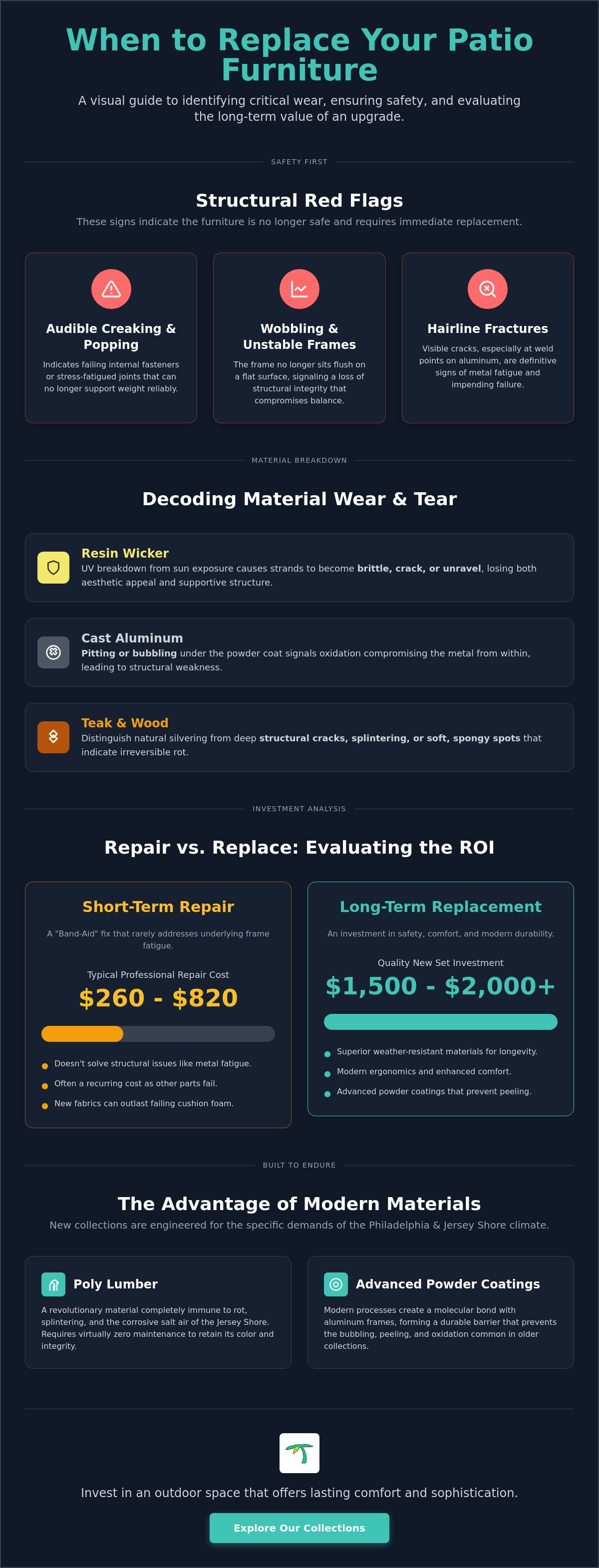
Audible creaking or popping when sitting, indicating failing internal fasteners or joints.
Wobbling frames that no longer sit flush against the patio surface despite adjustments.
Hairline fractures visible at the weld points of aluminum dining chairs or chaise lounges.
Material-Specific Warning Signs
Different common patio furniture materials exhibit wear in unique ways. Identifying these material benchmarks helps you decide when to replace patio furniture before the damage becomes irreversible:
Resin Wicker: Look for brittle strands that crack or "unravel," which is a sign of UV breakdown from intense sun exposure.
Cast Aluminum: Identify pitting or bubbling under the powder coat, which signals oxidation is compromising the metal from the inside out.
Teak: Distinguish between natural silvering and deep structural checking or soft, spongy spots that indicate rot.
The Safety Check: When to Stop Sitting
Conduct a seasonal inspection of all weld points on aluminum frames to check for fractures. You should also test the tension of your rattan wicker outdoor furniture to ensure the weave hasn't lost its supportive, elastic bounce.
Key Takeaway: If a piece exhibits visible structural fractures or significant frame movement, it is no longer safe for guest use and requires an immediate upgrade to ensure your sanctuary remains secure.
Repair vs. Replace: Evaluating the ROI of Your Outdoor Investment
Determining when to replace patio furniture often involves a calculation of long-term value rather than just an immediate price tag. While a "Band-Aid" fix like replacing vinyl straps or fabric slings might seem cost-effective, these repairs rarely address the underlying structural fatigue of an aging frame. Industry data indicates that professional repairs can cost between $260 and $820. When quality mid-range sets typically cost between $1,500 and $2,000, the ROI of a new investment becomes undeniable.
Modern luxury sets offer ergonomic support that was simply unavailable 10 to 15 years ago. High-performance powder coatings now create a molecular bond with the frame, preventing the unsightly bubbling and peeling common in older collections. Our aluminum dining furniture showcases these advancements, providing a level of durability that far exceeds previous generations.
When Replacement Cushions Aren’t Enough
High-quality fabrics like Sunbrella are incredibly resilient, but they often outlast the internal foam they protect. If your seating feels flat or takes days to dry after a rainstorm, the foam has reached its limit. While ordering custom outdoor cushions in Ardmore can breathe new life into a sturdy set, it cannot fix a frame that is structurally failing.
Modern Material Innovations (2026)
The 2026 market has seen a significant shift toward materials that require virtually zero maintenance. Poly lumber is completely immune to rot, splintering, and the corrosive salt air of the Jersey Shore. Similarly, high-density polyethylene (HDPE) wicker is dyed through the core, unlike cheap PVC alternatives that peel and fade over time.
Contemporary powder coating processes create a molecular bond that prevents the bubbling and peeling seen in older sets. If you're unsure if your current set is worth the effort of a refurbish, you can speak with our design consultants for a professional assessment. Investing in a high-quality set today ensures you won't have to ask when to replace patio furniture again for years to come.
Selecting Replacements Designed for the Philadelphia & Jersey Shore Climate
The Mid-Atlantic climate presents a unique set of challenges that standard retail sets simply aren't built to handle. From the heavy humidity of the Delaware Valley to the gale-force winds of the Jersey Shore, your environment dictates the engineering required for your outdoor space. When you finally decide when to replace patio furniture, your new selection should prioritize weight and material density to ensure it remains a permanent fixture of your home rather than a seasonal casualty.
Heavy-duty cast aluminum and high-density poly lumber are essential for coastal decks where stability is non-negotiable. These materials offer the necessary ballast to withstand ocean breezes while remaining impervious to salt-induced pitting. This transition is about more than just durability; it's an opportunity to embrace the "personal sanctuary" concept. By shifting from mere functional seating to a curated retreat, you create a space that invites relaxation. Explore our outdoor furniture lines to see how modern engineering can gracefully navigate the extremes of local weather.
Curating Longevity: A Material Selection Strategy
For gardens across the Main Line, Grade-A teak furniture remains the gold standard because its natural oils provide a built-in defense against rot and insects. If your aesthetic leans toward the contemporary, extruded aluminum provides a sleek, maintenance-free profile for Philadelphia patios. With over 200 custom fabric choices available, your new investment will not only endure the elements but will also reflect the evolving sophistication of your home's interior design.
The Tropicraft Experience: From Showroom to Installation
We invite you to visit the historic Ardmore Theatre building to experience high-end craftsmanship through physical engagement. Our 20,000-square-foot showroom allows you to "test-drive" the ergonomics of different collections before making a final decision. To ensure your sanctuary is perfect from day one, we provide professional, white-glove delivery and assembly. Knowing when to replace patio furniture is the first step toward reclaiming your outdoor lifestyle; seeing the quality in person is the second. Our team is ready to help you navigate this transition with the expertise your home deserves.
Reclaiming Your Outdoor Sanctuary
Your outdoor living space should be a place of effortless relaxation, not a source of maintenance frustration or structural concern. Identifying when to replace patio furniture is ultimately about recognizing when your current environment no longer serves your lifestyle or reflects your home's aesthetic. By choosing materials engineered specifically for the Mid-Atlantic climate, you ensure your backyard remains a durable and beautiful extension of your interior elegance for years to come.
Since 1977, our family business has served as a trusted authority for Philadelphia area homeowners seeking to elevate their outdoor experience. Our historic 20,000-square-foot showroom in Ardmore invites you to explore over 200 custom fabric choices and experience the superior craftsmanship of our collections firsthand. We're here to guide you from the initial spark of design inspiration to the final, white-glove installation of your new retreat. We invite you to explore our premium outdoor collections and find your next sanctuary. Your perfect afternoon of leisure is waiting to be curated.
Frequently Asked Questions
How many years should a high-quality patio set last?
A premium outdoor set crafted from materials like cast aluminum or Grade-A teak should provide between 15 and 20 years of reliable service. While mass-market alternatives often deteriorate within three to five seasons, investment-grade pieces are engineered for longevity. Regular maintenance and using protective covers during the off-season in Ardmore or Villanova can extend this lifespan even further. For your spa or spa area, you can check out Northern Hot Tub Covers to find custom-fit protection that withstands the elements.
Is it worth it to reupholster outdoor furniture or should I buy new?
Reupholstering is a viable mid-life update if the structural frame remains in pristine condition. However, if you're evaluating when to replace patio furniture because of frame fatigue or outdated ergonomics, buying new is often the better investment. Modern luxury collections incorporate advanced comfort technologies that older frames simply cannot accommodate, regardless of new fabric.
Can salt air damage aluminum patio furniture?
Salt air can cause pitting and surface oxidation on aluminum if the finish isn't high-performance powder coating. In coastal areas like Stone Harbor or Avalon, salt crystals can trap moisture against the metal, leading to structural degradation over time. Choosing frames with a molecularly bonded finish ensures your furniture remains impervious to the corrosive effects of the Jersey Shore's maritime climate.
What is the most durable material for a windy Jersey Shore deck?
High-density poly lumber and heavy-duty cast aluminum are the superior choices for high-wind environments. These materials offer the necessary weight to prevent shifting during coastal storms while resisting the relentless sun and salt spray. Determining when to replace patio furniture often coincides with a move to a coastal property, where lighter materials like PVC or standard resin wicker are easily displaced by the wind.


Comments