


What furniture and materials work well on a wooden deck?
The best furniture for a wooden deck balances outdoor durability with a weight and footprint that suit the space. Aluminum is a practical choice for a lighter setup, while teak, resin wicker, and poly lumber offer distinct looks and materials designed for outdoor living. Choose pieces that complement the deck without crowding it.
A wooden deck should feel like an inviting retreat, not a surface that needs constant worry. The right furniture can make it comfortable for dining, lounging, and gathering while helping you care for the deck. This guide covers materials, practical layout choices, and precautions for placing furniture on wood or composite decking.
Table of Contents
1. What furniture and materials are best for outdoor use?
Material choice shapes outdoor comfort, maintenance, and longevity. Teak furniture can last 50+ years outdoors; dense eucalyptus and acacia can last 20 or more years with periodic oiling or sealing. Pine, fir, and cedar may last 10–20 years with proper care. Recycled HDPE poly lumber has a stated lifespan of 25–50+ years.
Aluminum suits a dining set or chairs when lighter furniture is useful. With a rustproof frame and powder-coated finish, aluminum can last 10–15 years with normal care; high-grade aluminum may last 15–25 years. Resin wicker adds woven texture, while PVC and plastic are lightweight, weather-resistant choices. Compare resin wicker outdoor furniture with aluminum’s clean lines when choosing colors and shapes for your decking and railing.
For dining: Choose a material and finish suited to outdoor exposure, then leave room for chairs to move around the table.
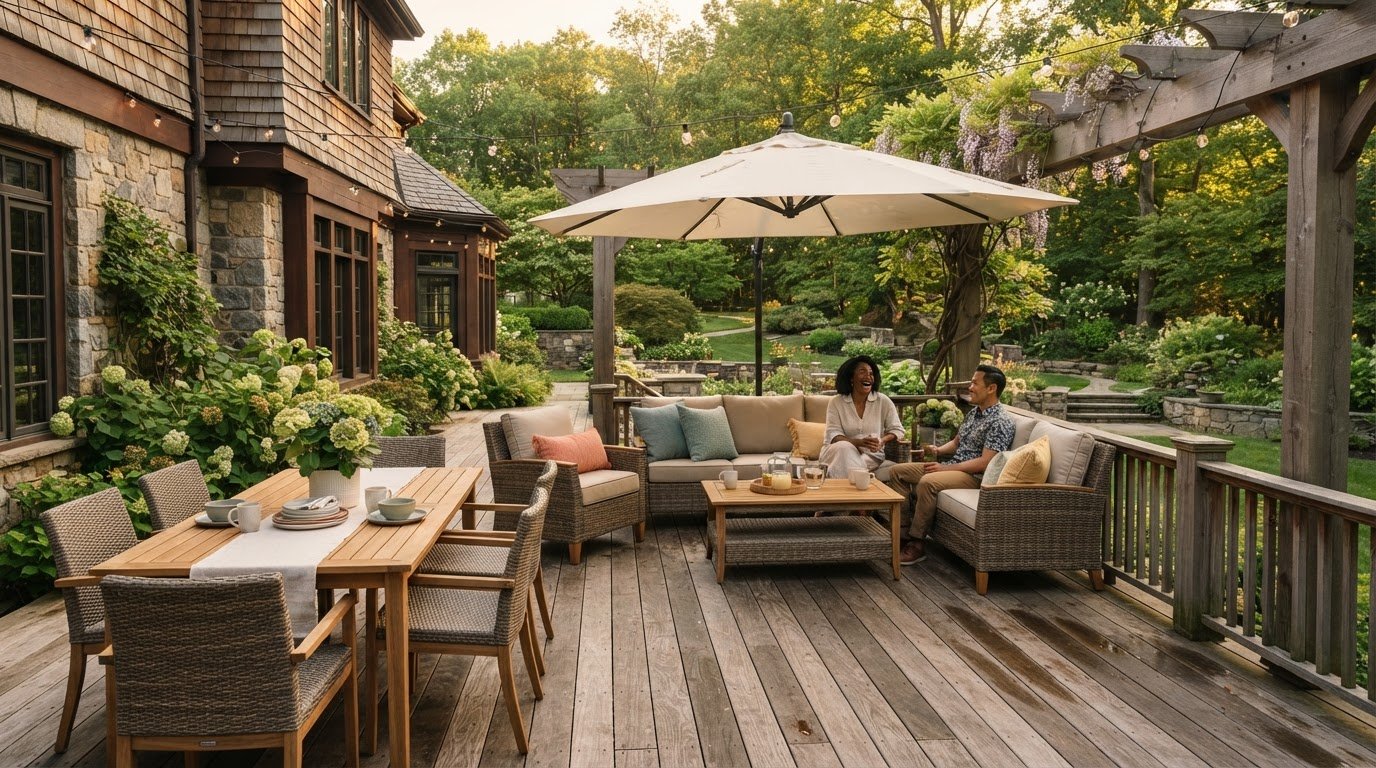
For lounging: Pair a sofa or chairs with a functional coffee table, side table, or pouf. These provide surfaces for drinks and help guests settle in.
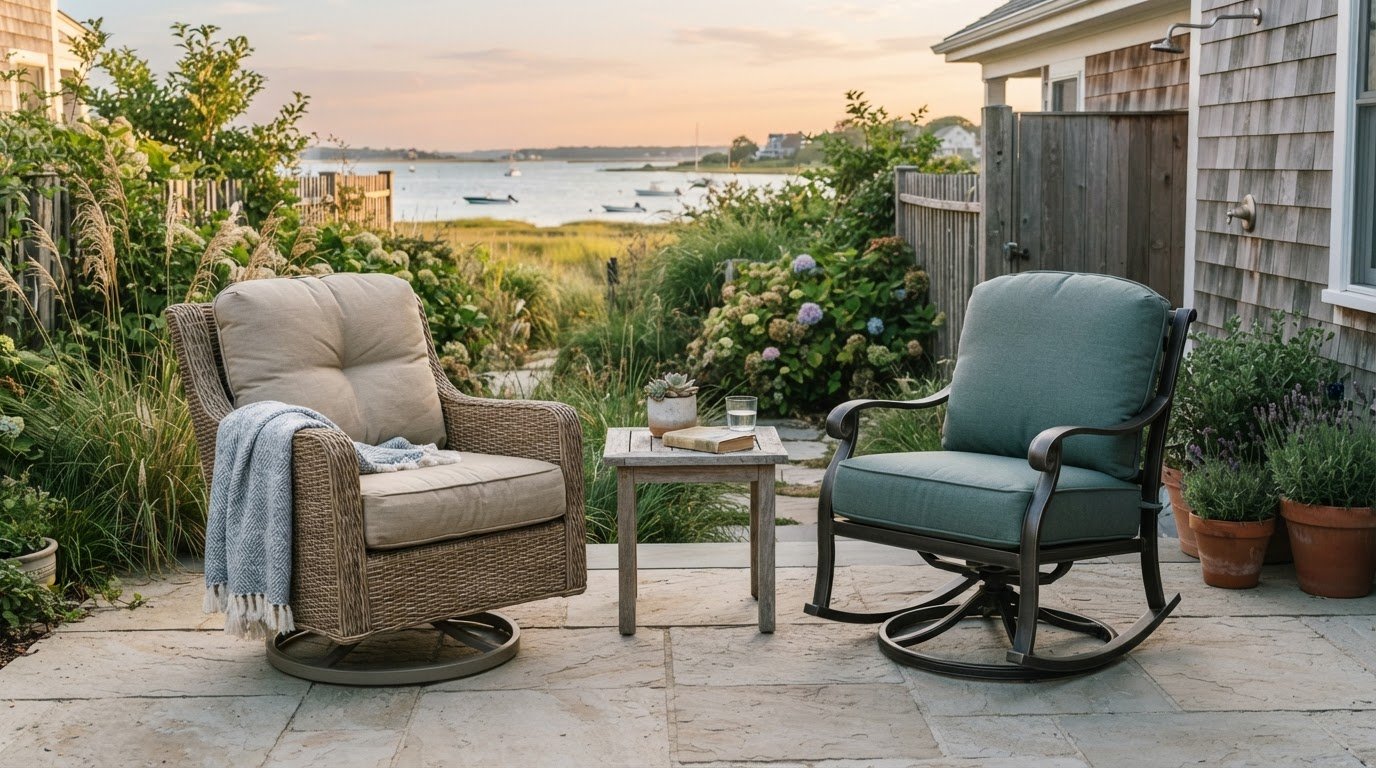
For compact decks: A side table beside two chairs keeps the arrangement useful without taking up space for a full dining set.
Cushions make outdoor seating more inviting, but fabric matters. Polypropylene outdoor fabrics resist UV exposure and dry quickly. For deck seating, choose cushions 4–6 inches thick with quick-drying foam cores; recommended drainage time is 30–60 minutes. Use protective covers when cushions aren’t in use to limit weather exposure.
2. What is the best furniture for a wood deck?
Metal, wood, wicker, and plastic can all work on a wooden deck. Choose based on weather exposure, weight, care, and comfort. Aluminum is lightweight, teak brings a substantial natural look, and resin wicker creates a woven lounge setting. Plastic is another lightweight option. The best fit is furniture whose material and scale suit your deck’s structure and layout.
Weight matters, especially on an older deck. Older wooden decks often support distributed loads of 40–50 pounds per square foot. Keep seating and tables arranged to preserve a clear path across the surface.
Use your deck’s dimensions to choose a table size and seating capacity:
An 8-by-10-foot deck suits a 36-inch round or 42-inch square table for 2–4 people.
A 10-by-12-foot deck can accommodate a 48-inch round or square table for 4–6.
A 12-by-14-foot deck can fit a 60-inch round or 72-inch rectangular table for 6–8.
At 14 by 16 feet or larger, consider a 72-inch-or-larger rectangle or two zones.
For a smaller footprint, a bistro table keeps dining functional without overwhelming the deck. On larger decks, separate lounge and dining areas with furniture placement, while leaving room for chairs to pull out. If the deck has composite decking, use the same careful weight planning and protect the surface from furniture legs. Plan a deck furniture layout around its dimensions, structure, and intended use.
3. Furniture precautions for composite decking
Furniture legs can scratch composite decking. Fit chairs, wicker pieces, and sectional feet with rubber protectors or caps. Check them periodically, especially after moving a coffee table or rearranging seating, and replace any that have shifted or worn. This helps reduce scuffs on the deck surface.
Keep grills and fire pits off composite boards. A manufactured gas fire pit may be suitable with an appropriate heat-resistant barrier, but direct heat can damage decking. Place the heat source away from cushions and fabric, and keep the barrier between it and the composite surface.
Composite outdoor furniture’s durability and cost depend on material quality and construction. High-quality or premium composite furniture can last 15–25 years or more when protected from extreme environments. For a practical comparison, consider expected lifespan and care alongside the initial purchase, rather than weighing cost alone. Resin wicker offers a different look and should be assessed by its outdoor construction and upkeep needs.
Wood and composite decks need different protections. On wood, a properly sealed surface can accommodate area rugs. Move furniture occasionally to help prevent extreme fading or discoloration. On composite decking, prioritize protective feet and heat barriers. On either surface, keep cushions dry and use covers when furniture faces harsh seasonal weather. A compact arrangement, such as two chairs and a side table, also means less furniture to move when checking protectors.
Discuss furniture choices for your deck to plan a durable, well-protected outdoor setting.
Tropicraft Patio: Resin Wicker
Tropicraft Patio helps homeowners in Ardmore and Philadelphia explore outdoor furniture choices suited to their deck’s look and layout. Its resin wicker outdoor furniture offers a woven aesthetic, while cast aluminum and extruded aluminum provide distinct alternatives for dining or lounging.
Use the materials as a starting point, then consider how you want your outdoor space to feel, whether it’s a quiet retreat or a welcoming setting for guests. For a deeper look at choosing pieces for a deck, explore the related guidance in this article alongside the collection details.
Contact Tropicraft Patio to discuss your deck furniture choices.
Shape a Deck That Feels Like Your Own Retreat
Let the way you want to spend time outdoors guide your final choices. A quiet morning coffee, a relaxed evening with friends, or weekend dining each calls for a different balance of comfort and open space. Picture those moments on your deck, then choose pieces that support them without making the area feel crowded. That personal vision is the most useful guide to finding the best furniture for a wooden deck.
Once you know the mood and function you want, it becomes easier to settle on a cohesive arrangement that feels welcoming season after season. For help bringing your ideas together, connect with Tropicraft Patio. Your outdoor retreat can begin with one thoughtful choice.
Frequently Asked Questions
What is the best furniture for a wood deck?
Furniture with comfortable, supportive proportions suits a wood deck used for long meals or visits. The best furniture for a wooden deck should complement how guests sit, not just the deck’s style. Outdoor dining chairs with 17–19-inch seat heights pair with standard 28–30-inch tables. For lingering conversations, chair backs of at least 16 inches offer added support.
What furniture and materials are best for outdoor use?
Outdoor furniture is a strong choice when its construction suits the exposure and its care fits your routine. Consider whether pieces will sit in direct sun, collect rain, or need frequent cleaning before selecting materials and finishes. During peak season, wash frames and tables every 4–6 weeks to remove accumulated grime and keep maintenance manageable.
How can I make my big deck more comfortable?
Greenery can soften a large deck, but avoid placing pots directly on the wood. They can hold moisture against the boards, so use stands that allow airflow underneath. Group plants near the perimeter to create a garden-like feel while keeping the main gathering area open.
What materials are best for outdoor furniture on a wooden deck?
Choose furniture with a finish suited to the condition of your deck’s surface. After staining or sealing in mild, dry conditions, wait at least 72 hours before placing furniture. Some oil-based deck stains may take up to seven days to fully harden. Follow the product’s curing instructions to avoid marking a newly treated surface.
Which patio furniture is most durable in rain, sun, and changing temperatures?
Durability depends on both the furniture’s construction and regular care through changing weather. During peak season, wash outdoor frames and tables every 4–6 weeks so dirt and residue don’t accumulate. Before colder or wetter conditions arrive, clean pieces and store removable accessories in a dry place. A consistent seasonal routine helps keep furniture ready for use.

Comments