


Teak vs. Poly Lumber Furniture: A Philadelphia Luxury Buyer’s Guide (2026)
- Tropicraft Staff
- Aug 13
- 5 min read
Your outdoor sanctuary should be a reflection of your home’s architectural soul, not a source of maintenance stress. You likely desire an elegant retreat where every component holds its value for a decade or more. However, Philadelphia's humidity and the Jersey Shore's salt air can be unforgiving to inferior materials. Choosing between teak vs poly lumber furniture is the most critical decision you'll make for your estate or coastal getaway.
This guide clarifies which premium material best suits your lifestyle and design aesthetic. We'll examine how these surfaces perform against Mid-Atlantic elements and help you select the material that aligns with your vision of a low-stress, high-end sanctuary. From the Main Line to the coast, discover the foundation of your private retreat.
Table of Contents
The Material Dilemma: Choosing Teak vs Poly Lumber Furniture for Your Estate
Selecting the right material for your patio involves balancing aesthetic desires with environmental realities. The choice between teak vs poly lumber furniture often centers on the "soul" of the space. Teak provides a timeless, organic warmth that connects your sanctuary to the natural world.
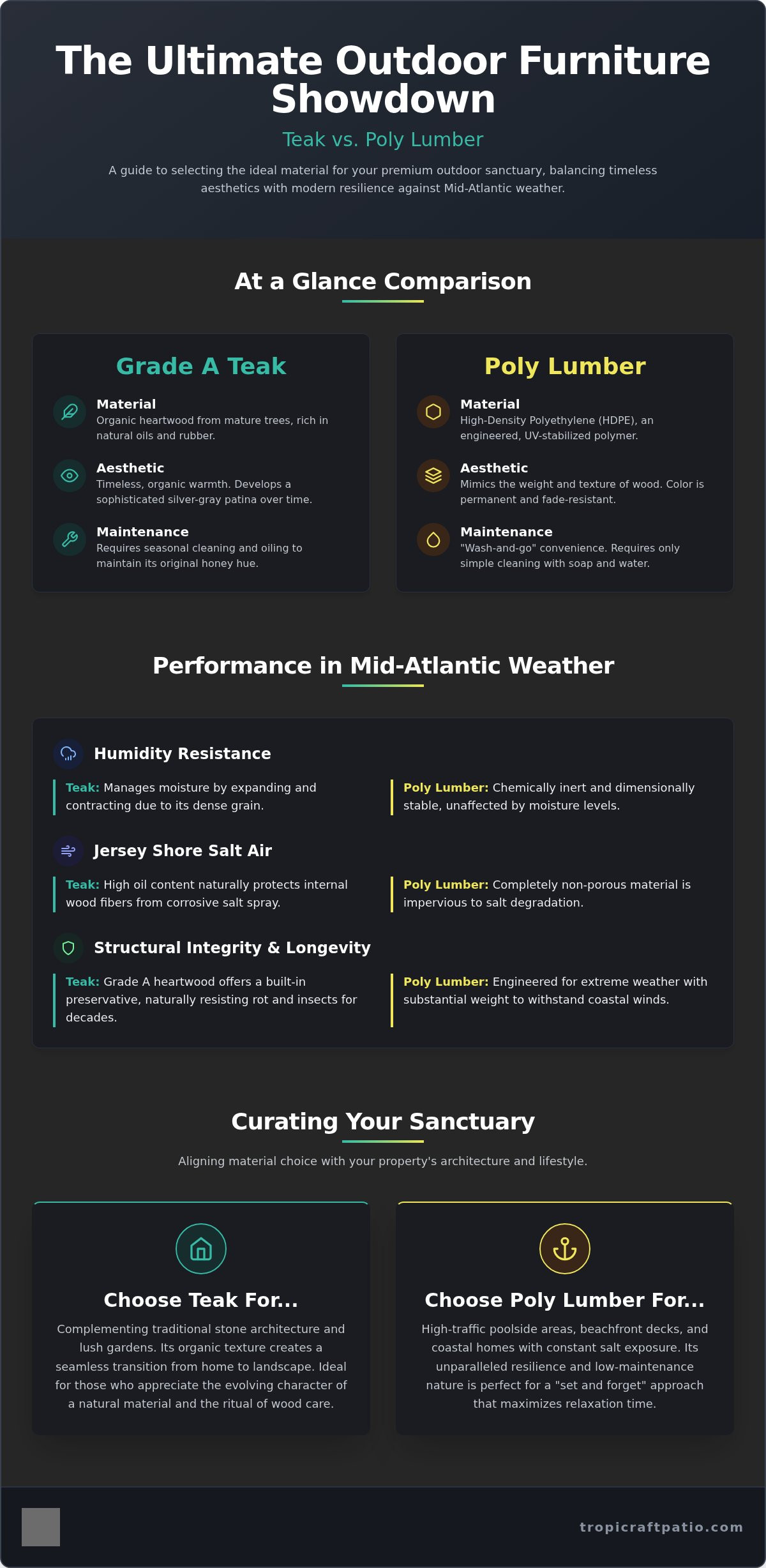
Grade A teak is a "living" material rich in natural oils and rubber, offering a heritage look that evolves over time. In contrast, poly lumber is high-density polyethylene (HDPE) engineered for extreme weather. HDPE is a UV-stabilized polymer that mimics the weight of wood without the organic decay.
Framing this choice is an investment in your lifestyle. You're deciding between the organic warmth of heritage wood and the modern resilience of engineered polymers. Both materials represent a commitment to quality that transcends standard outdoor offerings.
The Heritage of Grade A Teak and Why Grade Matters
Authentic luxury relies on the integrity of the material. Grade A teak is harvested exclusively from the heartwood of mature trees, where the concentration of natural oils and rubber is highest. This heartwood serves as a built-in preservative against the elements.
Grade A (Heartwood): Highest density of oils; naturally resistant to rot and wood-boring insects.
Grade B/C (Sapwood): Lacks natural protection; prone to warping and structural failure.
These Teak wood properties ensure your investment remains structurally sound for decades. It's the definitive choice for the luxury patio furniture Philadelphia market, catering to those who prioritize long-term value.
Mid-Atlantic Performance: Main Line Humidity vs. Jersey Shore Salt Air
Philadelphia’s climate demands materials that can breathe or resist moisture entirely. High summer humidity on the Main Line forces wood to expand and contract. While Grade A teak manages this through its dense grain, poly lumber is chemically inert and remains dimensionally stable regardless of moisture levels.
Coastal environments in Ventnor and Avalon introduce corrosive salt spray that quickly degrades standard hardware. Both teak and poly lumber are naturally resistant to these elements. The debate regarding teak vs poly lumber furniture often centers on this specific resilience during intense Nor'easters.
Salt Resistance: Teak's high oil content protects internal fibers from salt, while poly lumber is entirely non-porous.
Structural Weight: Both materials offer the substantial heft required to withstand coastal winds without shifting.
Some homeowners worry that engineered materials look "plastic" next to a luxury pool. Premium poly lumber features a textured grain that mimics the presence of solid wood. Beyond aesthetics, choosing durable materials reduces the environmental impact of furniture waste.
Maintenance Realities: The Silver Patina vs. Color-Fast Polymers
Teak is a living material that eventually transitions to a sophisticated silver-gray patina. If you prefer the original honey hue, seasonal cleaning and specialized oiling are necessary. Poly lumber offers a "wash-and-go" lifestyle with permanent, UV-resistant color.
Our poly lumber furniture collections utilize pigments infused throughout the HDPE to prevent fading or peeling. This allows your sanctuary to remain vibrant without the need for painting or staining. For help deciding which fits your home, speak with our design consultants.
Curating Your Sanctuary: How to Choose for Your Specific Space
Designing an outdoor retreat requires an eye for architectural harmony. The organic texture of teak perfectly complements the traditional stone architecture and lush gardens found throughout the Main Line. Its warm tones soften hardscapes, creating a seamless transition from the home to the landscape. For high-traffic poolside areas or beachfront decks where salt exposure is constant, we recommend poly lumber for its unparalleled resilience. This material withstands the harshest coastal conditions without sacrificing the aesthetic of a high-end estate.
Comfort remains the ultimate goal of any sanctuary. You can integrate custom outdoor cushions in Ardmore to elevate the tactile experience of either material. Ultimately, the choice in the teak vs poly lumber furniture debate depends on your lifestyle. If you enjoy the ritual of wood care and the evolution of a natural patina, teak is unmatched. If you prefer a "set and forget" approach that leaves more time for relaxation, poly lumber is the superior investment.
The Tropicraft Advantage: A Sensory Experience in Ardmore
Digital browsing cannot replace the tactile reality of premium craftsmanship. We invite you to our 20,000-square-foot showroom in Ardmore to feel the difference in grain and weight for yourself. With over 200 fabric choices, our curators help you design a bespoke look that transcends standard collections. Once your selection is complete, our white-glove delivery service ensures a professional installation in King of Prussia, Villanova, or your Jersey Shore retreat. Your transition to luxury living should be as effortless as the lifestyle itself.
Investing in Your Outdoor Legacy
Your outdoor space is an extension of your home's character and a vessel for future memories. Whether you choose the organic heritage of Grade A teak or the engineered resilience of poly lumber, your decision shapes the soul of your sanctuary. We've explored how each material navigates the specific demands of the Mid-Atlantic climate, from coastal salt air to suburban humidity. The right choice in the teak vs poly lumber furniture debate ultimately reflects your personal rhythm and aesthetic vision.
Since 1977, Tropicraft Patio has curated the finest outdoor furniture lines for discerning Philadelphia families. We provide white-glove delivery and professional installation to ensure your transition to luxury living is seamless. We invite you to schedule a design consultation or visit our Ardmore showroom today. Let us help you craft an environment where relaxation is the only priority.
Frequently Asked Questions
Does poly lumber furniture get too hot in the direct Philadelphia sun?
Lighter shades of poly lumber remain comfortable even in the direct Philadelphia sun. While darker colors absorb more thermal energy, the material's low heat conductivity prevents it from reaching the scorching temperatures of metal furniture. Choosing lighter tones like sand or white ensures your poolside retreat stays inviting during the hottest July afternoons.
Will my teak furniture turn gray, and can I prevent it?
Untreated teak naturally develops a silver-gray patina, but this transition is entirely preventable. You can maintain the rich honey color by applying a specialized teak protector once a season. This sealer blocks UV rays while allowing the wood's natural oils to preserve the grain. It's a simple ritual that keeps your investment looking brand new.
Is poly lumber heavy enough to stay on my deck during a Jersey Shore storm?
Premium poly lumber is specifically engineered for high-wind environments like the Jersey Shore. Because HDPE is a dense, heavy material, these pieces typically weigh significantly more than standard resin or aluminum options. The debate over teak vs poly lumber furniture often focuses on stability, and poly lumber's density is a clear advantage during coastal storms.
Which material has a better ROI for a home in the Main Line area?
Both materials deliver a significant ROI by enhancing your home's outdoor living space. Teak is a prestigious legacy material that can last 50 years, while the longevity of teak vs poly lumber furniture provides a low total cost of ownership by eliminating annual staining. Either choice serves as a durable asset that maintains the high standards of a Main Line estate.


Comments