


Teak vs. Acacia Wood Outdoor Furniture: Which Is Best for the Philadelphia Climate?
- Tropicraft Staff
- Aug 16
- 6 min read
The hardest wood isn't always the strongest choice for a Philadelphia summer. While acacia technically outranks teak on the Janka hardness scale, that extra density won't save your patio set from a humid July or a salty breeze on the Jersey Shore. Choosing between teak vs acacia wood outdoor furniture is the difference between a lifetime investment and a temporary placeholder that may crack after a single winter.
It's frustrating to watch a beautiful investment warp under the Mid-Atlantic sun, especially when you're seeking a low-maintenance sanctuary. You deserve a space that remains a private retreat without the constant cycle of sanding and sealing. This guide explores how these materials handle our local climate, comparing long-term value and weather resistance. You'll discover why one material is the gold standard for luxury estates while the other often falls short of the "buy once, cry once" promise.
Table of Contents
The Hardwood Hierarchy: Comparing Teak vs. Acacia Wood Outdoor Furniture
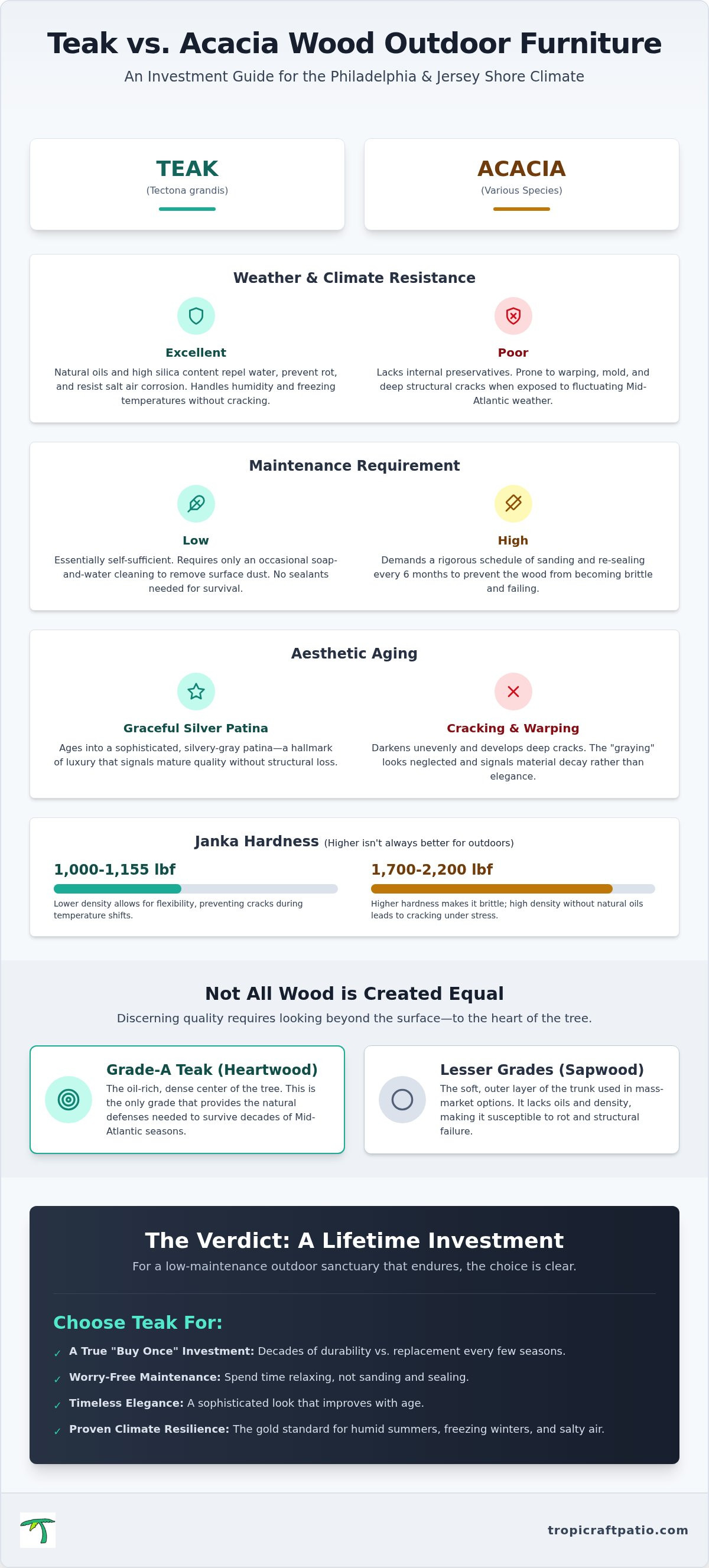
Not all hardwoods are created equal. When comparing teak vs acacia wood outdoor furniture, the secret to longevity lies deep within the grain. Grade-A teak, specifically Tectona grandis, is unique because it's saturated with natural oils and high silica content. These elements act as a biological shield, repelling water from the inside out and preventing the wood from becoming brittle.
Acacia is often marketed as a durable alternative, but it lacks these internal preservatives. It's a short-grain wood that relies almost entirely on topical sealants for protection. While acacia actually scores higher on the Janka Hardness Scale, high density doesn't equate to weather resistance. Teak remains the gold standard because it manages its own hydration, making it a true investment in long-lasting outdoor comfort. Visiting our outdoor furniture lines in Ardmore allows you to feel this difference personally; the buttery, oil-rich texture of premium teak is unmistakable compared to the dry grain of acacia.
Weather Resistance in the Philadelphia and Jersey Shore Climate
Our local environment presents two distinct challenges for outdoor materials. According to NOAA climate data, the Philadelphia region experiences high summer humidity that often traps moisture within wood fibers. While acacia may warp or develop mold under these conditions, teak's natural oils prevent rot and fungal growth.
Salt Air Resilience: For estates in Avalon or Stone Harbor, salt air acts as a relentless abrasive. Teak's dense structure is the only wood that resists this corrosion without failing.
Seasonal Stability: Teak handles the transition from humid August afternoons to freezing January nights without the structural cracking common in cheaper hardwoods.
Maintenance and Aesthetics: The Silver Patina vs. The Acacia Crack
The visual evolution of your patio furniture should enhance your home's character, not create a maintenance burden. When evaluating teak vs acacia wood outdoor furniture, the aesthetic trajectory is starkly different. Grade-A teak is prized for its ability to weather into a sophisticated, silvery-gray patina. This natural transformation is a hallmark of luxury estates, signaling a material that's matured alongside its environment without losing structural integrity.
Acacia lacks this graceful transition. Instead of a refined patina, untreated acacia tends to darken unevenly and warp. Because it's a short-grain wood, it's prone to developing deep structural cracks when exposed to the fluctuating humidity of Greater Philadelphia. For the busy homeowner, this is a critical maintenance reality check. A personal sanctuary should offer tranquility; it shouldn't demand a weekend of labor.
Preserving Your Investment: Cleaning and Protection Strategies
Maintaining the luster of premium wood doesn't have to be intensive. Teak requires little more than an occasional soap-and-water cleaning to remove surface dust; it's essentially self-sufficient. In contrast, acacia requires a rigorous schedule of sanding and sealing every six months to prevent the wood from becoming brittle and grey in a way that looks neglected rather than intentional.
UV-protectant sealants can preserve the original golden-honey hue of teak, though they aren't necessary for its survival. You can find detailed steps in our Teak Care 101 guide. If you're ready to see how these materials look after years of seasonal exposure, we invite you to speak with our design consultants at our Ardmore showroom.
Choosing the Right Foundation for Your Outdoor Sanctuary
Philadelphia’s architectural landscape, spanning from historic Main Line stone estates to modern beachfront glass in Avalon, demands a foundation that bridges tradition and contemporary design. Teak’s warm hues and clean lines offer this versatility. It isn't merely a place to sit; it's a structural element that anchors your personal sanctuary and reflects a commitment to quality.
Discerning the quality of your investment requires looking beyond the surface. Premium collections utilize Grade-A heartwood, the oil-rich center of the tree. In contrast, mass-market options often use Grade-C sapwood, which is the soft, light-colored outer layer of the trunk. When you evaluate teak vs acacia wood outdoor furniture, remember that Grade-A teak is the only material that provides the density needed to survive decades of Mid-Atlantic seasons without structural failure.
The Tropicraft Experience: From the Ardmore Showroom to Your Patio
Digital images can't capture the tactile reality of high-end craftsmanship. We invite you to explore our 20,000-square-foot Ardmore showroom to experience the weight and silk-like texture of our outdoor furniture lines. It's the best way to understand why teak remains the gold standard for local designers and builders who prioritize long-term value.
Once you've selected your pieces, our white-glove delivery service ensures a seamless transition to your new retreat. We handle every detail of the installation for homes in Villanova, Margate, and Cape May. It's a professional, high-touch approach that transforms the acquisition of furniture into an effortless investment in your luxury lifestyle.
Design Your Forever Retreat
Creating a personal sanctuary requires materials that respect both your time and the local environment. When evaluating teak vs acacia wood outdoor furniture, the long-term value of Grade-A heartwood is undeniable. Teak's unique biological makeup provides a natural defense against Philadelphia's humidity and the Jersey Shore's salt air. You'll avoid the structural cracking common with lesser woods, enjoying a graceful silver patina instead of a heavy maintenance schedule.
Our family-owned business has curated luxury outdoor lifestyles since 1977. We invite you to visit our 20,000-square-foot historic showroom in Ardmore to feel the difference in quality for yourself. With our white-glove delivery and installation service, your transition to high-end leisure is entirely seamless. Explore our premium teak furniture collections and start building the outdoor space you've always envisioned.
Frequently Asked Questions
How long does acacia wood last compared to teak in outdoor settings?
Acacia typically lasts between five and ten years, whereas Grade-A teak is a 50-year investment. This lifespan gap is critical when choosing teak vs acacia wood outdoor furniture. While acacia is a hardwood, it lacks the internal oil reserves to prevent the core rot that often occurs in the humid Mid-Atlantic. Teak's density and natural preservatives ensure it remains structurally sound for generations.
Does acacia wood turn grey like teak if left untreated?
Both woods grey, but only teak develops a refined silver patina. Untreated acacia often turns a dull, blotchy charcoal and is prone to surface checking. Teak's transition is an aesthetic asset for high-end Philadelphia homes, while acacia's greying is usually a sign of fiber breakdown. Regular oiling is mandatory for acacia to maintain its appearance, unlike the self-sufficient nature of teak.
Is teak wood better for salt air environments like the Jersey Shore?
Teak is significantly better for the Jersey Shore because it's virtually impervious to salt-induced corrosion. The high silica content found in teak vs acacia wood outdoor furniture acts as a barrier against the abrasive salt mist found in Avalon or Stone Harbor. Acacia absorbs salt, which accelerates drying and leads to structural failure within just a few seasons on the coast.
Can I leave teak furniture outside during a Philadelphia winter?
Yes, premium teak is the only wood that can stay outside year-round in Philadelphia without protection. It doesn't absorb the moisture that leads to the freeze-thaw cycles that crack lesser woods like acacia. While we recommend protective covers to keep surfaces clean from snow and debris, the furniture's structural integrity will remain completely unaffected by the harshest winter weather.


Comments