


Teak Patio Furniture Pros and Cons: A Philadelphia Homeowner’s Guide (2026)
- Tropicraft Staff
- Aug 17
- 6 min read
Imagine looking out at your Main Line garden after a harsh January freeze only to find your new outdoor set split and weathered beyond repair. It's a common frustration for homeowners who prioritize both aesthetics and durability but struggle with the Mid-Atlantic's volatile climate. You want an outdoor space that feels like a personal sanctuary, not a source of recurring maintenance stress.
This guide explores the essential teak patio furniture pros and cons to help you determine if this "gold standard" material is the right investment for your lifestyle. We will analyze how Grade-A teak resists the extreme humidity of the Jersey Shore and the rapid temperature swings of the Philadelphia region. By the end, you'll understand how to achieve a high-end, low-stress retreat that gains character rather than degrading over time.
Table of Contents
The Unrivaled Benefits of Grade-A Teak for Luxury Outdoor Living
Grade-A teak is a botanical marvel that thrives where other woods fail. When evaluating teak patio furniture pros and cons, the most significant advantage is its innate survival mechanism against the elements. While Philadelphia summers bring intense humidity, this dense timber remains indifferent to moisture.
High Oil Content: Natural oils act as a built-in preservative, preventing rot and decay from the inside out.
Silica Infusion: Teak (Tectona grandis) contains high levels of silica, making it naturally resistant to water penetration and pests.
Structural Stability: Unlike softer woods, teak resists warping and checking even during intense Mid-Atlantic humidity shifts.
The aesthetic journey of teak is equally compelling. It is the only wood that transitions from a rich honey-gold to a sophisticated silver patina without losing its structural integrity. This graceful aging process makes it an heirloom-quality material for high-end gardens.
Why Material Density Matters for Your Private Retreat
Grade-A teak is harvested exclusively from the heartwood of mature trees, dense with protective oils that prevent moisture absorption. This substantial weight creates a sense of tranquility and permanence in your outdoor design.
Wind Resistance: Its heavy, substantial feel keeps furniture stable during powerful thunderstorms and high-wind events.
Tactile Quality: The smooth, tight grain provides a sensory experience that synthetic materials simply cannot replicate.
Legacy Value: Because it lasts for decades, teak offers a significantly lower cost-per-year than disposable alternatives.
You can explore our diverse outdoor furniture lines to experience this exceptional craftsmanship in person. Investing in the density of heartwood ensures your retreat remains a stable and beautiful sanctuary for years to come.
The Maintenance Reality: Teak vs. Acacia in the Philadelphia Climate
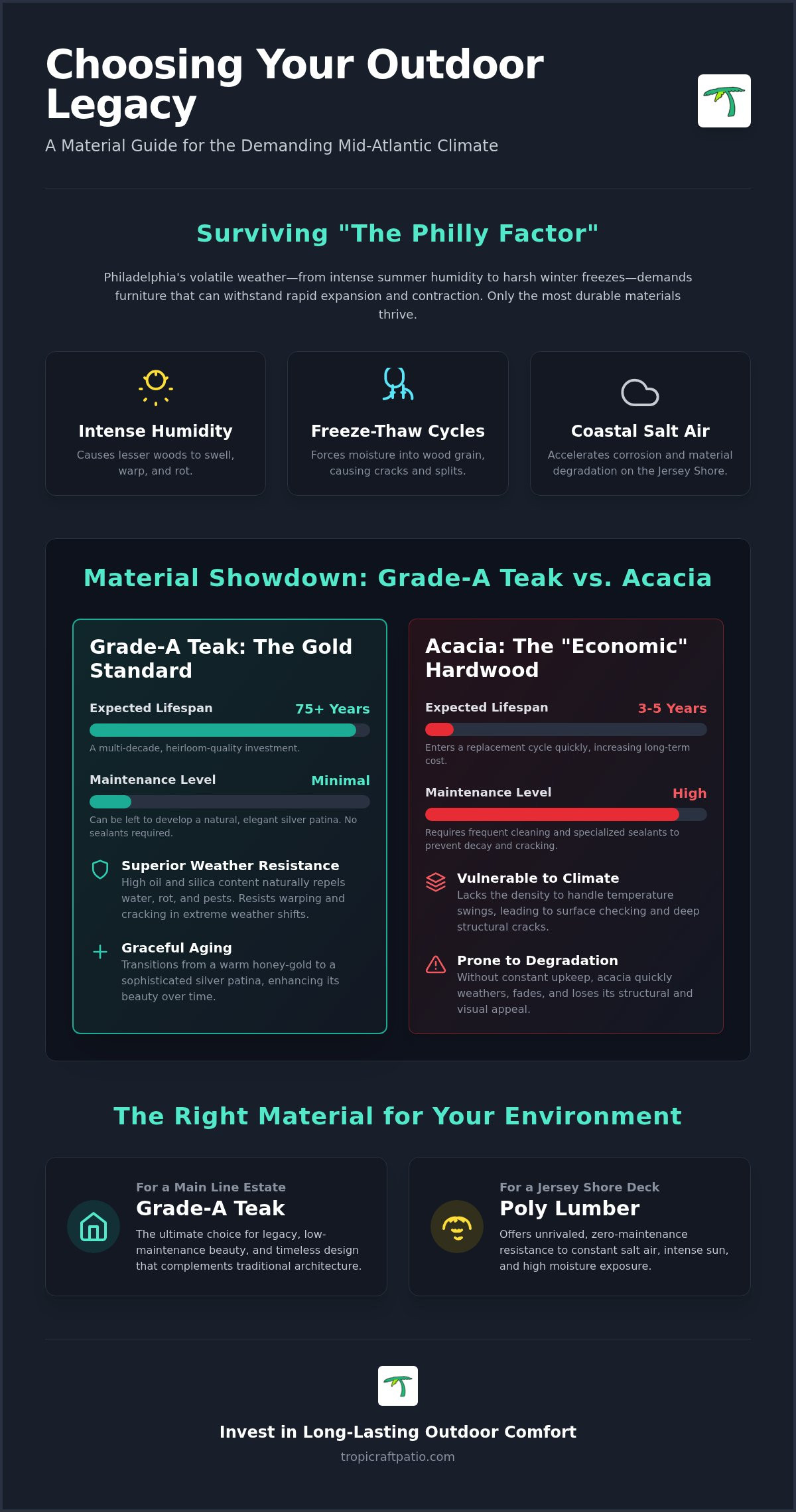
Philadelphia weather is notoriously volatile. When weighing teak patio furniture pros and cons, it's essential to look at how different species react to the "Philly Factor," those sudden shifts from sweltering humidity to freezing drafts. These rapid cycles force wood to expand and contract, testing the limits of its grain.
Acacia Vulnerability: As an "economic" hardwood, acacia lacks the internal density to handle local temperature swings, often resulting in surface checking and deep structural cracks.
Maintenance Fatigue: Acacia requires frequent cleaning and specialized sealants to survive PA winters, while teak's preservation is largely internal.
The Silvering Choice: Most Main Line homeowners prefer the low-maintenance silver patina over the constant labor of oiling.
According to this Forbes guide to outdoor furniture materials, teak's performance in high-moisture environments is unmatched. While acacia requires labor-intensive care to prevent rot, teak remains structurally sound even if left to age naturally.
Navigating Humidity and Freezing Winters in Ardmore
Ground-level moisture is a silent threat to garden furniture on traditional estates. Understanding how to mitigate this ensures your investment remains a centerpiece of your retreat for decades rather than seasons.
Protective Feet: Use professional-grade feet to prevent wood legs from wicking moisture directly from stone or damp soil.
Strategic Covering: High-quality, breathable covers are non-negotiable for protecting acacia from ice and snow, whereas teak is resilient enough to remain exposed.
If you're unsure which material suits your home's specific exposure, reach out to our design consultants for a personalized assessment of your outdoor space.
Strategic Alternatives: When to Choose Teak, Acacia, or Poly Lumber
Selecting the right material requires looking past the initial acquisition. When evaluating teak patio furniture pros and cons, the long-term ROI is undeniable. A Grade-A teak set often serves a Main Line estate for 20 years or more. Entry-level acacia sets typically enter a replacement cycle every 3 to 5 years. Choosing teak isn't just about style; it's about ending the cycle of disposable furniture and investing in a legacy.
Different environments demand different solutions. For Jersey Shore properties where salt air is a constant factor, Poly Lumber offers unrivaled resistance and zero-maintenance ease. If you prefer a modern aesthetic that balances weight and durability, Aluminum Dining Furniture provides a lightweight, rust-proof frame. Many of these contemporary collections incorporate teak accents, providing the perfect bridge between industrial strength and organic warmth.
Choosing the Right Material for Your Main Line Home
Teak remains the premier choice for traditional estates where aesthetic legacy is the priority. Its presence anchors a garden, offering a sense of permanence that synthetic materials can't replicate. When you weigh the teak patio furniture pros and cons in person, the value becomes clear. We invite you to experience the tactile difference between Grade-A heartwood and lesser alternatives at our 20,000-square-foot Ardmore showroom. Feeling the wood's density and smooth grain helps you move from standard comfort to high-end luxury. Investing in quality today ensures your outdoor space remains a private sanctuary for decades.
Elevate Your Outdoor Sanctuary with Confidence
Navigating the teak patio furniture pros and cons reveals that the true value of Grade-A timber lies in its effortless longevity. While materials like acacia require constant vigilance against the elements, teak allows you to focus on the simple pleasure of leisure. Whether you're furnishing a traditional Main Line estate or a coastal Jersey Shore retreat, your choice should reflect a commitment to quality that lasts for decades. It's an investment in a lifestyle where beauty and durability coexist in perfect harmony.
Since 1977, our family-owned business has helped homeowners curate private sanctuaries that stand the test of time. We invite you to visit our 20,000-square-foot showroom in Ardmore to experience these premium materials firsthand. From expert design guidance to white-glove delivery and installation, we ensure your transition to luxury living is seamless. Speak with a Design Expert at Tropicraft Patio today to begin crafting your ideal outdoor retreat.
Expert Answers for Your Outdoor Investment
Is teak wood patio furniture worth the high price tag?
Yes, teak is widely considered a superior investment because it offers a lifespan of 20 years or more. While the initial cost is higher, you avoid the replacement cycle of budget woods that fail every few seasons. When evaluating teak patio furniture pros and cons, the long-term ROI and the prestige of owning heirloom-quality heartwood justify the premium price for luxury homes.
How long will acacia wood furniture last compared to teak in Pennsylvania?
Acacia typically maintains its structural integrity for only three to five years in the Mid-Atlantic climate. Pennsylvania's dramatic temperature shifts cause this less-dense wood to expand and contract, leading to deep cracks. In contrast, Grade-A teak often lasts 20 to 30 years. Its high natural silica and oil content protect it from the warping that destroys cheaper alternatives.
Can I leave my teak furniture outside during a Philadelphia winter?
You can leave Grade-A teak outside during a Philadelphia winter without fear of structural failure. The wood's internal oils prevent moisture from penetrating the grain and freezing, which is the primary cause of splitting in lesser woods. While it's resilient enough to remain uncovered, we recommend using breathable protective covers to shield the surface from winter debris and simplify your spring cleaning routine.
Does acacia wood rot faster than teak in humid climates?
Acacia is significantly more prone to rot and mold when exposed to high humidity. It lacks the natural water-repelling properties found in teak heartwood, which can lead to fungal growth during damp Philadelphia summers. Teak's high oil and silica content act as a natural preservative and fungicide. This makes it far more resistant to decay in humid or coastal environments.
What is the best way to prevent teak furniture from turning gray?
Applying a high-quality UV-rated teak sealer annually is the most effective way to maintain the original honey-gold hue. Unlike traditional oils, sealers block the sun's rays without trapping moisture that can lead to mold. This step is purely aesthetic. If you prefer a low-maintenance approach, you can simply allow the wood to age naturally into a sophisticated, silvery-gray patina over time.
Is poly lumber a better investment than teak for a Jersey Shore home?
Poly lumber is an excellent choice for high-exposure coastal decks because it's completely impervious to salt spray and requires zero maintenance. However, it doesn't replicate the tactile warmth or prestige of real timber. When weighing teak patio furniture pros and cons, many homeowners still choose teak for its natural elegance and legacy feel, accepting the minimal cleaning required for such a high-end material.


Comments