


Protecting Your Investment: How to Safeguard Luxury Patio Furniture from Snow and Ice (2026)
Updated: Jul 16
Leaving your hand-finished teak or custom-woven resin wicker to the mercy of a Mid-Atlantic winter isn't just a maintenance oversight; it's a gamble with a significant investment. You've curated a personal sanctuary designed for leisure, yet the arrival of the first frost often brings a lingering sense of unease. We understand the hesitation that comes with watching heavy drifts pile up on your high-end finishes. You shouldn't have to choose between the winter aesthetic of your terrace and the long-term structural integrity of your pieces. Mastering the professional techniques for protecting patio furniture from snow and ice is the only way to ensure your retreat remains pristine for the spring thaw.
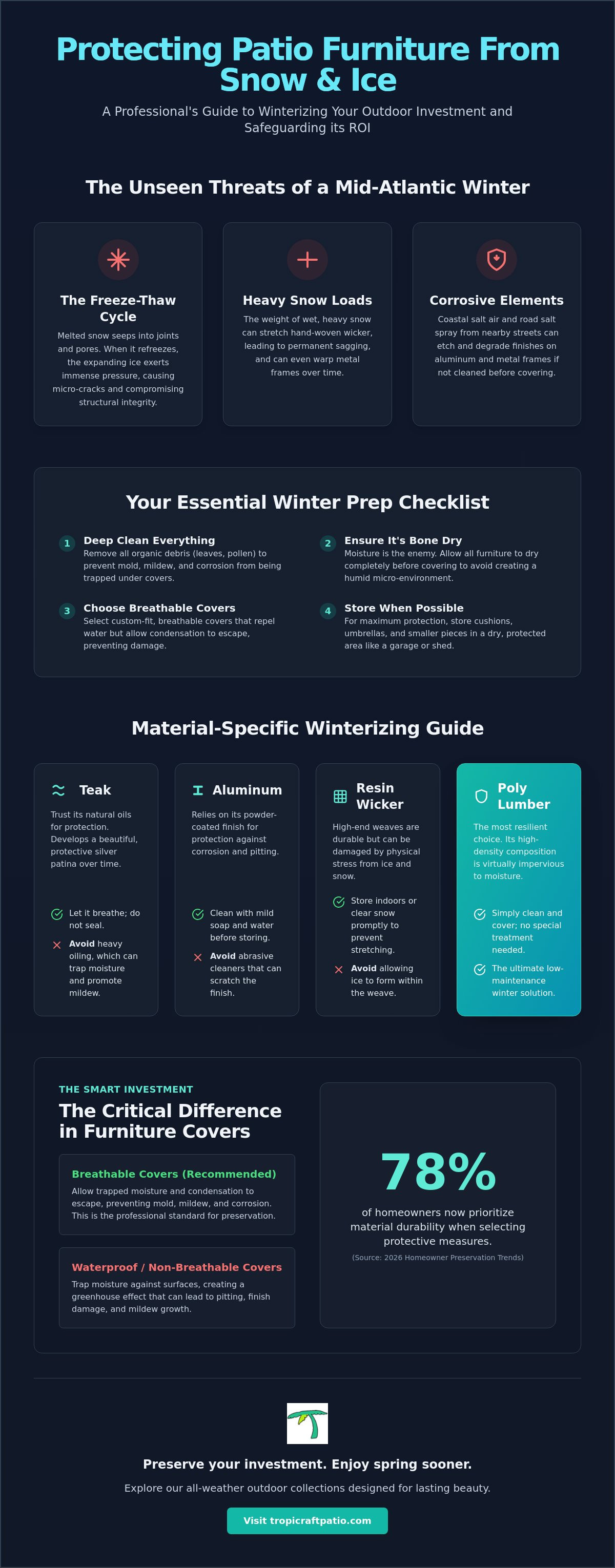
Protect your finishes. Preserve your peace of mind. Recent 2026 data shows that 78% of homeowners now prioritize material durability when selecting protective measures, reflecting a shift toward intentional preservation. This guide provides a clear maintenance plan tailored to these high standards, including critical updates on new PFAS-free textile regulations and material-specific storage strategies. Whether you're managing extruded aluminum or luxury upholstery, you'll gain the expert knowledge needed to preserve your furniture's ROI and beauty for many seasons to come.
Table of Contents
The Winter Threat: Understanding Ice and Snow Damage to Luxury Outdoor Furniture
Your outdoor sanctuary is an extension of your home's elegance. While high-end collections are designed for resilience, the Mid-Atlantic winter introduces variables that standard "weatherproof" labels don't fully address. Protecting patio furniture from snow and ice is a matter of managing the invisible forces of nature; specifically, the destructive freeze-thaw cycle. When daytime sun melts snow, moisture seeps into the smallest joints of your furniture. As temperatures plummet at night, that water expands with immense force, potentially compromising the structural integrity of your favorite pieces.
Heavy snow loads present a different kind of physical stress. For luxury resin wicker, the weight of several inches of wet snow can gradually overstretch the hand-woven fibers. This tension loss often leads to sagging that remains long after the spring thaw. Understanding Garden furniture materials and care is essential for anyone who views their terrace as a long-term investment rather than a seasonal convenience.
Moisture Expansion and Structural Integrity
Ice crystals are surprisingly sharp and powerful. In natural teak, trapped moisture that freezes can cause micro-cracks in the wood fibers, a process known as checking. Metal frames face a different risk; if moisture is trapped under non-breathable covers, it can lead to "pitting" or oxidation on the finish. Hydrostatic pressure describes the mechanical force exerted by moisture as it expands into ice within the narrow confines of furniture joints and crevices.
Geographic Vulnerabilities: Philadelphia vs. The Jersey Shore
The specific risks to your furniture often depend on your zip code. In coastal enclaves like Avalon and Stone Harbor, the combination of corrosive salt air and freezing spray creates a harsh environment for aluminum finishes. Conversely, homeowners on the Main Line must contend with heavy, wet snowfalls that differ significantly from dry, powdery mountain snow. These heavy loads require proactive clearing to prevent frame warping. Key regional threats include:
Road salt: Sleet in the Philadelphia area often carries salt from nearby roads, which can etch the finish of cast aluminum if not cleaned prior to covering.
Salt air: Coastal winters accelerate corrosion if protective barriers aren't maintained.
Ice dams: Pooled water on flat furniture surfaces can create localized ice dams that stress glass tabletops.
Material-Specific Winterizing: Strategies for Teak, Aluminum, and Resin Wicker
Before the first frost settles over the Delaware Valley, a rigorous deep-cleaning protocol is your first line of defense. Removing organic debris like fallen leaves and pollen is critical; these seemingly harmless materials trap moisture against frames, creating a breeding ground for mold, mildew, and even nesting pests during the damp months. For homeowners also managing properties in the South, services like pest control Raleigh NC can help address these seasonal biological threats. When protecting patio furniture from snow and ice, starting with a pristine surface ensures that protective layers don't inadvertently seal in corrosive elements. For those seeking the ultimate in durability, poly lumber furniture remains the most resilient choice for Philadelphia winters, as its high-density composition is virtually impervious to moisture absorption.
Caring for Natural and Engineered Woods
The debate over oiling luxury Grade-A Teak before winter often leads to the conclusion that less is more. While some suggest heavy oiling, this can actually trap moisture if not applied perfectly. High-quality teak naturally produces its own protective oils, which help it maintain structural integrity even as it develops that coveted silver patina. You can learn more about these nuances in our Ultimate Teak Furniture Buyer's Guide. It's also vital to monitor for minor stress cracks, or "checking," which are common results of extreme temperature fluctuations but rarely affect the furniture's lifespan.
Metal and Wicker: Protecting the Finish
Modern cast aluminum patio furniture relies on automotive-grade powder coating to repel moisture and resist the pitting mentioned in previous sections. To protect garden furniture in winter, avoid the temptation to power-wash resin wicker before storage, as high pressure can micro-tear the weave and invite ice accumulation. High-density polyethylene (HDPE) resin wicker is specifically engineered with UV-inhibitors and stabilizers that maintain structural elasticity and prevent brittleness even in sub-zero temperatures. If you're uncertain about which materials best suit your specific landscape, speak with one of our design consultants for a personalized assessment.
The Art of Professional Protection: Covers and Storage Logistics
While the material science of your furniture provides the foundation for durability, the final step in protecting patio furniture from snow and ice involves sophisticated physical barriers. Many homeowners mistakenly reach for generic plastic tarps or heavy vinyl sheets. These non-breathable materials are often detrimental; they trap condensation against the frame and fabric, leading to rapid mildew growth and finish degradation. High-quality patio furniture covers prioritize vapor permeability, allowing moisture to escape while preventing snow and ice from making direct contact.
Precision fit is equally vital. Generic, oversized covers allow heavy snow to pool in low spots, creating localized ice dams that can crack glass surfaces or strain frame joints. Custom-fit solutions ensure a taut surface where precipitation can slide off effortlessly. Even with elite weather-resistant fabrics like Sunbrella, we recommend storing cushions and pillows in a climate-controlled environment. While the fibers are engineered for the elements, extreme cold can stiffen foam cores over time, affecting the long-term comfort of your investment.
Selecting the Right Protective Covers
Look for multi-layer breathable fabrics rather than single-ply vinyl. These textiles offer a soft inner lining that won't scratch powder-coated finishes while maintaining a rugged exterior. Ensure your covers feature secure tie-downs and buckle systems. During a Philadelphia Nor'easter, wind-lofting can turn a loose cover into a sail, potentially toppling even heavy cast aluminum pieces. For flat-surfaced tables, use "tents" or support poles to create a peak, ensuring constant moisture runoff.
Storage Solutions for the Philadelphia Homeowner
For large, intricate sets that are difficult to move, on-site protection with professional-grade covers is often the most practical route. However, smaller accessories like umbrellas and cantilevers should always be removed and stored horizontally to prevent internal mechanism freezing. Fire pits require specialized attention; ensure the burner is covered and the fuel source is safely disconnected. If the logistics of seasonal transitions feel overwhelming, our team offers professional assistance. Visit the Tropicraft Contact Page to discuss tailored winterizing advice for your specific collection.
Secure Your Outdoor Retreat for the Seasons Ahead
Preserving the effortless elegance of your terrace requires a sophisticated blend of material science and proactive care. By prioritizing breathable protective covers and implementing material-specific cleaning protocols, you ensure that your investment retains its structural integrity and aesthetic allure. Mastering the art of protecting patio furniture from snow and ice is the final step in maintaining a personal sanctuary that remains untouched by the elements. Your outdoor space is an investment in a lifestyle of relaxation; it deserves a preservation strategy that reflects its value.
For homeowners and real estate investors who want to ensure their outdoor living spaces and overall property value are protected year-round, TBM Property Management offers the professional oversight and maintenance coordination necessary to safeguard high-end investments.
Since 1977, Tropicraft Patio has served the Philadelphia area as a trusted partner in luxury outdoor living. Our 20,000-square-foot showroom in Ardmore showcases the finest collections specifically selected to withstand the rigors of the Mid-Atlantic climate. From professional white-glove delivery to seamless installation, we provide the high-touch service and heritage quality your home deserves. We invite you to explore our curated collections of winter-resilient outdoor furniture and consult with our design experts to prepare your space for the coming year. Let's ensure your retreat stays pristine and ready for your next moment of leisure.
Frequently Asked Questions
Can I leave my poly lumber furniture outside in the snow all winter?
Yes, high-density poly lumber is engineered to remain outdoors year-round without compromising its structural integrity. Its non-porous composition prevents moisture absorption, which is the primary cause of cracking during the freeze-thaw cycle. While it withstands heavy snow loads easily, we still recommend using a breathable cover to prevent surface staining from organic debris. This simple step ensures your investment remains pristine and ready for use the moment spring arrives.
Is it better to store patio cushions in a garage or a basement?
A climate-controlled basement is the superior choice for storing luxury cushions and pillows. While garages offer shelter, they are subject to extreme temperature fluctuations and humidity that can encourage mildew growth within the foam core. Storing textiles in a dry, indoor environment preserves the elasticity of the fill and the vibrancy of the fabric finish. Always ensure cushions are completely dry and clean before placing them in breathable storage bags for the season.
Should I shrink-wrap my outdoor furniture for maximum protection?
Shrink-wrapping is generally discouraged for high-end materials because it creates a completely airtight seal that traps moisture. This lack of ventilation often leads to pitting on metal frames and mold on resin wicker. When protecting patio furniture from snow and ice, a custom-fit, breathable cover is a far more effective solution. It provides the necessary physical barrier while allowing vapor to escape, maintaining the health of your furniture's finish throughout the winter.
How do I remove ice from my patio table without scratching the surface?
Avoid using metal scrapers or salt-based de-icers, as these can permanently etch glass or powder-coated aluminum surfaces. The safest method for protecting patio furniture from snow and ice during cleaning is to allow the sun to melt the accumulation naturally. If immediate removal is necessary, use a soft-bristled brush for loose snow or lukewarm water to gently loosen thin layers of ice. Never use boiling water, as the extreme thermal shock can shatter tempered glass tabletops.


Comments