


Luxury Fire Pits: Elevating Your Philadelphia Outdoor Oasis (2026)
A luxury outdoor centerpiece should never fall victim to the corrosive salt air of the Jersey Shore or the shifting seasons of the Philadelphia suburbs. While the global market for outdoor fire pits has reached a valuation of 787.85 million dollars in 2026, finding a piece that maintains its elegance against local elements remains a frequent challenge for homeowners. You shouldn't have to settle for a feature that rusts after one season or clashes with your carefully curated teak and wicker collections.
We understand that creating a personal sanctuary requires a delicate balance of aesthetic beauty and technical compliance. This guide will show you how to select a sophisticated fire feature that meets Philadelphia's strict 15 foot safety clearance regulations while offering the durability your lifestyle demands. You'll discover the nuances of gas versus wood-burning units, material longevity in coastal environments, and design strategies to ensure your new architectural anchor feels like a seamless, permanent extension of your home.
Key Takeaways
Compare the performance of natural gas, propane, and wood-burning fire pits to determine which fuel source aligns with your maintenance preferences and local safety codes.
Discover why marine-grade aluminum and powder-coated finishes are essential for ensuring your outdoor features withstand the corrosive salt air of the Jersey Shore.
Explore professional design strategies for integrating high-end fire tables with premium materials like resin wicker to create a cohesive and inviting outdoor oasis.
Understand the specific 15-foot clearance rules and stable surface requirements mandatory for safe, legal operation within the Philadelphia city limits.
Identify the technical specifications and certifications that guarantee your investment remains a durable, high-performing centerpiece for years to come.
Table of Contents
Choosing the Ideal Fire Pit: A Selection Framework for Philadelphia Homeowners
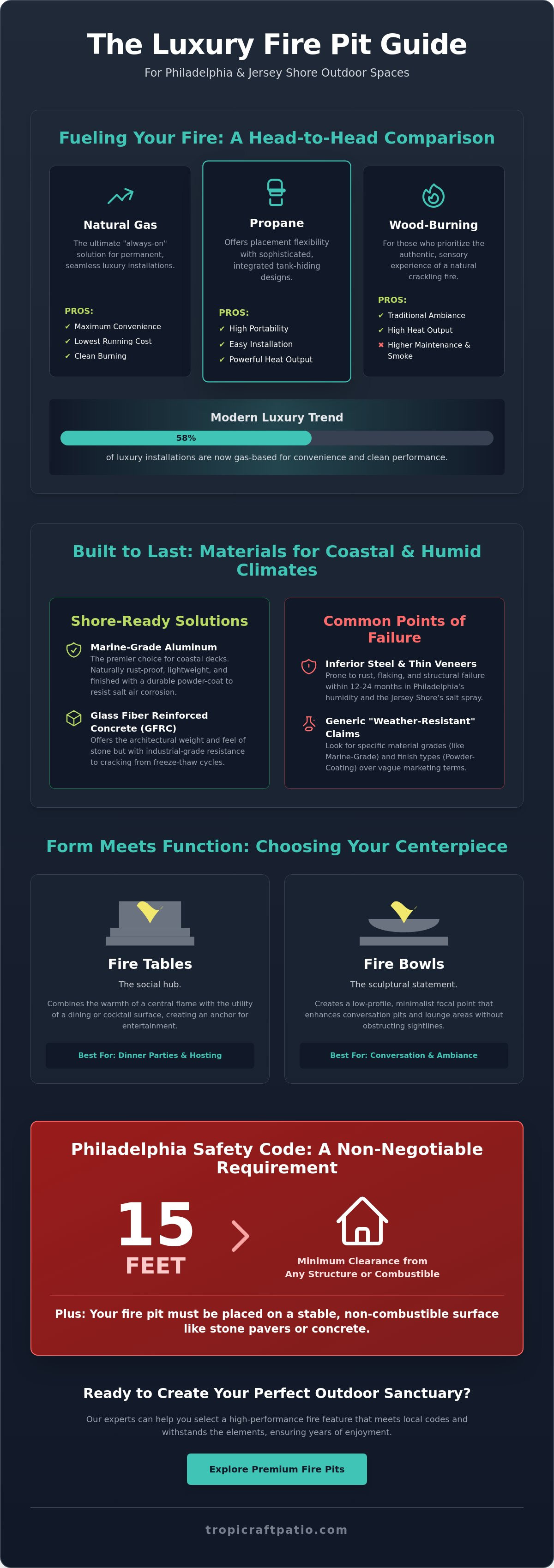
Selecting the right fire feature begins with defining the soul of your outdoor retreat. Whether you seek a quiet sanctuary for reflection or a high-performance social hub, your choice should reflect your property's specific scale. In the Philadelphia region, spatial planning is often dictated by the 15 foot safety clearance rule, making the footprint of your furniture just as vital as the flame itself.
Main Line Estates: Large fire tables serve as architectural anchors for expansive patios.
Urban Courtyards: Low-profile fire bowls provide warmth without obstructing sightlines in compact spaces.
Key Takeaway: Always prioritize scale to ensure your fire feature complements your landscape rather than crowding it.
Fuel Types: Convenience vs. Tradition
Your choice of fuel defines your daily lifestyle and maintenance commitment. While some prefer the traditional crackle of a log fire, the luxury market has shifted toward cleaner, more efficient alternatives. For a foundational look at these options, this Fire Pits 101 resource offers a detailed history of traditional use.
Natural Gas: The ultimate "always-on" solution for permanent luxury installations.
Propane: Offers placement flexibility with sophisticated tank-hiding designs.
Wood-burning: Best for those who prioritize the sensory experience of a natural fire.
Key Takeaway: Gas-based units now account for over 58% of luxury installations due to their convenience and clean-burning performance.
Form and Function: Fire Tables vs. Fire Bowls
Designers typically choose between two distinct silhouettes to achieve a specific atmosphere. Fire tables bridge the gap between utility and luxury, pairing beautifully with aluminum dining furniture to provide a stable surface for cocktails. Fire bowls offer a sculptural, minimalist aesthetic that works best in lounge-heavy environments where the visual impact of the flame is the primary objective.
Fire Tables: Combine dining utility with the warmth of a central flame.
Fire Bowls: Create a low-profile, sculptural focal point for relaxed seating areas.
Key Takeaway: Choose a fire table if you host dinner parties; opt for a bowl to create a dedicated conversation pit.
Performance and Durability: Materials Built for the Main Line and Jersey Shore
Philadelphia's high humidity and the Jersey Shore's corrosive salt spray demand more than generic "weather-resistant" claims. Inferior steel or thin stone veneers often flake or rust within 12 to 24 months in these local micro-climates. Material choice is the single most important factor in ensuring your investment survives the regional freeze-thaw cycles.
Marine-Grade Aluminum: Naturally rust-proof and lightweight, making it the premier choice for coastal decks in Avalon or Stone Harbor.
GFRC (Glass Fiber Reinforced Concrete): Offers the architectural weight of stone with significantly higher industrial-grade crack resistance.
Key Takeaway: High-gauge aluminum and GFRC represent an investment in long-lasting outdoor comfort that outperforms standard retail alternatives.
To create a cohesive and resilient retreat, many homeowners pair their fire pits with cast aluminum patio furniture. This ensures every piece in your oasis shares the same level of craftsmanship and weather resistance.
The Salt Air Challenge: Shore-Ready Solutions
For coastal properties, corrosion is the primary enemy of outdoor longevity. Identifying finishes that can withstand the relentless Atlantic air is essential for protecting your sanctuary's aesthetic and structural integrity.
Powder-Coated Frames: A multi-stage finish that provides a permanent barrier against oxidation and fading.
High-Density Polyethylene: Ideal for surrounding seating; explore our poly lumber options for a maintenance-free coastal setup.
Key Takeaway: Only use non-ferrous metals or high-density polymers within five miles of the ocean to prevent rapid salt-air degradation.
Winter Maintenance and Protection
Pennsylvania's freeze-thaw cycles can be brutal on porous materials if they aren't properly shielded. Moisture that enters small crevices can expand when frozen, potentially causing structural stress to the frame or burner components.
Custom-Fit Covers: These are non-negotiable for shielding the burner and fire media from ice, snow, and winter debris.
Burner Care: Ensure the igniter remains dry and clear of nesting insects during the off-season to guarantee a smooth start in the spring.
If you're unsure which material fits your specific micro-climate, feel free to contact our design consultants for a professional, research-driven recommendation based on your location.
Designing Your Sanctuary: Integrating Fire Features with Premium Collections
A high-end outdoor space thrives on cohesion. Unlike standalone units found at mass-market retailers, luxury fire pits act as the heart of a curated floor plan. The "Oasis" concept focuses on maximizing flow, ensuring your fire feature invites conversation rather than obstructing movement. It's about creating a destination within your backyard that feels as intentional as your living room.
Achieve a sophisticated aesthetic by coordinating the textures of your fire table with resin wicker outdoor furniture. Darker, hand-woven weaves provide a stunning contrast to the clean lines of a concrete or aluminum fire bowl. Layered outdoor lighting further enhances the natural flicker of the flame, extending the usability of your patio well into the evening. Because these textures and light levels are difficult to judge on a screen, visiting our Ardmore showroom allows you to experience the tactile quality and scale of these collections in person.
Seating Arrangements for Fire Features
Surround your flame with deep-seating club chairs or swivel rockers to create an intimate "chat set." For safety and comfort, maintain a minimum of 3 feet between the edge of the fire feature and your furniture. This distance provides ample legroom while keeping guests comfortably within the heat radius. This arrangement encourages a relaxed, unhurried pace of social connection that defines the luxury outdoor lifestyle.
Customizing Your Fire Pit
Personalize the internal media with fire glass or lava rock that complements your custom outdoor cushions. This attention to detail ensures your fire pits feel integrated into the overall color palette. When evaluating performance, look for units with 50,000 to 100,000 BTUs. This output ensures enough warmth to cut through a brisk Main Line evening or a damp Jersey Shore night without becoming overpowering for those seated nearby.
Transforming Your Backyard into a Year-Round Sanctuary
Your outdoor oasis deserves a centerpiece that balances architectural beauty with the resilience to withstand the demanding Philadelphia climate. By selecting high-performance materials like marine-grade aluminum and ensuring your layout adheres to local safety ordinances, you're making an investment that lasts well beyond a single season. A thoughtfully integrated fire feature doesn't just provide warmth; it anchors your entire design, creating a seamless flow between your resin wicker seating and your custom cushions. These fire pits serve as the essential components of a personal sanctuary where social connection and relaxation meet.
Since 1977, Tropicraft Patio has helped homeowners throughout Pennsylvania and the Jersey Shore navigate these complex design decisions. We provide white-glove delivery and professional installation to ensure your transition to luxury living is effortless. Our custom design consultations offer access to over 200 premium fabric choices to perfectly match your existing aesthetic. Visit our 20,000-square-foot Ardmore showroom to explore our curated fire pit collections and experience the tactile quality of our craftsmanship firsthand. We look forward to partnering with you to create your ideal private retreat.
Frequently Asked Questions
Do I need a permit for a fire pit in Philadelphia or the Main Line?
Yes, permanent natural gas installations require specific mechanical and plumbing permits from the City of Philadelphia or your local Main Line township. While portable units don't typically require a permit, they must adhere to strict safety codes. For example, Philadelphia regulations require these features to be located at least 15 feet away from any structure or combustible surface. Always verify your specific municipal ordinances to ensure your private retreat remains fully compliant with current safety standards.
Can I place a fire pit directly on my wood or composite deck?
You should only place gas or propane fire pits on a wood or composite deck if the specific model is certified by the manufacturer for use on combustible surfaces. Wood-burning units are generally prohibited on decks because of the high risk of heat transfer and stray embers. For approved gas models, using a protective heat shield or a stone paver base provides an extra layer of security. This protects your premium decking investment while maintaining a safe environment for relaxation.
How do I choose between a propane fire pit and a natural gas one?
Choose natural gas if you prefer the unparalleled convenience of a permanent fuel source that never requires a tank refill. This is the ideal "set and forget" solution for fixed architectural installations on luxury estates. Propane is the better choice if you value the flexibility to reposition your fire pits as your patio layout evolves. Modern propane designs often include sophisticated internal storage to hide the tank, ensuring the clean, minimalist lines of your oasis remain undisturbed.
What is the best fire pit material for a home near the Jersey Shore?
Marine-grade aluminum and Glass Fiber Reinforced Concrete (GFRC) are the superior choices for coastal properties in towns like Avalon and Stone Harbor. These materials are specifically engineered to resist the corrosive effects of salt air and intense humidity. Unlike mass-market steel units that often show signs of rust within 12 months, powder-coated aluminum maintains its structural integrity and sophisticated finish. It's a durable investment that ensures your coastal sanctuary remains beautiful despite the demanding seaside environment.


Comments