


How to Protect Resin Wicker Furniture in Winter: A Luxury Care Guide
What if the greatest threat to your outdoor sanctuary isn't a heavy snowfall, but the relentless cycle of freezing rain and coastal salt air? For many homeowners in the Mid-Atlantic, the shift toward wetter, stormier winters means your patio investment faces unique environmental stresses. You've likely felt that familiar concern about whether your high-end frames will crack in a sudden freeze or if the salt air will compromise the intricate weave.
We understand that your outdoor space is a private retreat. Learning how to protect resin wicker furniture in winter is essential for preserving the comfort and quality you expect from your investment. This guide reveals professional techniques to safeguard your collection against harsh elements. You'll discover a refined maintenance routine that confirms the durability of your HDPE materials while safeguarding their aesthetic brilliance. We'll walk through everything from strategic cleaning to the essential role of custom protective covers.
Table of Contents
Understanding Resin Wicker Durability in the Mid-Atlantic Climate
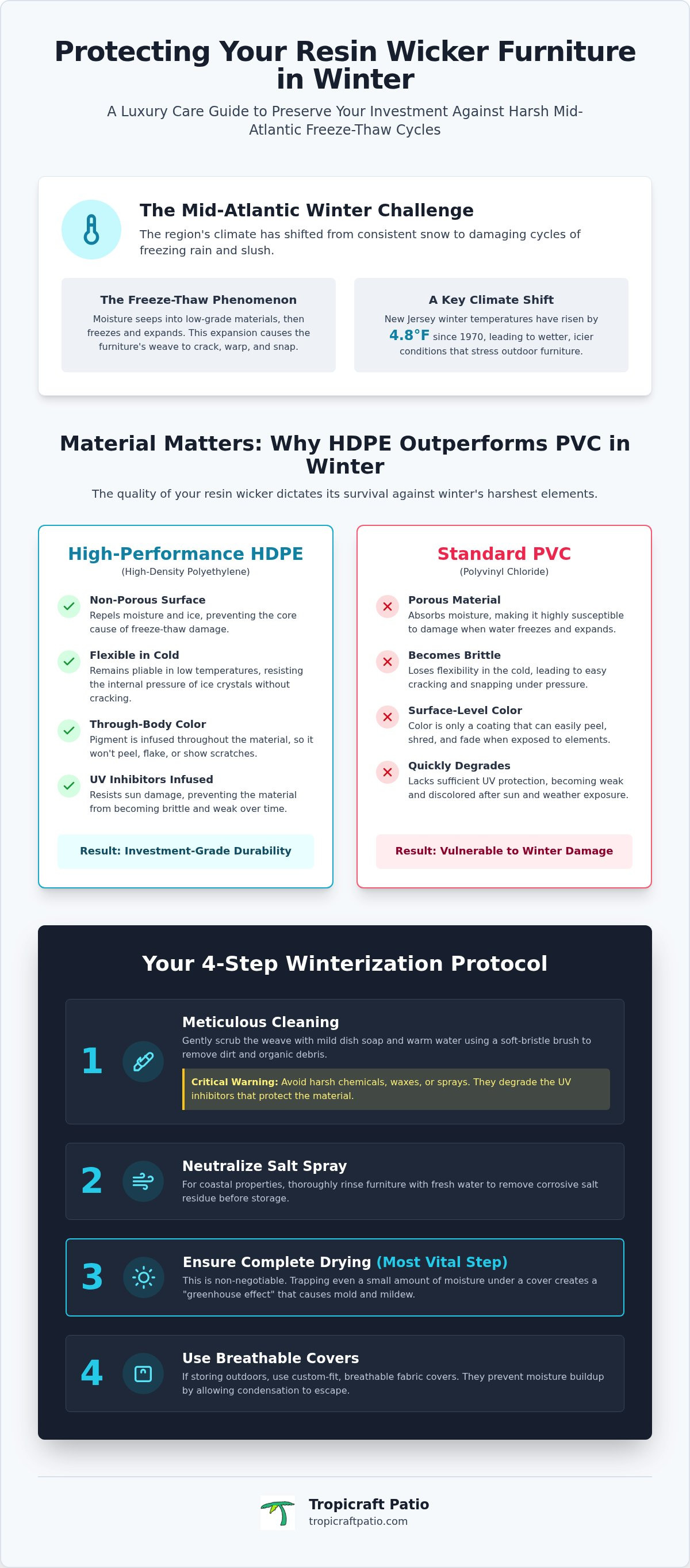
The Philadelphia winter presents a unique challenge for outdoor living spaces. With New Jersey winter temperatures rising by 4.8°F since 1970 according to state climate analysis, the region now experiences frequent cycles of freezing rain and slush rather than consistent snow. Knowing how to protect resin wicker furniture in winter is vital for navigating these damp, fluctuating conditions. Premium Resin wicker, specifically High-Density Polyethylene (HDPE) infused with UV inhibitors, is engineered to withstand these shifts without losing its structural integrity.
Understanding the "freeze-thaw" phenomenon is essential for maintaining your investment. When moisture seeps into porous, low-grade materials and freezes, it expands, often causing the structural weave to snap or warp. High-quality resin is non-porous, meaning it repels the moisture and ice common in our region. This resilience makes it a superior choice for long-lasting outdoor comfort in Pennsylvania homes, acting as a durable foundation for your private retreat.
HDPE vs. PVC: Why Material Quality Dictates Winter Survival
The chemical stability of HDPE is what prevents the brittleness often seen during extreme Ardmore winters. While PVC (polyvinyl chloride) is prone to cracking and fading, HDPE strands are dyed all the way through the material. This prevents the unsightly peeling or shredding that occurs when cheaper, surface-painted sets are exposed to heavy sleet and ice.
When exploring luxury rattan wicker outdoor furniture, consider these advantages for winter durability:
Color Longevity: Through-body pigments ensure that the rich tones of your set won't flake or wear away.
Structural Integrity: HDPE remains flexible in low temperatures, resisting the internal pressure of ice crystals.
Moisture Resistance: The non-porous surface prevents the growth of mold that often plagues inferior plastics.
Choosing the right material is the first step in ensuring your outdoor sanctuary transitions beautifully from the winter frost into the spring sunshine.
How to Protect Resin Wicker Furniture in Winter: Essential Maintenance Steps
Proper maintenance transforms seasonal chores into a preservation ritual. Your first priority is a meticulous cleaning using a mixture of mild dish soap and warm water. Use a soft-bristle brush to gently agitate the weave, removing organic debris that can become food for mildew during damp months.
It's vital to avoid harsh chemicals, car waxes, or epoxy sprays. These substances often contain solvents that degrade the UV inhibitors in high-end HDPE, causing the brittleness you don't want to see in your investment. Protecting the chemical integrity of the material is just as important as the physical cleaning.
Total drying is non-negotiable before applying any protective layers. Trapping water beneath a cover creates a "greenhouse" effect, leading to mold growth even on resilient materials. Following professional insights like Preparing Your Wicker for Winter ensures you don't overlook these critical steps during your seasonal transition.
The Art of Cleaning and Pre-Winter Preparation
For properties in Avalon or Cape May, salt spray remains a year-round environmental factor. Rinse your sets thoroughly with fresh water to neutralize corrosive salt before seasonal storage. While cleaning, inspect the underlying aluminum frames for trapped debris where the wicker meets the metal.
This level of care maintains the long-term value detailed in the ultimate guide to premium outdoor furniture. If you have questions about specific care protocols for your collection, contact our design team for personalized guidance.
Storage and Covering Solutions for Philadelphia & Jersey Shore Homes
While luxury HDPE is weather-resistant, the strategy for how to protect resin wicker furniture in winter often depends on your available space. Indoor storage in a garage or basement is the gold standard for absolute preservation, yet it's not always practical for large sectional sets. Outdoor covers offer a convenient alternative, provided they meet high-performance standards. Custom-fit covers utilize breathable fabrics that allow internal moisture to escape, preventing the "greenhouse effect" where trapped condensation leads to surface mold. Understanding how to protect resin wicker furniture in winter involves more than just a barrier; it requires a moisture management system.
Cushions and pillows require a separate approach. Even high-performance Sunbrella fabrics should be stored indoors during the off-season. While the fabric resists mildew, the internal foam can retain moisture in the damp Mid-Atlantic climate. Storing them in dry, climate-controlled spaces ensures they remain plush and pristine for spring use.
Professional Protection: High-End Covers vs. Indoor Storage
Homes in King of Prussia or Villanova often face heavy snow loads that can strain furniture joints. Select covers with reinforced seams and secure tie-downs to prevent wind-lofting during coastal storms. Ensure your furniture is elevated slightly off the ground to prevent the wicker from sitting in standing water or ice. This small adjustment protects the feet and lower weave from prolonged moisture exposure. Experience these premium protection options firsthand by visiting our Ardmore showroom.
Preserving Your Outdoor Sanctuary for Seasons to Come
Investing in high-performance materials like HDPE is the first step toward a long-lasting outdoor retreat. By mastering how to protect resin wicker furniture in winter through meticulous cleaning and the use of breathable, custom-fit covers, you ensure your sanctuary remains a place of tranquility. Since 1977, our family-owned business has helped homeowners across the Main Line and Jersey Shore maintain the elegance of their high-end collections. Whether you visit our 20,000-square-foot showroom in Ardmore or require expert delivery to your coastal property, we're here to act as your refined curator. Don't let the Mid-Atlantic elements compromise your comfort or the long-term value of your investment. Explore our curated outdoor furniture collections and protective accessories to safeguard your sanctuary today. We look forward to helping you transition your space beautifully through every season.
Frequently Asked Questions
Can I leave my resin wicker furniture outside in the snow?
High-quality HDPE resin wicker can remain outdoors during a Philadelphia winter; however, we recommend using protective covers. While the material resists freezing, heavy snow loads in areas like Villanova or King of Prussia can put unnecessary stress on the frame. Using professional-grade covers prevents ice from expanding within the weave, ensuring your investment remains pristine for spring.
Should I use a power washer to clean my wicker furniture before winter?
You shouldn't use a power washer on high-end resin wicker. The intense pressure can fray the delicate weave or compromise the finish of the underlying aluminum frame. Instead, use a soft-bristle brush and mild soap to remove debris. This gentle approach is the most effective method for how to protect resin wicker furniture in winter without causing structural damage.
How do I prevent mold and mildew on my outdoor furniture covers?
Preventing mold requires using breathable, custom-fit covers that allow air circulation. Never cover your furniture while it's damp from a Jersey Shore rainstorm. Trapped moisture creates a greenhouse effect that encourages mildew growth. Ensure every piece is completely dry before covering, and choose high-quality fabrics designed to vent internal condensation while repelling external sleet and snow.
Do I need to store my outdoor cushions inside during the winter?
We strongly recommend storing all outdoor cushions and pillows in a climate-controlled indoor space during the winter months. While Sunbrella fabrics are exceptionally durable, the internal foam can absorb moisture from the humid Mid-Atlantic air. Storing them inside prevents mildew and ensures they stay plush. This is a critical step in how to protect resin wicker furniture in winter and maintain its aesthetic appeal.


Comments