


How to Clean Resin Wicker Furniture: Preserving Your Luxury Outdoor Investment
- Tropicraft Staff
- Aug 1
- 9 min read
That powdery yellow film coating your resin wicker after a breezy spring weekend? It's not just pollen. It's the beginning of a slow deterioration cycle that catches even the most attentive homeowners off guard. High-end HDPE resin wicker is engineered to outlast virtually every other outdoor material on the market, yet the wrong cleaning approach can dull its finish, compromise the weave, and prematurely age a piece that was built to last decades. Knowing how to clean outdoor furniture cushions and the wicker frames beneath them is the single most important maintenance skill you can develop as a luxury outdoor living enthusiast.
You already know that what you invested in isn't ordinary patio furniture. It's the foundation of your outdoor sanctuary, and it deserves a care routine that reflects that. Whether you're rinsing off salt air residue from a weekend at the Jersey Shore or battling the mildew that creeps in during Philadelphia's humid summers, the approach matters as much as the effort.
This guide walks you through a professional-grade cleaning protocol designed specifically for high-performance resin wicker, so you can restore its original luster and protect your investment through every season.
Table of Contents
Understanding Your Resin Wicker: Material Quality and the Mid-Atlantic Climate
Not all resin wicker belongs in the same conversation. The term gets applied loosely to everything from big-box patio sets that crack after two winters to hand-woven HDPE furniture engineered to withstand decades of coastal exposure. That distinction isn't just a marketing detail - it determines how you care for the material, how often you need to clean it, and how long it will hold its shape and color.
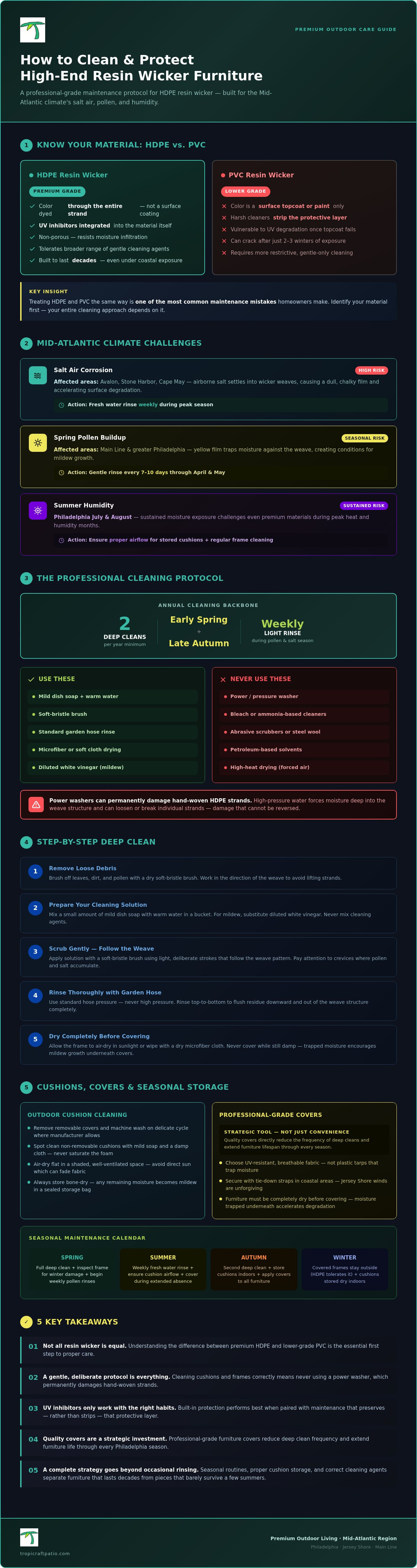
High-quality resin wicker is made from High-Density Polyethylene (HDPE), a non-porous thermoplastic that's dyed through during manufacturing. The color isn't a coating applied to the surface; it runs through the entire strand. UV inhibitors are integrated directly into the material, creating a built-in defense against the sun's most damaging wavelengths. The result is a weave that resists fading, brittleness, and surface cracking even after years of direct exposure.
HDPE vs. PVC: Why Material Science Dictates Your Cleaning Method
Lower-grade resin wicker is typically made from PVC and relies on surface paint or a topcoat for its color and finish. That's a meaningful structural difference. Harsh cleaning agents, abrasive scrubbers, or high-pressure water can strip that topcoat, leaving the material vulnerable to UV degradation and moisture infiltration. HDPE, by contrast, tolerates a broader range of gentle cleaning approaches because there's no protective layer to strip away - the protection is built in.
This is precisely why knowing how to clean outdoor furniture cushions and the wicker frames beneath them starts with knowing what you're actually working with. The right method for premium HDPE is not the right method for a painted PVC set, and treating them the same way is one of the most common maintenance mistakes homeowners make. Explore Tropicraft's rattan and wicker collections to see how premium HDPE construction translates into real-world durability.
Local Challenges: Salt Air and Pollen in Philadelphia and the Jersey Shore
The Mid-Atlantic region presents a specific and demanding set of environmental stressors that generic cleaning guides simply don't address.
Salt air corrosion: For homeowners in Avalon, Stone Harbor, and Cape May, airborne salt deposits settle into every surface, including wicker weaves. Left unaddressed, salt residue accelerates surface degradation and leaves a dull, chalky film. A weekly rinse with fresh water during peak season is one of the most effective preventive habits you can build.
Spring pollen: Across the Main Line and greater Philadelphia, pollen season arrives aggressively. That yellow film isn't just cosmetic - it traps moisture against the weave, creating the conditions mildew needs to establish itself. A gentle rinse every seven to ten days during April and May keeps the surface clear before buildup begins.
Humid summers: Philadelphia's July and August humidity creates sustained moisture exposure that challenges even premium materials. Proper airflow around stored cushions and regular frame cleaning are the two most effective countermeasures.
Understanding these regional patterns is the foundation of a smart maintenance strategy. For a deeper look at how material selection intersects with climate performance, the Ultimate Guide to Selecting Premium Outdoor Furniture offers valuable context on choosing materials built for this specific environment.
The furniture you invested in was designed to meet these challenges. The care routine you build around it should reflect that same level of intention.
The Definitive Protocol for Cleaning High-End Resin Wicker
There's a rhythm to caring for premium outdoor furniture that mirrors the lifestyle it supports: unhurried, deliberate, and attentive to detail. Rushing the process, or reaching for the wrong tools, is where most well-intentioned cleaning efforts go sideways. The good news is that HDPE resin wicker is genuinely forgiving when treated with the right approach - and remarkably low-maintenance when that approach becomes a seasonal habit.
Two deep cleans per year form the backbone of any smart maintenance schedule. The first happens in early spring, clearing away winter's accumulated grime before you're ready to use the space. The second comes in late fall, before furniture goes into storage or under protective covers for the colder months. Between those bookends, a light rinse every week or two handles routine surface buildup without any scrubbing required.
Essential Tools and Solutions for a Professional Clean
The right toolkit is simple. Gather these before you start:
Soft-bristle nylon brush: Firm enough to work into the weave, gentle enough not to stress the strands
pH-neutral dish soap (Dawn works well): Cuts through grime without stripping the material's surface integrity
Microfiber cloths: Essential for hand-drying dark finishes without leaving water spots or lint
Low-pressure garden hose: The only water delivery method you should use on premium wicker
Abrasive cleaners and bleach-based solutions are off the table entirely. Even on HDPE, abrasives create micro-scratches that trap dirt and dull the finish over time. Bleach can degrade the weave's structural integrity with repeated use. The ideal cleaning solution is simply one tablespoon of pH-neutral soap dissolved in one gallon of warm water.
The non-negotiable rule: no power washers. The concentrated pressure can work its way into the hand-woven intersections, loosening the tension that holds the weave together. Once those strands begin to separate, the damage is irreversible. It's a mistake that no amount of subsequent care can undo.
Step-by-Step Maintenance for Intricate Weaves
Follow this sequence for a thorough, streak-free result every time.
Step 1: Remove loose debris first. Use a dry soft-bristle brush or a vacuum with a brush attachment to clear dust, pollen, and organic debris from the crevices of the weave. Skipping this step means you'll be pushing dirt deeper into the pattern once the water is introduced.
Step 2: Apply your soapy solution with intention. Dip the nylon brush into your prepared solution and work in small, circular motions across the surface. Pay particular attention to the underside of armrests and seat frames, where moisture and debris tend to accumulate unnoticed. This is also the stage where knowing how to clean outdoor furniture cushions as a complete system pays off - address the frame and the cushion fabric together so nothing is left to re-contaminate a freshly cleaned surface.
Step 3: Rinse low, dry thoroughly. Use a gentle garden hose setting to rinse from the top down, ensuring no soapy residue remains in the weave. Then hand-dry every surface with a microfiber cloth, especially on darker finishes where standing water leaves visible mineral deposits. Allow the piece to air-dry fully in a shaded spot before replacing cushions or applying a protective cover.
If you'd like guidance on building a complete seasonal care routine for your specific furniture, reach out to the Tropicraft team for personalized recommendations.
Protecting Your Investment: Cushions, Covers, and Seasonal Care
Cleaning is the foundation, not the ceiling. Knowing how to clean outdoor furniture cushions and wicker frames correctly gives you a strong starting point, but the furniture that holds its beauty through decade after decade is the furniture that benefits from a complete, layered care strategy. That means the right cushion fabrics, the right protective covers, and a seasonal rhythm calibrated to Philadelphia's climate.
Caring for Sunbrella® and Luxury Outdoor Fabrics
Premium cushions and a pristine wicker frame belong together. A meticulously cleaned frame paired with stained or mildewed cushion fabric undermines the entire aesthetic, and the reverse is equally true. The two elements form a system, and they perform best when maintained as one.
Sunbrella® and comparable solution-dyed acrylic fabrics are engineered for outdoor durability, but they reward prompt attention. For spot-cleaning, act within the first few minutes of a spill: blot the area with a clean cloth, apply a mild soap-and-water solution, and rinse thoroughly. Letting a stain set into the weave is the one scenario where even the best fabric becomes difficult to fully restore. For a deeper dive into deep-cleaning luxury outdoor fabrics and selecting the right custom options for your space, the Custom Outdoor Cushions in Ardmore guide offers detailed guidance tailored to this region.
The Role of Custom Covers and Professional Storage
A high-quality protective cover does more than keep rain off your furniture. It reduces the frequency of deep cleans, shields UV inhibitors from unnecessary cumulative exposure, and prevents the mildew cycle that Philadelphia's humid summers reliably trigger. The critical detail: choose breathable covers rather than sealed plastic alternatives. Trapped moisture beneath a non-breathable cover creates exactly the conditions you're trying to prevent.
Seasonal storage deserves equal attention. Philadelphia winters subject outdoor materials to repeated freeze-thaw cycles that stress even the most resilient HDPE weaves. Bringing cushions indoors or into a climate-controlled space before the first hard frost eliminates that expansion and contraction pressure entirely.
Store cushions vertically in a dry, ventilated space to prevent moisture from pooling against the fabric
Cover frames with breathable protective covers if they remain outdoors through winter
Perform a quick inspection each spring before your first use of the season, checking weave tension and fabric condition
Tropicraft's team has spent decades helping Main Line and Jersey Shore homeowners build care routines that match their specific furniture and climate exposure. Contact our design experts for custom care advice tailored to your collection, or browse our protective cover options to find the right fit for your pieces. The investment you made in your outdoor sanctuary deserves a protection strategy that's just as considered.
Your Outdoor Sanctuary Deserves Care That Matches Its Craftsmanship
Premium resin wicker is built to endure decades of Mid-Atlantic seasons, but that longevity isn't passive. It's earned through consistent, deliberate maintenance. The protocol you've just learned, from understanding your HDPE material's built-in advantages to knowing how to clean outdoor furniture cushions as part of a complete seasonal system, gives you everything you need to protect that investment year after year.
Three principles carry the most weight: use the right tools and solutions, never a power washer; treat cushions and frames as a unified system, not separate afterthoughts; and build seasonal rhythms that get ahead of pollen, salt air, and humidity before they cause lasting damage.
Tropicraft Patio has been helping Philadelphia and Jersey Shore homeowners build outdoor sanctuaries since 1977. Our 20,000-square-foot Ardmore showroom features curated resin wicker collections alongside over 200 custom fabric choices, so every detail reflects your vision. Connect with our design team today for personalized care guidance and expert recommendations tailored to your collection. Your outdoor space is worth it.
Frequently Asked Questions
Can I use a power washer to clean my resin wicker furniture?
No. Power washing is one of the most damaging things you can do to resin wicker, regardless of how high-quality the material is. The concentrated pressure forces its way into the hand-woven intersections, loosening strand tension in ways that can't be reversed. Once the weave begins to separate or warp, no amount of subsequent care restores it.
A low-pressure garden hose is the right tool. Paired with a soft-bristle nylon brush and a mild soap solution, it delivers a thorough clean without stressing the structure. It's a gentler approach that actually produces better long-term results.
How do I remove mold or mildew from the wicker weave?
Act quickly. Mix one tablespoon of pH-neutral dish soap with one gallon of warm water, then use a soft-bristle brush to work the solution into the affected area using small circular motions. For more stubborn mildew, a diluted white vinegar solution (one part vinegar to four parts water) can be effective on HDPE resin without compromising the material's integrity the way bleach-based cleaners would.
Rinse thoroughly from top to bottom with a garden hose and allow the piece to dry completely in a shaded, well-ventilated area before replacing cushions. Knowing how to clean outdoor furniture cushions alongside the frame is equally important here, since mildew on the fabric can re-contaminate a freshly treated surface.
Is it safe to leave resin wicker outside during a Philadelphia winter?
Premium HDPE resin wicker is built to handle cold temperatures, but Philadelphia's freeze-thaw cycles create repeated stress that adds up over time. Frames can generally stay outdoors when covered with a breathable protective cover, but cushions should always be brought indoors or stored in a dry, climate-controlled space before the first hard frost to prevent moisture from expanding within the fabric and foam.
A spring inspection before your first use of the season is a smart habit regardless. Check weave tension and fabric condition so any minor issues get addressed before they develop into larger problems through the warmer months.
How often should I deep clean my patio furniture if I live near the Jersey Shore?
Two full deep cleans per year form the baseline for any outdoor furniture, but coastal homeowners in areas like Avalon, Stone Harbor, and Cape May should layer in more frequent maintenance between those sessions. A fresh water rinse once a week during peak season is one of the most effective habits you can build. Airborne salt deposits settle into the weave continuously, and letting them accumulate accelerates surface degradation and leaves a dull, chalky film that becomes harder to address the longer it sits.
During spring pollen season, a light rinse every seven to ten days keeps the surface clear before buildup creates the moisture-trapping conditions that mildew needs to take hold. The combination of salt air and humidity along the Jersey Shore makes consistency the most important variable in any care routine.


Comments