


How to Choose the Right Umbrella Base for Philadelphia & Jersey Shore Winds
Imagine a serene Saturday afternoon on your Avalon deck, only for a sudden 20-mile-per-hour Atlantic gust to transform your elegant patio umbrella into a dangerous projectile. It's a common frustration for homeowners across the Greater Philadelphia region who find that standard hardware simply cannot withstand our local coastal breezes or sudden summer storms. You've likely spent years perfecting your outdoor oasis, so you shouldn't have to settle for a bulky, plastic umbrella base that detracts from your hand-woven resin wicker or stains your custom bluestone patio. These functional elements should enhance your design, not compromise it.
We believe your peace of mind is just as important as your aesthetic. This guide will help you master the art of securing your shade by selecting a foundation that provides unparalleled stability without compromising on luxury. We'll explore the critical weight requirements for different canopy sizes and the specific benefits of mobile versus fixed solutions, ensuring your investment remains both secure and sophisticated through every season.
Key Takeaways
Understand how to calculate the precise ballast required to protect your outdoor oasis from the unique wind patterns of Ardmore and the Main Line.
Master the "Canopy-to-Weight" rule to select an umbrella base that provides unparalleled stability and safety for your specific canopy diameter.
Learn how to choose between under-table and free-standing configurations to ensure a seamless fit with your premium aluminum dining furniture.
Discover why high-quality materials like cast aluminum and natural stone are essential investments for enduring the coastal elements of the Jersey Shore.
Table of Contents Calculating the Ideal Weight for Your Philadelphia Patio Selecting the Right Base Type for Your Furniture Configuration Material Excellence: Durability for the Main Line and Jersey Shore
Calculating the Ideal Weight for Your Philadelphia Patio
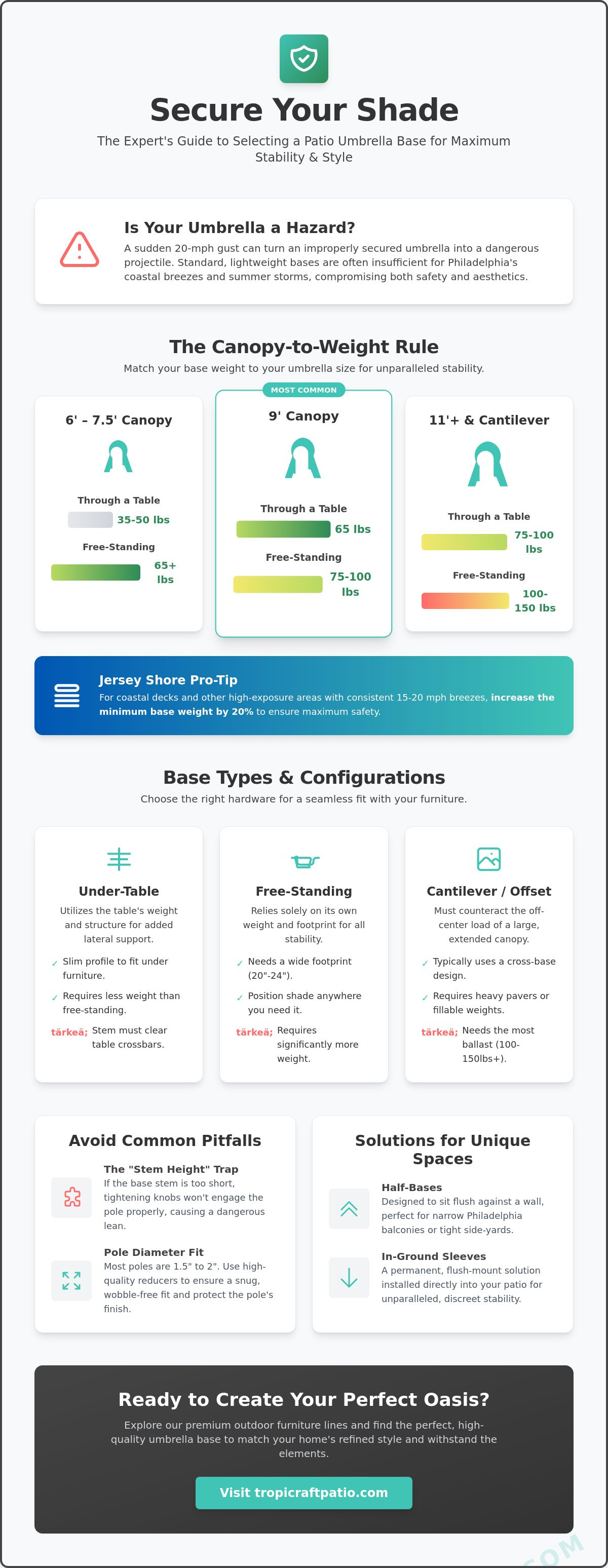
Creating a serene outdoor oasis in Ardmore or along the Main Line requires more than just aesthetic coordination. It demands a technical understanding of local wind patterns. While a gentle breeze provides relief during a Villanova summer, sudden gusts can easily transform a standard patio umbrella into a safety hazard if it isn't anchored by a substantial umbrella base. Standard big-box 30lb bases are frequently insufficient for free-standing market umbrellas, as they lack the ballast needed to counter the lift generated by umbrella aerodynamics during a storm.
Weight Recommendations by Umbrella Size
The "Canopy-to-Weight" rule is your primary safeguard against property damage. For those designing high-exposure decks or coastal retreats at the Jersey Shore, we recommend exceeding these minimums by 20 percent to account for consistent 15-20 mph sea breezes.
6 to 7.5 Foot Umbrellas: Use a minimum of 35-50 lbs when supported by a table. For free-standing setups, choose 65 lbs or more.
9 Foot Umbrellas: These require a 65 lb base for through-table use. Free-standing models need 75 to 100 lbs to remain stable.
11 Foot+ and Cantilevers: Large canopies act like sails. These require 100 to 150 lbs, often utilizing specialized weight plates or permanent bolt-down solutions.
Fixed vs. Mobile Bases: When to Prioritize Portability
Sophisticated landscape designs often feature expansive bluestone or travertine patios. If your shade needs to transition from a dining area to a poolside lounge, a mobile umbrella base with integrated wheels is a practical investment. Don't settle for flimsy hardware; look for premium models with dual-locking mechanisms. These ensure your sanctuary stays exactly where you intended, even when the Philadelphia weather shifts unexpectedly. Explore our outdoor furniture lines to find a collection that matches your home’s refined style.
Selecting the Right Base Type for Your Furniture Configuration
Choosing an umbrella base isn't just about weight; it's about how the hardware integrates with your existing layout. For traditional dining setups, under-table bases must be slim enough to fit beneath your aluminum dining furniture while ensuring the stem clears any structural crossbars. If the stem is too tall, it may hit the table underside, preventing the umbrella from sitting flush and creating an unstable canopy.
Free-standing market umbrellas require a different approach. Because they lack the lateral support of a table, these bases need a wider footprint, typically 20 to 24 inches in diameter, to prevent tipping during a sudden breeze in Margate or Avalon. For cantilever models, a cross-base is standard, but it must be weighted with high-density pavers or professional-grade fillable containers to offset the weight of the extended arm. To ensure your sanctuary remains secure, you should calculate the base weight by multiplying the canopy width by 10 for a safe minimum. For a cohesive aesthetic across your deck, review our guide on selecting premium outdoor furniture in Philadelphia and the Jersey Shore.
Measuring for a Perfect Fit
The "Stem Height" trap is a frequent oversight for Ardmore homeowners. If the base stem is too short, the tightening knobs won't engage with the umbrella pole properly, leading to a precarious lean. Always verify your pole diameter. Most premium poles measure between 1.5 and 2 inches. Use high-quality reducers or sleeves to ensure a snug fit that eliminates wobbling and protects the finish of your pole.
Specialty Bases for Unique Spaces
Tight urban spaces require clever engineering. Half-bases are designed to sit flush against walls, making them the ideal umbrella base solution for narrow Philadelphia balconies or apartment side-yards. For a permanent, high-end look, in-ground sleeves offer a flush-mount solution for poolside luxury. These sleeves are installed directly into your patio surface, providing unparalleled stability without the visual bulk of a traditional stand. Explore our premium outdoor furniture lines to find the perfect match for your shade solution.
Material Excellence: Durability for the Main Line and Jersey Shore
Selecting a high-performance umbrella base requires more than just picking a weight; it's about matching the material to your specific microclimate. For homeowners in the Delaware Valley and along the Atlantic coast, the environment dictates the standard of quality. Your outdoor sanctuary deserves components that resist the wear of time and weather.
Cast aluminum stands as the premier choice for those seeking intricate design without the risk of oxidation. This material is naturally rust-resistant, making it a reliable anchor for poolside dining sets where splashes are frequent. For the expansive, traditional estates of Villanova, concrete and stone bases provide a timeless aesthetic. These natural materials offer the sheer density needed to keep large market umbrellas upright during sudden suburban thunderstorms.
Coastal residents in Avalon and Stone Harbor face the unique challenge of corrosive salt air. While cheap plastic alternatives often crack or fade within a single season, premium high-density resins are UV-stabilized and engineered to withstand the elements. These materials maintain their structural integrity and color even after years of direct sun exposure. You'll find these high-end resins often pair beautifully with our poly lumber collections for a cohesive, low-maintenance retreat.
Preventing Deck and Patio Damage
Your choice of umbrella base shouldn't come at the expense of your flooring. Premium models feature integrated rubber feet or glides. These components elevate the heavy base just enough to prevent rust rings and scratches on expensive ipe or composite decking. We also recommend breathable designs that allow airflow beneath the unit. This prevents moisture from being trapped against natural stone, which can lead to permanent discoloration or organic growth on your patio surface.
Maintenance for Long-Term Performance
Protecting your investment involves simple, seasonal habits. Before the first Philadelphia frost, ensure your stone or concrete base is dry and covered. Trapped moisture can freeze and expand, causing micro-fractures in the material. For coastal properties, a quick rinse with fresh water every 14 days removes salt spray and yellow pollen. This preserves the luster of the powder-coated finish without the need for harsh chemicals. If you need assistance with your seasonal setup, contact us for professional installation services in the Jersey Shore area.
Secure Your Outdoor Oasis Against Coastal Winds
Philadelphia’s gusty afternoons and the Jersey Shore’s salt-heavy breezes demand more than a standard solution. Selecting a heavy-duty umbrella base isn't just about aesthetics; it's a critical safety measure for your patio. You'll need to calculate the proper weight based on whether your umbrella is freestanding or supported by a dining table to prevent uplift during a storm. Choosing weather-resistant materials ensures your investment survives the humidity and seasonal shifts common in Pennsylvania and New Jersey.
Since 1977, our family-owned team has provided the expertise needed to build durable, sophisticated retreats. We understand that high-end furniture requires a high-end experience, which is why we offer professional white-glove delivery throughout the Main Line and coastal communities. You don't have to guess which specifications are right for your specific wind exposure. Our experts are ready to guide you through every technical detail and design choice to ensure your sanctuary remains tranquil and safe.
Explore our curated collection of premium umbrella bases and shade solutions at our 20,000 sq. ft. showroom in historic Ardmore. We look forward to helping you anchor your perfect outdoor sanctuary for years of refined relaxation.
Frequently Asked Questions
Can I use a 50lb umbrella base for a free-standing 9-foot umbrella?
You should not use a 50lb umbrella base for a free-standing 9-foot umbrella because it lacks the stability to withstand wind gusts exceeding 10 miles per hour. For a free-standing canopy of this size, industry standards recommend a minimum weight of 75 to 100 pounds. This ensures your outdoor retreat remains secure and prevents the umbrella from tipping, which could damage your premium furniture or patio surfaces.
What is the best umbrella base material for a home on the Jersey Shore?
High-density polyethylene or heavy-duty powder-coated aluminum are the most reliable materials for coastal environments like the Jersey Shore. These materials are specifically engineered to resist the corrosive effects of salt air and high humidity that often degrade standard steel. Investing in a high-quality umbrella base made from these non-corrosive elements ensures your poolside oasis maintains its sophisticated appearance and structural integrity for many seasons.
Do I need a different base if my umbrella is going through a table?
You can use a lighter umbrella base when the pole is supported by a table, as the table frame provides a secondary point of contact for stability. While a free-standing model requires significant weight, a 50-pound base is generally sufficient for a table-supported 9-foot umbrella. We recommend selecting a low-profile design to ensure your guests have ample legroom while enjoying a refined dining experience on your patio.
How do I stop my umbrella base from rusting on my patio?
You can prevent oxidation by selecting a base with a professional-grade powder-coated finish or choosing a cast stone composite that contains no metal. If you currently own a cast iron base, applying a clear coat of rust-inhibitor spray once every 12 months provides a protective barrier against the 40 percent average humidity found in the Philadelphia region. For a truly maintenance-free lifestyle, transitioning to high-performance polymers is the most effective way to eliminate rust stains on your stone or wood decking.
Comments